Venerable Fulton J. Sheen (1895-1975), one of the most dynamic preachers of the Catholic Faith in the twentieth century, speaks in
this four minute video about "Matt Talbot, Patron Saint of Alcoholics."

Venerable Matt Talbot Resource Center
The Venerable Matt Talbot Resource Center exists to compile writings about the life, times, conversion, and recovery from alcoholism of Matt Talbot (1856-1925) of Dublin, Ireland. Disclaimer: The placing of information on this site from external linked sources does not necessarily imply agreement with that information. This center is independent of any other center, group, organization, website, or Facebook page. Comments are welcome at: ven.matt.talbot.resource.center@gmail.com
Sunday, December 10, 2017
Monday, December 4, 2017
Personally Invite Pope Francis to Visit Matt Talbot's Tomb in 2018
Ask Pope to visit Matt Talbot, Archbishop
Martin says
November 23,
2017
“The bishop’s main point was the importance of the holy people of God, with Matt Talbot as example,” said Fr Richard Ebejer, former administrator of Our Lady of Lourdes Parish on Seán McDermott Street, where Talbot’s shrine is. He added that he was delighted that the famous Dublin ascetic had been mentioned, and so asked whether the Pontiff might be prevailed upon to visit Talbot’s tomb, which St John Paul II was widely expected to visit in 1979 although doing so had never been on his schedule.
Disappointed
“The local people had prepared for the visit, and had been disappointed when the Pope did not visit,” the Maynooth-based Salesian told The Irish Catholic, saying that this showed how it is “good not to raise expectations.”Fr Ebejer has previously said that the disappointment felt locally at St John Paul’s failure to visit the tomb is still palpable today, and that while the North inner city is a marginalised community which has a social stigma attached to it, it has many positive aspects which the archbishop himself has often highlighted.
“There’s a strong sense of solidarity there,” Fr Ebejer said, describing the area as a “local community struggling to lift itself out of poverty”. He pointed to how Dr Martin has spoken about the role of mothers and grandmothers keeping families together when things went wrong, and noted how – even among families where religious practice is low – there is a strong attachment there to the local church.
Fr Eddie Conway OP of the nearby St Saviour’s Church, where Talbot had been going when he collapsed and died in Granby Lane in 1925 agreed it would be good if the Pope visited a community that is so often marginalised.
Stressing that details of the papal visit have not been confirmed, Fr Conway described the failure to visit the tomb in 1979 as “a terrible omission” and said “It would be good for the Pope to visit him – he’s Dublin’s holy man, the saint of the working class, known for how he fought with the whole addiction thing, and someone people can identify with.”
Matt Talbot was declared ‘venerable’ by Pope Paul VI in October 1975."
Sunday, December 3, 2017
On Prayer
The following excerpt on prayer is from an article at http://www.holyfamilybordeaux.org/reflection/prayer/
“C.S. Lewis, in the play ‘Shadowlands’ by William Nicholson, says, “I pray because I can’t help myself. I pray because I’m helpless. I pray because the need flows out of me all the time, waking and sleeping. It doesn’t change God. It changes me.” Kahlil Gibran goes further when he says: “You pray in your distress and in your need: would that you might pray also in the fullness of your joy and in your days of abundance…”
Prayer is gift. St Augustine says that in prayer we open our hearts to receiving what God intends to give. Matt Talbot prayed for the gift of prayer and he tells us that it was given to him “in abundance.”
In prayer we bring together the whole of Creation, so that in the words of St Paul,“all things may be united in Christ – things in heaven and things on earth.” (Eph 1:10)”
“C.S. Lewis, in the play ‘Shadowlands’ by William Nicholson, says, “I pray because I can’t help myself. I pray because I’m helpless. I pray because the need flows out of me all the time, waking and sleeping. It doesn’t change God. It changes me.” Kahlil Gibran goes further when he says: “You pray in your distress and in your need: would that you might pray also in the fullness of your joy and in your days of abundance…”
Prayer is gift. St Augustine says that in prayer we open our hearts to receiving what God intends to give. Matt Talbot prayed for the gift of prayer and he tells us that it was given to him “in abundance.”
In prayer we bring together the whole of Creation, so that in the words of St Paul,“all things may be united in Christ – things in heaven and things on earth.” (Eph 1:10)”
Thursday, November 30, 2017
A Catholic Journey Through the Twelve Steps and the Sacrements
Two reviews about this informative new book are posted below.
Although Matt Talbot is not mentioned, Matt did
use the sacraments and the yet to be written twelve steps as part of his
recovery journey.
The Twelve Steps and the Sacraments: A Catholic Journey Through Recovery
by
https://www.amazon.com/Twelve-Steps-Sacraments-Catholic-Recovery/dp/1594717257
"The Twelve Steps and the Sacraments outlines in a
penetrating way the essential relationship between the beauty of each step and
the specific sacramental reality that can link that step to a deepening
relationship with Jesus Christ."
--From the foreword by Most Rev. Robert W. McElroy, Bishop of
San Diego
"In the eight decades since their initial formulation by a
handful of alcoholics with the help of a few clergymen, the Twelve Steps have
aided countless numbers of women and men with various addictions overcome their
unhealthy attachments and go on to lead happy, healthy, and productive lives in
their homes, in society and in their places of worship. In The Twelve Steps
and the Sacraments, Scott Weeman shares his own personal story of recovery
and the stories of other recovering addicts to help us get a clear picture of
the Twelve Steps and how they relate to the sacraments Christ established and
left to his people for our sanctification. Whether you or someone you know is in
recovery (or ought to be), whether you are a Catholic or not, this book will
help you understand the sacraments in light of the Twelve Steps. More
importantly, Weeman will help you see the Twelve Steps more clearly in the Light
of Christ."
--Marcus Grodi, Founder and president of The
Coming Home Network International
Monday, November 20, 2017
Christ as Your Brother and Friend
The following excerpt is from a 2017 Easter message
by Fr. John Lynch at http://www.cny.org/stories/the-risen-friend-in-our-midst,15417?.
As a side note, when Matt Talbot is grouped with other holy people as
examples in a homily, article, or book, one might note what
characteristics the group might share or represent, which is evident
here.
“...No two lives are alike. The 20th
century saw countless men and women who lived their friendship with Christ in
vastly different ways, people like Dorothy Day, St. Maximilian Kolbe, St. Teresa of the Missionaries of Charity, St. John
Paul II or a recovered alcoholic named Matt Talbot. Some of them wandered far
away before they came home to their Friend. But home they came, to know the joy
of his forgiveness.
Your life is different as well. You may know poverty
or wealth, have a host of friends or a handful, be healthy or chronically ill,
enjoy fame or live in obscurity.
Against the background of eternity, none of this
matters. What does matter is that the Easter message comes to life in your
heart. Christ, God’s Son and your Brother, lives. Here, today. He is your
Friend. As you say “I do” to the promises, and sing the Great Amen at the end of
the Eucharistic prayer, I hope you will give those words this meaning: “Lord,
you are my Friend. I am yours. And, from this moment on, my life, here each
Sunday and holy day, out there each weekday, will prove it.”
If this is what you mean, if you live as a friend of
your crucified and victorious Lord, your Easter is happy. It will be
forever...”
Friday, November 10, 2017
Reflections of an Indian Catholic Alcoholic
https://indiancatholicmatters.org/reflections-indian-catholic-alcoholic/
"My name is XXX. I am a Catholic and I am an Alcoholic. This is my story.
1000 days, so far, without touching a drop of alcohol. By the Grace of God. I have come to this milestone this month. Unthinkable for a typical businessman living in one of India’s fastest growing cities, who liked living the high life: Clubs, 5-star events, receptions, etc were a major part of most of my adult life till the past three years. The ostensible reason for my being at all these events, taking up memberships in all the possible Clubs in town and becoming one of the most networked people in the business circles in my City was business networking and the opportunities there-on. The actual reason why I was so regular at these events was alcohol: my poison of choice, whisky.
To cut a long story short, and it is probably, one that you have heard before till this point, is that I became more and more attracted to alcohol. After all, it had been my friend since college days at age of 18 years for almost 30 years. It transformed me from a shy introvert to the life of the party. Through all these years of my relationship with alcohol, I have never been pulled up for drunken driving nor ever had any accidents under the influence, or any problems at work. I was able to give up drinking for the normal Catholic seasons of Lent and Advent.
However, after these seasons were over, I would always make up overtime with alcohol to compensate for the period without! Slowly, a realisation that this unhealthy attraction (drinking alcohol per se is not bad, but only if done in moderation, and some of us just can’t drink in moderation!) was gaining precedence over my behavior, brought on by the pleadings of my better half, to give up this habit, prompted me to try and stop drinking alcohol not for a few days, but for life. Also, helping me make this hard decision was the first hand, experience of the problems that one of my closest college friends was having due to his own love for alcohol: DUI, Divorce, loss of custody of the kids and home – he had to face this all.
I can remember clearly my last drinking day. A Friday evening in October, three years ago. I was at a popular Club in the city and must have had quite a few pegs of India’s finest whisky. Next day, decided to stop. Joining Alcoholics Anonymous (AA) – which in fact has meetings in many churches, seemed not an option for me. In the Indian context, what would people say? There might be someone who might recognise you, etc, etc. So many of these thoughts might not occur to someone in the US or elsewhere.
So, in desperation, I turned to God and my Catholic Faith to bring me out of my love affair with Alcohol. I reasoned that other Catholics and many Saints could have overcome this battle too and I could learn from them and started researching this topic.
I called the Franciscan Friary and was connected to a kindly Friar who gave me a lot of literature on Franciscan spirituality and in particular on a little man from Assisi, St Francis who renounced a life of decadence and pleasure for one of poverty and penance and living as per God’s Will. Incidentally, the St Francis prayer is an integral part of AA matters even today. You know, the one that goes” “Lord make me a channel of your peace etc..”
Internet search also led me to the Pioneer Temperance Association, where members pledge not to consume alcohol via the pledge (Heroic Offering) to the Sacred Heart for the sake of excessive drinkers. This pledge was modelled on Jesuit spirituality and the devotion to the Sacred Heart made known by St Margaret Mary Alacoque.
I reproduce the Heroic Offering here:
The Heroic OfferingI found great consolation in saying the Offering everyday during Daily Mass, especially at the time of the Eucharistic Offering, praying especially that this day I would not touch alcohol. I found that visiting the Blessed Sacrament before any party where I knew alcohol would be served, and saying the Pledge, would also help strengthen me get through the occasion.
“For thy greater Glory and consolation, O most Sacred Heart of Jesus, for Thy sake, to give good example, to practice self-denial, to make reparation to Thee for the sins of intemperance and for the conversion of excessive drinkers, I will abstain for life from all intoxicating drinks, Amen”.
Researching further, I found that Catholic spirituality had its roots intertwined with AA and has an indelible influence on the AA movement right from the early days. An Catholic Priest Jesuit Fr. Ed Dowling was one of the earliest friends and spiritual advisors of Bill W, the Founder of AA. Sr. Ignatia also started the concept of giving out sobriety medals. A recovering alcoholic catholic priest Fr. Martin was famous for the Chalk Talks series that could be found on the net and explain very simply the causes of alcoholism. Calix – an association of recovering catholic alcoholics is also a useful resource on the internet.
All these resources strengthened me and helped me come to this point of 1000 days. I have weathered parties, receptions, vacations, special events, relative get togethers, where there is free flow of alcohol, without any problems. I cannot deny that it is not easy, but have managed. I am closer to God and my family, as well as am very involved with Church and related faith activities these days, besides being a Secular Franciscan. I have much more free time to spend with my family and my prayer life and health has also improved as well as relationships with others.
Of course, life without alcohol has to be faced head on; there is no numbing anaesthetic to take away your problems temporarily. Realising the opportunities lost when one placed alcohol more important than other things also brings on regret of the past, but all this can be washed away by having a Good Confession , and resolving to make a new beginning.
.
Why am I writing all this down? It is just to document my search on how looking for help in my religion – the beautiful Catholic Faith has helped me overcome my love for alcohol. I hope you might find some of this information helpful, if you have a love affair with alcohol, like I did and you are a Catholic. With God, all things are possible. It does involve a change of lifestyle habits, and sometimes a change in friends too. But if Matt Talbot could do it, let us draw inspiration and follow his example.
In writing this article, I wanted to condense the past three years of my learning of using my Catholic faith to overcome my love for alcohol, with the hope that it might help someone struggling with a similar problem somewhere. By sharing this experience, I am strengthened to continue in this journey for lifetime sobriety.
God Bless and I ask you to keep me in your prayers, as I take it one day a time, With God and Without Alcohol. Because through Him, all things are possible!"
NOTE: Another recent article titled, Helping The Catholic Alcoholic, at http://thewandererpress.com/catholic/news/frontpage/helping-the-catholic-alcoholic/ offers a different author’s recovery reflections about alcoholism and the value of 12 step programs but is not specifically Catholic in content despite its title.He does, however, mention Matt Talbot.
Monday, November 6, 2017
Video Homily About Matt Talbot
“Last Friday I happened to watch the Daily Mass on EWTN. Fr. Joseph Mary had a nice homily on Matt Talbot! He even mentioned that there is a miracle attributed to Matt that is being considered for possible beatification!
He also read two prayers written by Matt:
Oh most sweet Jesus, mortify within me all that is bad, make it die.
and
In company, guard your tongue; in your family, guard your temper; when alone, guard your thoughts.
Fr. Joseph begins talking about Matt at the 5:00 mark, and the prayers he reads at the 10:03 mark. At 10:54 he mentions the story behind the possible miracle.”
Thursday, November 2, 2017
Wednesday, November 1, 2017
Who is Included in Solemnity of All Saints or All Saint’s Day?
"The scope of the feast includes all those
officially recognised as saints and those whose cause for canonisation has not yet
been completed, like Matt Talbot and Cardinal Newman.
But it also includes those whose holy lives were known only to their family, friends or religious communities."
Note: Since the entire original article was published five years ago (and appears again today without updating) at https://www.catholicireland.net/saintoftheday/the-solemnity-of-all-saints/. The Irish Martyrs were previously beatified, Cardinal Newman is now Blessed John Henry Newman, and Pope John XXIII is now St. John XXIII.
But it also includes those whose holy lives were known only to their family, friends or religious communities."
Note: Since the entire original article was published five years ago (and appears again today without updating) at https://www.catholicireland.net/saintoftheday/the-solemnity-of-all-saints/. The Irish Martyrs were previously beatified, Cardinal Newman is now Blessed John Henry Newman, and Pope John XXIII is now St. John XXIII.
Saturday, October 28, 2017
Matt Talbot Novena 2017
For the past 25 years, the people of God in
Shannon and Kilrush have gathered together on Monday and Tuesday nights during
the months of October and November to pray for and support all
called to share life with addiction, either personally, or in family, or with a
colleague or neighbour.
The Gospel message is very much a story of God’s generosity. That same generosity is available today to you and yours as it was to Matt Talbot over one hundred years ago. St. Paul tells us:“I can do all things through Him who strengthens me.”
This year’s Novena began in both venues; Kilrush on Monday evenings and SS. John & Paul Church on Tuesdays and will continue for the months of October and November.
Petitions can be left at the shrine in both churches or, in an attempt to reach out to as many people as possible who are dealing with addiction, sent anonymously via the petition form on the Shannon parish website at http://www.shannonparish.ie/2017/10/matt-talbot-novena-week-5/
A warm welcome waits all who come. The Novena can be viewed live each week on Tuesdays at 7pm on http://www.shannonparish.ie/our-parish/webcam/
More details, including scheduled preachers, are available at http://www.shannonparish.ie/2017/10/matt-talbot-novena-2017/.
The Gospel message is very much a story of God’s generosity. That same generosity is available today to you and yours as it was to Matt Talbot over one hundred years ago. St. Paul tells us:“I can do all things through Him who strengthens me.”
This year’s Novena began in both venues; Kilrush on Monday evenings and SS. John & Paul Church on Tuesdays and will continue for the months of October and November.
Petitions can be left at the shrine in both churches or, in an attempt to reach out to as many people as possible who are dealing with addiction, sent anonymously via the petition form on the Shannon parish website at http://www.shannonparish.ie/2017/10/matt-talbot-novena-week-5/
A warm welcome waits all who come. The Novena can be viewed live each week on Tuesdays at 7pm on http://www.shannonparish.ie/our-parish/webcam/
More details, including scheduled preachers, are available at http://www.shannonparish.ie/2017/10/matt-talbot-novena-2017/.
Thursday, October 19, 2017
The Matt Talbot Way to Sobriety with Podcasts

Max Michili notified us on 10th October 2017 about a page he created on his website (www.yourprayerlife.com/) about Matt Talbot.
"My mission with the site is to teach people to pray always."
Max stated he had previously no idea who Matt Talbot was until a friend mentioned that his devotion to Matt helped him overcome alcoholism. This friend was apparently very excited to share how the Lord has used the rosary and Jesus Prayer podcasts on Max’s site in conjunction with Matt Talbot's Way to become sober. “He suggested I make a concerted effort to integrate these devotions on my site, and I think it is a great idea.”
Therefore, what Max has posted thus far can be viewed at http://www.
Sunday, October 15, 2017
Sobriety With Faith
Venerable Matthew Talbot Won
Sobriety With Faith
http://www.bigccatholics.com/2017/06/venerable-matthew-talbot-won-sobriety.html
For the next 15 years,
Talbot continued to drink heavily. It wasn’t until he was 28 that he finally
"hit bottom" and promised his mother he would "take the pledge." Her reply was
prescient: "May God give you strength to keep it." Matt went to confession and
attended daily Mass. He prayed as intensely as he used to
drink.
http://www.bigccatholics.com/2017/06/venerable-matthew-talbot-won-sobriety.html
"For anyone who has ever struggled with alcoholism, it should come as no surprise that Matthew Talbot, who sank to the depths of heavy drinking and soul crushing despair, also rose, through his struggle for sobriety, to the heights that the Church calls “venerable.” His story is an inspiration, not only to recovering alcoholics, but to anyone struggling with a seemingly overwhelming obsession.
Matt Talbot was born in Dublin, Ireland in 1856, the second of twelve children of Charles and Elizabeth Talbot. He began drinking when he was only 12 years old. after becoming a messenger for liquor merchants. In fact, with the exception of his oldest brother, all the Talbot men, father and sons, drank to excess often.
For the next 15 years,
Talbot continued to drink heavily. It wasn’t until he was 28 that he finally
"hit bottom" and promised his mother he would "take the pledge." Her reply was
prescient: "May God give you strength to keep it." Matt went to confession and
attended daily Mass. He prayed as intensely as he used to
drink.
From that time forward,
Talbot was a changed man. He began to pray and attend Mass with the same zeal he
had formerly devoted to drinking. In 1891, at the age of 35, he joined the Third
Order of St. Francis. Once known for his drunken rages, he instead became known
for piety, humility, and generosity. His drinking had compromised his health and
he suffered from kidney and heart ailments.
On June 7, 1925, Matthew Talbot collapsed and died
as he was walking to Mass on Trinity Sunday. Matthew Talbot was declared
venerable by Pope Paul VI in 1973. His feast day is June 18th.
Lord, in your servant, Matt Talbot you have given us a wonderful example of triumph over addiction, of devotion to duty, and of lifelong reverence for the Holy Sacrament. May his life of prayer and penance give us courage to take up our crosses and bravely follow Our Lord, Jesus Christ."
Saturday, October 7, 2017
A Venerable Matt Talbot Relic in Poland
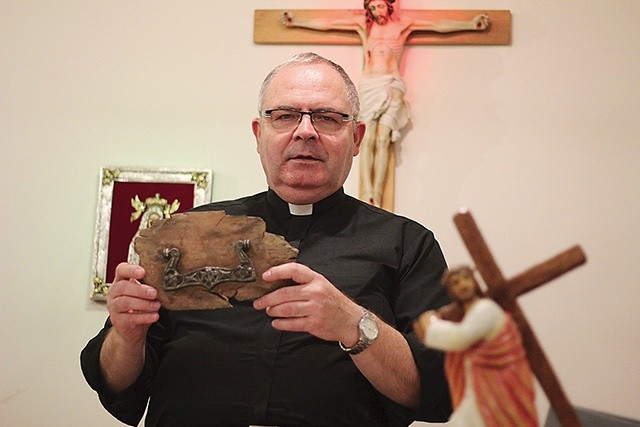
Grzegorz Jakielski, a good friend and major promoter of Matt Talbot at https://www.facebook.com/VenerableMattTalbot/, has
posted the following photo today of Father Zbigniew Kaniecki with a Matt Talbot`s relic - piece of
coffin in which his body rested for exhumation in 1952.
Saturday, September 23, 2017
Remembering the "Angel of Hope" for Alcoholics
A decade after the death of Venerable Matt Talbot,
Alcoholic Anonymous was founded.
One of the key figures in the early years of Alcoholics Anonymous was a non-alcoholic known simply as Sister Ignatia. As a hospital admissions officer in the 1930’s in Akron, Ohio, Sr. Ignatia befriended Dr. Bob Smith, co-founder of AA, and courageously arranged for the hospitalization of alcoholics at a time when alcoholism was viewed as a character weakness rather than a disease.
Alcoholic Anonymous was founded.
One of the key figures in the early years of Alcoholics Anonymous was a non-alcoholic known simply as Sister Ignatia. As a hospital admissions officer in the 1930’s in Akron, Ohio, Sr. Ignatia befriended Dr. Bob Smith, co-founder of AA, and courageously arranged for the hospitalization of alcoholics at a time when alcoholism was viewed as a character weakness rather than a disease.

Sister
Ignatia: The Catholic nun behind Alcoholics Anonymous
Patrick McNamara, PhD
Sep 22, 2017
https://aleteia.org/2017/09/22/sister-ignatia-the-catholic-nun-behind-alcoholics-anonymous/
https://aleteia.org/2017/09/22/sister-ignatia-the-catholic-nun-behind-alcoholics-anonymous/
What is Alcoholics Anonymous? AA is not, as is sometimes supposed, just another temperance movement, a new, fanatical reform crusade. It is a society, operating in groups, that is founded upon spiritual principles, and these principles closely parallel Catholic teaching.Still, many are unaware of the role Catholics played in AA’s early years, or that one of the key figures was a nun from Ohio named Sister Ignatia Gavin, C.S.A. (1889-1966). At St. Thomas Hospital in Akron, she helped Dr. Robert H. Smith, AA’s co-founder, to dispel the notion that alcoholism was a moral defect, rather than a spiritual, mental and physical disease.
In its reliance on grace, moral inventory taking, its confessional aspect and its emphasis on outreach, Haffner argued, “A Catholic member of AA should be a better Catholic as the result of his affiliation with this society and vice versa.”
Bridget Della Mary Gavin was one of three children born to a farmer in County Mayo, Ireland. Even as a child, she had what her biographer calls a “raw compassion” for alcoholism:
Whenever I would see anyone under the influence of alcoholism, it actually made my heart sick. I would try to offer everlasting reparation to the Sacred Heart of Our Lord to make up for the offense against His Divine Majesty.In 1896, the Gavins emigrated to Cleveland, Ohio. In an industrial city with a large working-class population, alcoholism was a big problem Parish priests started abstinence societies and young men took a “pledge” not to drink. Bridget graduated from Catholic schools, studied music, and taught music. Although she considered becoming a nun, her mother was opposed to it.
She dated and was even briefly engaged, but the call to religious life prevailed. In 1914, she joined the Sisters of Charity of St. Augustine, a community that ran schools and hospitals statewide. At 25, she was considered a “late vocation,” and given the name Ignatia. (Taking a new name signifies that a deep change has occurred in the person entering religious life.)
For many years, Sister Ignatia taught music in Cleveland schools until she suffered a physical breakdown. When she recovered, she transferred to hospital ministry. As her community opened St. Thomas Hospital in Akron in 1928, she was appointed the admitting officer. There she got to know Dr. Robert Holbrook Smith, who, after a bout with alcoholism, had been removed from the rosters of Akron’s more prestigious hospitals.
Beginning in 1934, Sister Ignatia began privately ministering to alcoholics with the help of a young intern, Dr. Thomas Scuderi. She tried to treat alcoholics from both a medical and pastoral standpoint, then an unchartered field. Scuderi recalled: “She was a great influence on my life as a physician. She taught me about loving people.” However, other doctors (and nuns, too) were less than supportive. Sister Ignatia later wrote:
I recalled very distinctly coming to the chapel for prayer shortly after five one morning, only to be met by the night supervisor who told me in unmistakable terms that the next time I admitted a D.T. [Delirium Tremens] to the hospital, I had better stay up all night and run around the corridors after him.At a time when chronic alcoholics were routinely sent to mental asylums, Sister Ignatia realized that they needed a healing beyond what medicine could provide. At the same time, she noted, hospitals had “little enthusiasm about admitting people who were imbibing too freely.”
On August 16, 1939, Dr. Smith persuaded her to officially admit an alcoholic patient to St. Thomas. Back in 1935, Smith and Bill Wilson, a New York stockbroker, had founded Alcoholics Anonymous as a program of moral and spiritual regeneration. Working with them, Ignatia began the first hospital treatment center for alcoholics, which one historian calls “a model for many chemical treatment programs in the United States.”
Although slight and frail in appearance, her biographer Mary Darrah notes, “A knowing intensity of expression all at once overcame her otherwise fragile features.” Darrah further adds:
Put briefly, AA’s angel was a strong, empathetic woman who extracted goodness from every situation and resolved to leave the world a little better than she found it. Ignatia had all the charisma of an Irish anamchara, or soul friend, so she easily folded the troubled into her heart.One patient recalled: “She saved my life. I found God and sobriety through her. She loved me when there was nothing about me to love. She was AA’s angel.” But hers was a “tough love” that required total abstinence from alcohol and drugs, acknowledgement of one’s dependence on a higher power, commitment to the AA program, and outreach to those still suffering.
Ignatia had a great devotion to the spiritual teachings of St. Ignatius Loyola, founder of the Jesuits, particularly his notion of “love through action.” She found a strong parallel between the saint’s writings and AA’s Twelve Steps. She routinely carried around with her a compendium of Ignatius’s thoughts, along with the 14th-century classic The Imitation of Christ. She gave copies of both to patients in the program’s early days. But her spirituality was also ecumenical. To a Protestant patient, she said:
The importance of our religion lies in our making it heavenly to those around us. In its essentials Catholicism is not as far apart as you suppose, from the beliefs of our separated brethren … love can surmount every obstacle.In 1952, Ignatia opened Rosary Hill Solarium in Cleveland, where she worked for 14 years. During her lifetIgnime, an estimated 15,000 alcoholics came under her care. As a result of her ministry, one author notes, “the alcoholics’ world changed.” At the time of her death in 1966, one commentator said: “If the Catholic Church doesn’t canonize her, the Protestants will make her a saint.” The Sisters poured more than 6,000 cups of coffee at her wake."
Note: While we will post more about Sr. Ignatia at a later date, three additional references about her are at:
http://venerablematttalbotresourcecenter.blogspot.com/2015/12/for-addicts-alcoholics-and-those-who.html
https://www.aa.org/pages/en_US/sister-mary-ignatia-1889-1966
http://silkworth.net/aabiography2/sister_ignatia_tribute.html.
A speech given by Sr. Ignatia at the 25th Anniversary of Alcoholics Anonymous, held in Long Beach California, in 1960 can be heard at https://www.srsofcharity.org/index.php/archives/special-collections/
Sunday, September 17, 2017
Meeting Matt Talbot
Such articles as this one help spread introductory information about
Venerable Matt Talbot to those who are not yet familiar with his name and/or
life.
"He was a drunk. And now he's on the path to sainthood: Meet Matt Talbot."
by Meg
Hunter-Kilmer
Sep 14, 2017
https://aleteia.org/2017/09/14/he-was-a-drunk-and-now-hes-on-the-path-to-sainthood-meet-matt-talbot/

Matt Talbot was a drunk. His father was a drunk. Nearly
every one of his brothers was a drunk. He was uneducated and unskilled and died
in obscurity. And someday soon, God willing, Venerable Matt Talbot will be a
saint.
Talbot (1856-1925) was the second of 12 children born to a working class Dublin family at a time when work and food were scarce and hope scarcer still. Matt’s home life was unstable and his schooling inconsistent. After a few years of sporadic attendance, Matt quit school entirely and entered the workforce.
His first job was for a wine seller, and the occasional taste he took of the merchandise soon turned him into a full-fledged alcoholic. By the time he was 13, Matt’s life was driven by his need to drink. He spent all his wages on alcohol, even pawning his boots when he didn’t have enough for a pint. Matt’s father beat him and made him change jobs, but it was too late. The alcohol had taken hold of him and, as his father well knew, it wouldn’t let go without a fight.
But Matt didn’t want to fight. He wanted to drink. And only to drink. His friends later said that he “only wanted one thing—the drink; he wouldn’t go with us to a dance or a party or a school function. But for the drink he’d do anything.” For 15 years, Matt begged, borrowed, and stole whatever he needed to feed his addiction, once stealing the fiddle from a blind beggar to sell it for liquor.
Matt was a lost cause—so everybody said. But everybody reckoned without grace.
Matt Talbot was the life of the party, but one day, when he was 28, he suddenly saw how false his happiness was, how false his friendships. He had been out of work for a few days and had drunk all his wages, so he stood outside a pub waiting for one of his many drinking buddies to offer to buy him a drink. But as one old friend after another passed him by, Talbot began to realize the emptiness of his life.
Disgusted with his friends and himself, he went home, to a mother very surprised to find her son home and sober so early in the day. After dinner, he announced his intention to “take the pledge,” to vow that he would abstain from all alcohol. His mother, whose pessimism was not unfounded, urged him not to make such a vow unless he intended to keep it.
But Matt’s heart had been seized, first by misery, then by remorse, and soon by love. He made his first confession in years and returned to the Sacraments. He promised sobriety for three months, then six, then for all his life. He worked even harder at his blue-collar jobs and gave the money he would have spent on beer to the poor. He went to Mass daily, lived simply, and performed powerful acts of penance and asceticism. He became a Third Order Franciscan. He taught himself to read so that he could study the Bible and the lives of the Saints. Perhaps most importantly, he never touched a drop of alcohol again.
But he never stopped being an alcoholic; the temptation to drink remained with him. Early into his abstinence he decided never to carry money with him as it was too much of a temptation to go into a pub and buy a pint. After work, as his friends went off to the pub, Talbot went to church; if he didn’t fill his time with something, he knew he would relapse. “Never be too hard on the man who can’t give up drink,” he once said. “It’s as hard to give up the drink as it is to raise the dead to life again. But both are possible and even easy for our Lord. We have only to depend on him.”
On Trinity Sunday, at the age of 69, Matt Talbot was making his way slowly through the streets of Dublin on his way to Mass. His body weakened by decades of hard labor, he collapsed of heart failure and was discovered later, an unidentified elderly man found dead in the street. He died as he had lived, in simple obscurity. But he was born that day into glory.
Venerable Matt Talbot is proof that being a follower of Christ doesn’t make virtue easy, it just makes it possible. Jesus fell three times under his cross to show us what it looks like to persevere in weakness, and Matt Talbot does just the same, an example of what it is to live with an addiction without being ruled by it.
Let’s ask his intercession for all those suffering from addiction, that God may give them the courage to persevere on the hard road of recovery. Venerable Matt Talbot, pray for us!"
A previous post by Meg that we have noted is available at
http://venerablematttalbotresourcecenter.blogspot.com/2017/07/feast-day-of-martyred-saint-who-died.html
Talbot (1856-1925) was the second of 12 children born to a working class Dublin family at a time when work and food were scarce and hope scarcer still. Matt’s home life was unstable and his schooling inconsistent. After a few years of sporadic attendance, Matt quit school entirely and entered the workforce.
His first job was for a wine seller, and the occasional taste he took of the merchandise soon turned him into a full-fledged alcoholic. By the time he was 13, Matt’s life was driven by his need to drink. He spent all his wages on alcohol, even pawning his boots when he didn’t have enough for a pint. Matt’s father beat him and made him change jobs, but it was too late. The alcohol had taken hold of him and, as his father well knew, it wouldn’t let go without a fight.
But Matt didn’t want to fight. He wanted to drink. And only to drink. His friends later said that he “only wanted one thing—the drink; he wouldn’t go with us to a dance or a party or a school function. But for the drink he’d do anything.” For 15 years, Matt begged, borrowed, and stole whatever he needed to feed his addiction, once stealing the fiddle from a blind beggar to sell it for liquor.
Matt was a lost cause—so everybody said. But everybody reckoned without grace.
Matt Talbot was the life of the party, but one day, when he was 28, he suddenly saw how false his happiness was, how false his friendships. He had been out of work for a few days and had drunk all his wages, so he stood outside a pub waiting for one of his many drinking buddies to offer to buy him a drink. But as one old friend after another passed him by, Talbot began to realize the emptiness of his life.
Disgusted with his friends and himself, he went home, to a mother very surprised to find her son home and sober so early in the day. After dinner, he announced his intention to “take the pledge,” to vow that he would abstain from all alcohol. His mother, whose pessimism was not unfounded, urged him not to make such a vow unless he intended to keep it.
But Matt’s heart had been seized, first by misery, then by remorse, and soon by love. He made his first confession in years and returned to the Sacraments. He promised sobriety for three months, then six, then for all his life. He worked even harder at his blue-collar jobs and gave the money he would have spent on beer to the poor. He went to Mass daily, lived simply, and performed powerful acts of penance and asceticism. He became a Third Order Franciscan. He taught himself to read so that he could study the Bible and the lives of the Saints. Perhaps most importantly, he never touched a drop of alcohol again.
But he never stopped being an alcoholic; the temptation to drink remained with him. Early into his abstinence he decided never to carry money with him as it was too much of a temptation to go into a pub and buy a pint. After work, as his friends went off to the pub, Talbot went to church; if he didn’t fill his time with something, he knew he would relapse. “Never be too hard on the man who can’t give up drink,” he once said. “It’s as hard to give up the drink as it is to raise the dead to life again. But both are possible and even easy for our Lord. We have only to depend on him.”
On Trinity Sunday, at the age of 69, Matt Talbot was making his way slowly through the streets of Dublin on his way to Mass. His body weakened by decades of hard labor, he collapsed of heart failure and was discovered later, an unidentified elderly man found dead in the street. He died as he had lived, in simple obscurity. But he was born that day into glory.
Venerable Matt Talbot is proof that being a follower of Christ doesn’t make virtue easy, it just makes it possible. Jesus fell three times under his cross to show us what it looks like to persevere in weakness, and Matt Talbot does just the same, an example of what it is to live with an addiction without being ruled by it.
Let’s ask his intercession for all those suffering from addiction, that God may give them the courage to persevere on the hard road of recovery. Venerable Matt Talbot, pray for us!"
A previous post by Meg that we have noted is available at
http://venerablematttalbotresourcecenter.blogspot.com/2017/07/feast-day-of-martyred-saint-who-died.html
Sunday, September 10, 2017
Combating Alcoholism through the Example and Intercession of Matt Talbot
The following selection is
an excerpt from Praying for Those with Addictions by Anne Costa (The Word Among Us Press, 2016).
Venerable Matt Talbot, Patron Saint of Alcoholics:
Combating Alcoholism through the Example and
Intercession of Matt Talbot
By: Anne Costa
September 7, 2017
https://wau.org/resources/article/venerable_matt_talbot_patron_saint_of_alcoholics
In all difficult times and circumstances, throughout the history of humanity and the Church, God has raised up saints in our midst to help us. They are our sisters and brothers in the body of Christ.
They lived lives and encountered hardships that
are very similar to our own. When we call upon the saints, we give our prayers
an extra boost of intercessory power, and our own faith is bolstered in the
process.
These ordinary people were given extraordinary graces and virtues to combat the darkness and trials that surrounded them. Five such individuals come to the forefront as guides on our mission of love, mercy, and hope for those we know who are addicted. They are St. Faustina, Venerable Matt Talbot, St. Monica and St. Augustine, and St. Maximilian Kolbe.
Venerable Matt Talbot
Venerable Matt Talbot (1856–1925) is the patron saint of alcoholics. He was one of twelve children born into extreme poverty in the tenements of Dublin, Ireland. His father was a heavy drinker who could not provide for his family, and so he moved them from place to place. As a result, Matt attended formal school only from the ages of eleven to twelve and could not read or write.
When Matt was twelve, he got his first job as a delivery boy for a beer bottling company and also took his first drink. This unhealthy combination seemed to seal his fate. By the time he was sixteen, Matt was a confirmed alcoholic. He was spending all of his money on alcohol and not supporting his family, who remained desperately poor. Matt recalled that he reached his lowest point “when he and his brothers stole a fiddle from a blind street player and sold it for the price of a drink.”
While these hardly seem like the actions of a man on his way to sainthood, God had another plan! One fateful Saturday afternoon, after twelve years of hard drinking, Matt found himself without a job, without a drink, and without a friend to help him get one. As he walked home that day, he experienced a moment of immense grace. He suddenly saw with an intense clarity in his mind and heart that he had been wasting his life. At the age of twenty-eight, he saw himself for what he truly was—a fool who had nothing to show for his life.
By the time he reached his home, Matt had made the decision to quit drinking. That very day he walked to Dublin Seminary and made his confession to a priest, who helped him “take the pledge” to renounce alcohol for three months. He returned at six months and then made the pledge for life—but it was not easy! There were no twelve-step programs or counselors or support groups to help him. Nevertheless, Matt maintained sobriety through a recovery program that centered on daily Mass, devotion to the Eucharist, a love for Mary, and spiritual reading. (He learned to read so that he could read the Bible.)
Matt Talbot is often referred to as an “urban ascetic.” After his conversion, he lived a life of quiet devotion, holiness, and extreme generosity in spirit and material goods in the midst of the flourishing city life that swirled around him. He offered a pious contrast and example of austerity and charity for those he worked with and those in his neighborhood.
Although there is no cause for sainthood presently open for Matt Talbot’s mother, Elizabeth, perhaps there should be! In addition to her husband, all but one of her seven sons were alcoholics. She had no money and barely a roof over her head but managed to remain steadfast in her prayers for her family. She took in work and held out hope that her family could be cured of its problems. Thanks to Matt, she was able to live the last twelve years of her life in relative peace and stability when he moved in to care for her after his father who passed away.
“Never be too hard on the man who can’t give up drink,” Matt Talbot is often quoted as saying. “It’s as hard to give up the drink as it is to raise the dead to life again. But both are possible and even easy for our Lord. We have only to depend on him.”. . .
“Lord, you give us the example of Venerable Matt Talbot as a man who seemed completely lost and beyond your grace. In a single moment, you pierced his heart and changed his mind, leading him back to you. Jesus, I pray for this same conversion and transformation for _________ in your perfect will and timing and for your greater glory. Amen.”
Note: Matt Talbot (1856-1925) was declared “Venerable” by Pope Paul VI in 1975.
In all difficult times and circumstances, throughout the history of humanity and the Church, God has raised up saints in our midst to help us. They are our sisters and brothers in the body of Christ.
These ordinary people were given extraordinary graces and virtues to combat the darkness and trials that surrounded them. Five such individuals come to the forefront as guides on our mission of love, mercy, and hope for those we know who are addicted. They are St. Faustina, Venerable Matt Talbot, St. Monica and St. Augustine, and St. Maximilian Kolbe.
Venerable Matt Talbot
Venerable Matt Talbot (1856–1925) is the patron saint of alcoholics. He was one of twelve children born into extreme poverty in the tenements of Dublin, Ireland. His father was a heavy drinker who could not provide for his family, and so he moved them from place to place. As a result, Matt attended formal school only from the ages of eleven to twelve and could not read or write.
When Matt was twelve, he got his first job as a delivery boy for a beer bottling company and also took his first drink. This unhealthy combination seemed to seal his fate. By the time he was sixteen, Matt was a confirmed alcoholic. He was spending all of his money on alcohol and not supporting his family, who remained desperately poor. Matt recalled that he reached his lowest point “when he and his brothers stole a fiddle from a blind street player and sold it for the price of a drink.”
While these hardly seem like the actions of a man on his way to sainthood, God had another plan! One fateful Saturday afternoon, after twelve years of hard drinking, Matt found himself without a job, without a drink, and without a friend to help him get one. As he walked home that day, he experienced a moment of immense grace. He suddenly saw with an intense clarity in his mind and heart that he had been wasting his life. At the age of twenty-eight, he saw himself for what he truly was—a fool who had nothing to show for his life.
By the time he reached his home, Matt had made the decision to quit drinking. That very day he walked to Dublin Seminary and made his confession to a priest, who helped him “take the pledge” to renounce alcohol for three months. He returned at six months and then made the pledge for life—but it was not easy! There were no twelve-step programs or counselors or support groups to help him. Nevertheless, Matt maintained sobriety through a recovery program that centered on daily Mass, devotion to the Eucharist, a love for Mary, and spiritual reading. (He learned to read so that he could read the Bible.)
Matt Talbot is often referred to as an “urban ascetic.” After his conversion, he lived a life of quiet devotion, holiness, and extreme generosity in spirit and material goods in the midst of the flourishing city life that swirled around him. He offered a pious contrast and example of austerity and charity for those he worked with and those in his neighborhood.
Although there is no cause for sainthood presently open for Matt Talbot’s mother, Elizabeth, perhaps there should be! In addition to her husband, all but one of her seven sons were alcoholics. She had no money and barely a roof over her head but managed to remain steadfast in her prayers for her family. She took in work and held out hope that her family could be cured of its problems. Thanks to Matt, she was able to live the last twelve years of her life in relative peace and stability when he moved in to care for her after his father who passed away.
“Never be too hard on the man who can’t give up drink,” Matt Talbot is often quoted as saying. “It’s as hard to give up the drink as it is to raise the dead to life again. But both are possible and even easy for our Lord. We have only to depend on him.”. . .
“Lord, you give us the example of Venerable Matt Talbot as a man who seemed completely lost and beyond your grace. In a single moment, you pierced his heart and changed his mind, leading him back to you. Jesus, I pray for this same conversion and transformation for _________ in your perfect will and timing and for your greater glory. Amen.”
Note: Matt Talbot (1856-1925) was declared “Venerable” by Pope Paul VI in 1975.
Sunday, September 3, 2017
"Matt Talbot: An Introduction"

A sixty four page book has been published by Veritas Publications, Ireland, at www.veritasbooksonline.com/matt-talbot.html
The publisher’s book
description:
"This short book explains how a seemingly unremarkable Dubliner became an inspiration for those suffering from addiction around the world. Born into poverty in the mid-nineteenth century, Matt Talbot’s early adulthood was blighted by crippling alcoholism but, in a remarkable turn of events, he would go on to overcome his addiction, join the Pioneer Association and inspire Christians around the globe with his forbearance, spiritual zeal and charitable acts. Declared venerable by Pope Paul VI in 1975, Matt Talbot’s example of great faith triumphing over adversity continues to inspire those struggling with alcohol and drug dependence to this day."
While this book does not list the author’s name, a recent book review at http://irishcatholic.ie/article/recent-books-brief-36 states the original source of authorship: Mary Purcell (1906-1991).
“Though this little book is unsigned on the title page, it is actually extracted from Mary Purcell’s Remembering Matt Talbot published in 1954. Mary Purcell was once a well known writer and her authorship should be recognised on the title page.
When local veneration of Matt Talbot began to emerge in 1930s Dublin the focus was on Matt Talbot’s stoic abasement of his flesh – this is the figure of Tom Kilroy’s play Talbot’s Box. Today, however, as his shrine in Sean McDermott Street shows, his name is associated with prayers for those who struggle with addiction to drugs or drink.
He was a quintessential working class Dubliner, and his life and circumstances will always be of interest. His escape from poverty was through the wonders of religious faith and a vision of something better, though the sinner in Matt Talbot was easier for the Church he lived with to encompass than the saint was.
Irish society has so greatly changed that many of the younger generations have only the vaguest idea of what life and religion were like in the early part of the 20th Century. This little book will be a step towards deepening their knowledge."
Besides used copies of Mary Purcell’s books on Matt Talbot are
available for sale online, two of her books can be read online at
https://issuu.com/messengerpublications/docs/the_making_of_matt_talbot and https://issuu.com/aidtothechurchinneed/docs/matt_talbot_times.
https://issuu.com/messengerpublications/docs/the_making_of_matt_talbot and https://issuu.com/aidtothechurchinneed/docs/matt_talbot_times.
Sunday, August 27, 2017
August 2017 Photographs at the Shrine of Venerable Matt Talbot, Dublin
Since our post of Matt Talbot Shrine July photographs http://venerablematttalbotresourcecenter.blogspot.com/2017/08/updated-photographs-of-shrine-of_23.html, Grzegorz Jakielski has posted numerous photos at the Shrine by a different photographer at
Below is a small sample:


Wednesday, August 23, 2017
Updated Photographs of the Shrine of Venerable Matt Talbot, Dublin
These photographs were taken on July 16, 2017 at the Shrine of Matt Talbot, Our Lady of Lourdes Church, Sean
McDermott Street, Dublin.


Thursday, August 17, 2017
Living the Hard Questions
This author has previously written about Venerable Matt
Talbot, which is available at http://venerablematttalbotresourcecenter.blogspot.com/search?q=Venerable+Matthew+Talbot+Conversion+Story
“God has a plan,” she said nonchalantly, shrugging her shoulders before I left the office. I cringed but forced a smile and a slight nod as I gathered my purse and quickly exited the building.
Why do these words always repulse me? I thought. They’re true. But incomplete, sort of trite and hollow, leaving me feeling the same – trite and hollow. It’s much like when people say, “Everything happens for a reason” or “Things will get better; look at the bright side.” It’s not that these sayings aren’t true in a shallow sense. It’s that they fall short of encompassing life’s mysteries and how God operates in us.
As I left my doctor’s office, I knew she was right – God does have a plan. But what was it? And why is not knowing whether or not I’m following it insufficient for me?
I thought briefly of Thomas Merton’s heart prayer: “Lord, I do not know where I’m going. But the fact that I desire to please you does, in fact, please you.” I guess that’s it – all of the wrestling within, the questions that are never answered and pleas that are met with deafening silence – it’s part of His excruciating plan for me.
It’s excruciating, because I’m left in the dark. He has chosen to withhold knowledge and clarity of His will from me, thus leaving me to grope and grasp for His hand without seeing what He’s doing or where He’s leading.
The grasping feels like drowning to me, but really it’s surrender. I’m letting go – of the need to know, to control, to feel certainty and confidence. This spiritual vulnerability is something new to me, and it’s terrifying. I am left here with a gaping wound in my heart, an unfulfilled longing to do great things for God. Yet His response is to keep me waiting, and I am in agony, not knowing if I should stay or move.
The fact that I desire to please God does, in fact, please Him. These words mean far more to me than “God has a plan” or “You are where you should be right now.” I’m learning that trust is more than repeating someone else’s mantra. It’s more than believing clichés. It’s radical, raw plunging into the abyss of the unknown. It’s clinging to God, cleaving to Him at all costs, pressing into His Sacred Heart.
Even in the unknown, the stark darkness and painful pruning of what I cannot see or determine, I please Him with my yes, renewed every day by my faithfulness to Him. My yes isn’t always straightforward; often, it’s messy and mingled with doubt and frustration. But it is nonetheless a wholehearted and honest renewal of my fidelity and commitment to serve Him in some capacity, however menial I may deem it to be.
And Jesus kneads the knots in my heart, which hurts. My ‘yes’ feels like His ‘no’ as He molds and shapes me into a more perfect and complete image of who I’ve always meant to be.
I left my doctor’s office with no real answers, as often happens in life. There’s nothing satisfactory about hearing the platitude, “God has a plan.” It’s something I intrinsically know yet fail to understand. And it’s because I’m in the midst of this inner tempest that vies for my soul. I cannot see or know or feel the truth of “God has a plan,” but I choose to accept it. And with that acceptance, I walk away.
I keep moving forward, wherever that may lead me. “Always forward,” St. Juniperro Serra claimed as his life’s motto. Indeed. Always forward, never back. To look behind me would be pointless and leave me in the wake of defeat and despair. Now I must accept the not knowing, live the questions themselves, and move ahead of where I am standing in this moment.
Though I want definite solutions, I don’t need them. What I need is to bask in God’s goodness, to throw myself into Him with unbridled trust and to dwell there until He bids me to begin again and again.
The deepening of one’s spiritual growth is not so much succeeding in the possession of unfailing answers to impossible questions. It’s more about living the mystery and becoming Mystery. It’s a way to heaven by obscure faith that is unclear but certain.
I’ve learned enough to know God may or may not make me privy to what He is doing in and with me at any given moment. But it’s enough for me to rest in this hard, messy, disjointed, and jarring place of what is incomplete. Life is incomplete until I journey beyond earth, so I shrug my shoulders in resignation as I look at the emerging twilight and say, “I know You have a plan, and that’s enough for me.”
Living the Hard Questions
August 2,
2017
Be patient toward all that is unsolved in your heart
and try to love the questions themselves.
Do not seek the answers that cannot be given you
because you would not be able to live them.
And the point is to live everything.
Live the questions now.
Perhaps you will then gradually, without noticing,
live along some distant day into the answer.
“Be Patient Toward All That is Unsolved” by Rainer Maria Rilke (1875-1926)
“God has a plan,” she said nonchalantly, shrugging her shoulders before I left the office. I cringed but forced a smile and a slight nod as I gathered my purse and quickly exited the building.
Why do these words always repulse me? I thought. They’re true. But incomplete, sort of trite and hollow, leaving me feeling the same – trite and hollow. It’s much like when people say, “Everything happens for a reason” or “Things will get better; look at the bright side.” It’s not that these sayings aren’t true in a shallow sense. It’s that they fall short of encompassing life’s mysteries and how God operates in us.
As I left my doctor’s office, I knew she was right – God does have a plan. But what was it? And why is not knowing whether or not I’m following it insufficient for me?
I thought briefly of Thomas Merton’s heart prayer: “Lord, I do not know where I’m going. But the fact that I desire to please you does, in fact, please you.” I guess that’s it – all of the wrestling within, the questions that are never answered and pleas that are met with deafening silence – it’s part of His excruciating plan for me.
It’s excruciating, because I’m left in the dark. He has chosen to withhold knowledge and clarity of His will from me, thus leaving me to grope and grasp for His hand without seeing what He’s doing or where He’s leading.
The grasping feels like drowning to me, but really it’s surrender. I’m letting go – of the need to know, to control, to feel certainty and confidence. This spiritual vulnerability is something new to me, and it’s terrifying. I am left here with a gaping wound in my heart, an unfulfilled longing to do great things for God. Yet His response is to keep me waiting, and I am in agony, not knowing if I should stay or move.
The fact that I desire to please God does, in fact, please Him. These words mean far more to me than “God has a plan” or “You are where you should be right now.” I’m learning that trust is more than repeating someone else’s mantra. It’s more than believing clichés. It’s radical, raw plunging into the abyss of the unknown. It’s clinging to God, cleaving to Him at all costs, pressing into His Sacred Heart.
Even in the unknown, the stark darkness and painful pruning of what I cannot see or determine, I please Him with my yes, renewed every day by my faithfulness to Him. My yes isn’t always straightforward; often, it’s messy and mingled with doubt and frustration. But it is nonetheless a wholehearted and honest renewal of my fidelity and commitment to serve Him in some capacity, however menial I may deem it to be.
And Jesus kneads the knots in my heart, which hurts. My ‘yes’ feels like His ‘no’ as He molds and shapes me into a more perfect and complete image of who I’ve always meant to be.
I left my doctor’s office with no real answers, as often happens in life. There’s nothing satisfactory about hearing the platitude, “God has a plan.” It’s something I intrinsically know yet fail to understand. And it’s because I’m in the midst of this inner tempest that vies for my soul. I cannot see or know or feel the truth of “God has a plan,” but I choose to accept it. And with that acceptance, I walk away.
I keep moving forward, wherever that may lead me. “Always forward,” St. Juniperro Serra claimed as his life’s motto. Indeed. Always forward, never back. To look behind me would be pointless and leave me in the wake of defeat and despair. Now I must accept the not knowing, live the questions themselves, and move ahead of where I am standing in this moment.
Though I want definite solutions, I don’t need them. What I need is to bask in God’s goodness, to throw myself into Him with unbridled trust and to dwell there until He bids me to begin again and again.
The deepening of one’s spiritual growth is not so much succeeding in the possession of unfailing answers to impossible questions. It’s more about living the mystery and becoming Mystery. It’s a way to heaven by obscure faith that is unclear but certain.
I’ve learned enough to know God may or may not make me privy to what He is doing in and with me at any given moment. But it’s enough for me to rest in this hard, messy, disjointed, and jarring place of what is incomplete. Life is incomplete until I journey beyond earth, so I shrug my shoulders in resignation as I look at the emerging twilight and say, “I know You have a plan, and that’s enough for me.”
Subscribe to:
Posts (Atom)