Showing posts with label Beatification. Show all posts

Sunday, August 26, 2018

A Dublin Interview About Pope Francis’ Visit and Venerable Matt Talbot


DUBLIN INTERVIEW: From Alcoholic to Future Canonized Saint
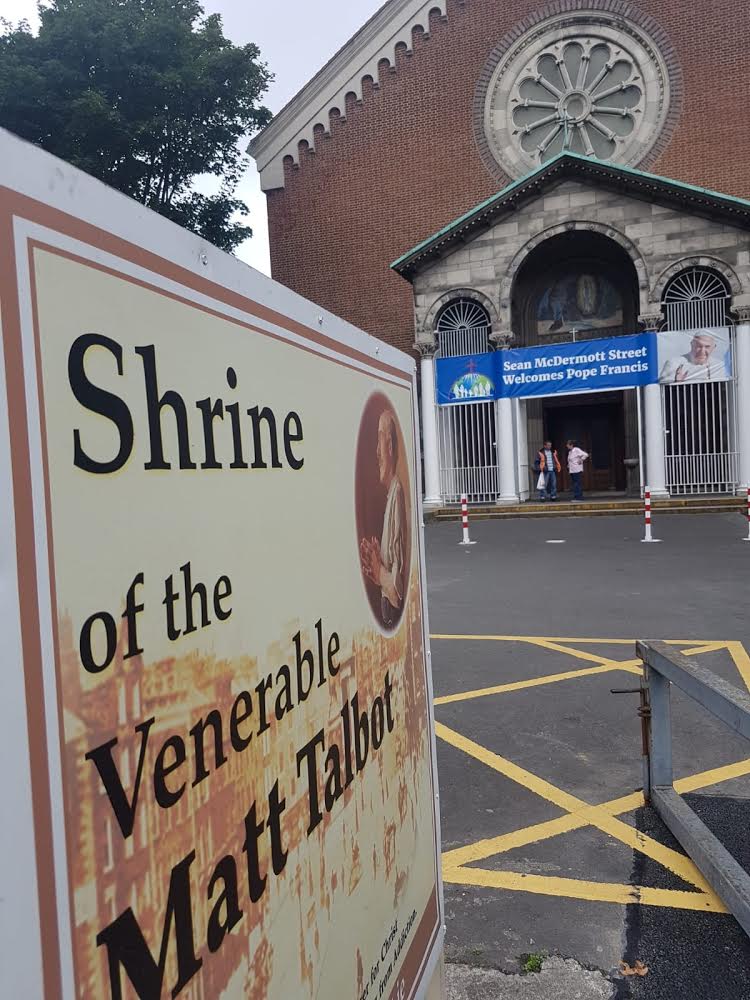
25.08.2018 ZENIT
 

Dublin’s Sean McDermott Street is the address where one finds the Parish of our Lady of Lourdes. It is not a popular district for tourists, so here there are no bars recommended by guidebooks where one goes to drink a Guinness, or a precious local whiskey. But for those who have the habit of raising their elbow a little too much, perhaps it would be a good idea to come here.

Even the Venerable Matt Talbot, buried here, was an alcoholic. Now there is a process of beatification going on for him, and soon, who knows? He very well may be proclaimed “saint.” 

Nevertheless he may already be considered a patron of men and women struggling with alcoholism. He was born in Dublin in 1856, second of twelve children. Alcoholism then was a scourge in Ireland among poor families like the Talbot's. And working as early as 12 years before bottling beer, then downloading whiskey in the port, certainly did not help him. At 27, impoverished and brutalized by vice, he vowed not to drink for three months. Since then he no longer touched on alcohol for the rest of his life, dedicated to prayer, to charity, in the third Franciscan order, and to social commitment as the founder of the Christian Workers’ Movement.
 
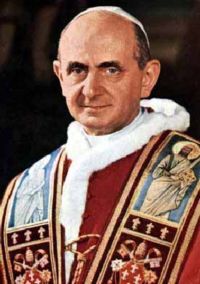
In 1972 his remains were removed from a tomb in Our Lady of Lourdes Church in Sean McDermott Street, Dublin, in the area where Matt spent his life. In 3 October 1975 Pope Paul VI declared him “venerable”, with a decree on his “heroic virtues”. Now the news is that Pope Francis, arriving in Dublin on Saturday 25 August, will stop here to venerate at least the chain found under the clothes of Talbot when he suddenly died of a heart attack, at 69, on his way to Mass on Trinity Sunday, 7 June 1925. The chain was a sign of devotion and penance.

While the Pope’s pause was to be brief and only outside the Church, organizers warned, the Pope decided to quickly enter and pray before the relics anyway. Pope John Paul II was supposed to stop over during his 1979 visit, but he ran out of time. Here is our conversation with Salesian Parish Priest, Father Michael Casey:
***
How well known is the place where we find ourselves now, the Shrine of Matt Talbot?

It is really well-known in the [United] States, England, and in some parts of Australia. Saint John Paul II had great devotion to the venerable Matt Talbot, and he wrote a little booklet on the life of Matt Talbot and he had great hopes that he would be able to canonize him.

Also Pope Paul VI, when he was a cardinal, he came to Dublin and he visited the grave of Matt Talbot. He was actually the Pope who made him venerable.

At that time, alcohol was the drug of “choice” of Matt. And that has been part of our history. Some have taken to alcohol to deal with life’s challenges and deal with life’s pain. It still is a challenge for us, our Irish society, but unfortunately there is not only alcohol; there are many other drugs on the market at the choice of many people.

So addiction is certainly a symptom of a deeper yearning and hunger, not only for spirits. And that is why the life of Matt Talbot gives us a lot of encouragement and hope tor people. His life teaches us that when we have a hunger and a thirst, we need to understand what we are really searching for, what can satisfy it.  And that is not alcohol or drugs. And Matt’s thirst was for the Living God.

Is faith enough to overcome addictions like alcoholism?

I think in fairness to Irish society and the government, I think they are trying to implement different laws to curb excesses of alcohol and help to have a different attitude towards it. We often say that we don’t see people drunk or overly intoxicated in other European countries, whereas here in Ireland we tend to binge drink, that has destructive effects on families and relationships.

So it is a problem, an issue that we are very aware that in Irish society. But it is a challenge, an open battle, an education, targeting young people, to help them to make more positive choices.

What do you do to promote the knowledge and the devotion to the Venerable Matt Talbot? Are there any special activities?

Our team here, we are the custodian of this church where his relics are. We are here mainly here  mainly to welcome people, pilgrimages, give talks, promote through the web site, and so on.
One of the priest, Father Brian Lawless, is the Vice-Postulator. He, at a national level and the international level, is trying to promote the cause in different ways.

What is the significance of Pope Francis’ visiting here?

A visit here wasn’t part of the original plan, but I think the Archbishop of Dublin Martin, and Pope Francis himself feel very much at home in this community, for it is one that has had its struggles, its own challenges, and has people of great faith. So I think they feel very much at home here. I think it has been a very symbolic gesture of him putting his feet on this sacred soil that is our home. It is something very special for us. We feel blessed by his presence and encouraged.

According to the program, the Pope was supposed to remain outside the Church, but given that Francis usually does not follow programs, were you happy that he came in to pray before the relics?

We know, Pope Francis often surprises people. It was wonderful he decided to enter! Aware his time was very very tight, we were planning to bring the relics of Matt Talbot to him, to show him. They are very special relics: one is the chain that Matt Talbot used as part of a devotion to Mary. It became important because when he died and when he went to the hospital, the nurses saw the chain and they wondered who this man was. The other was the lovely cross which Matt used in his room. His room for him was a kind of monastic cell. Therefore, we were glad Pope Francis saw these, and that he found the wings to come and pray here!

Saturday, April 8, 2017

The Beatification of Fr John Sullivan SJ, 13 May 2017, in Dublin

Tuesday, June 7, 2016

Miracles for Canonization and the Example of Venerable Matt Talbot*


Why Miracles Should Remain a Requirement for Canonization  

COMMENTARY: Canonization and beatification aren't equivalent to induction into a hall of fame. The Church cannot risk raising up someone for veneration without definitive proof.

by Brian O’Neel
June 7, 2016
http://www.ncregister.com/daily-news/why-miracles-should-remain-a-requirement-for-canonization


Recently, I got into a vigorous debate with a good friend who is also a good Catholic.

He longs for the eventual canonization of the Irish alcoholic Venerable Matt Talbot (d. 1925). He says the Holy Father should just go ahead and declare him a saint, although Talbot’s intercession hasn’t produced a miracle.

His argument is that, in the Year of Mercy, Pope Francis should show mercy to the ever-growing legion of those addicted by drugs or alcohol by canonizing the former drunk from Dublin. Doing this, he argues, would show addicts the Church understands that their affliction isn’t a weakness, but a true sickness, and she offers them both the temporal and spiritual compassion they need to beat their disease.

As a semi-professional hagiographer who has studied Talbot’s life, I agree he certainly deserves the title of “Venerable,” meaning he led “a life of heroic virtue.” That doesn’t ipso facto make him a saint, however.

I wanted to make the same argument to a nun with whom I recently spoke. Her order’s foundress is up for beatification. When I asked this sister why this “Servant of God” deserves our consideration as an example for us to emulate, she replied in an incredulous, almost-offended voice: “Why, she founded an order.”

No doubt, this spiritual mother was a very good and holy woman. Her body was even found incorrupt. But that doesn’t necessarily make her a saint.

To know whether someone is in heaven, we need a miracle. All any of us — you, I, the consultors for the Vatican’s saint-making office (the Congregation for the Causes of Saints) —  can see is the surface of a person. We don’t know what lies inside the hidden corners of a soul. Only God does.

To wit, one book on hell tells the story of a male religious who everyone agreed lived a remarkably holy life. Thus, when he died, his brothers naturally assumed he went to heaven. So imagine their surprise when his apparition appeared a short time later, telling them he was in everlasting fire. The reason? He died with an unconfessed mortal sin.

How many of us have committed a mortal sin and hesitated to confess it out of fear or shame?

But even if a Servant of God or Venerable died in a state of grace, is it not at all likely they are in purgatory and not before the Beatific Vision? The Fatima visionary Francisco Marto — Blessed Francisco, mind you — was counseled he would need to say many Rosaries to avoid purgatory. Our Lady told the children a deceased girl they knew would “be in purgatory until the end of the world.”

One might reasonably ask what anyone so young could have done to merit such a long time in purgatory. But if we know our Catholic faith, then we understand we spend time in purgatory not as a punishment, per se, but to cleanse the temporal effects of sin from our souls.

With someone such as Matt Talbot, is it not conceivable that he is in purgatory? After all, he started excessively drinking at age 12. He didn’t quit drinking until age 28. Let’s be conservative and say he was drunk every day for 15 years. (We know he usually was inebriated, because the day he gave up drinking his mother was surprised to see him sober.) That is 5,475 days of drunkenness. At least once, he stole to get money for drinking. Who knows what other damaging acts to the soul he committed. That is a huge number of mortal sins. (Note: As St. Thomas points out in the Summa, Q. 150, intoxication isn’t always a capital sin.) Yes, our God is perfectly merciful — but he is also perfectly just.

And for reasons we’ll discuss, we need a definitive sign from God before we go declaring his justice satisfied.

It wasn’t always so. For several hundred years, local bishops or communities were allowed to proclaim someone a saint or blessed. This led to “Blessed Charlemagne,” who had eight to 10 known wives and concubines, and of his 20 children, nine were illegitimate. He also had 4,500 Saxons massacred in a single day and said any survivors who refused to receive baptism would likewise die. The Swedes once revered as a saint a man who was killed while drunk.

This is why the Holy See began reserving the canonization process to itself, permanently doing so in 1170 under Alexander III. Since then, popes such as Sixtus V, Urban VIII, Benedict XIV and St. John Paul II have revised the saint-making procedure. But always, miracles have been required.

So why require a miracle as part of the process? As professor Heidi Schlumpf wrote on the process: “Miracles confirm ‘the Church’s judgment regarding the virtue or martyrdom of the Servant of God.’”

God can make this confirmation at any moment. Considering the average length of a beatification (118 years from death to ceremony) and canonization process (an average 49 additional years), Mother Teresa of Calcutta and John Paul II were approved for sainthood amazingly quick.

If God wanted to demonstrate that Talbot or, say, Jesuit Father Walter Ciszek, a Servant of God, was in heaven at this moment, what would stop him from doing so?

Ultimately, the desire to scrap the miracle “litmus test” is an impatience to see our “saint” raised to the altars. There may be purely altruistic reasons behind this, but the spirit is still the same. But if we get rid of the miracle requirement, then why have a process at all?

Why, indeed. Canonization and beatification aren’t equivalent to induction into a hall of fame. As Jesuit Father J.R. MacMahon wrote: “When the Pope utters the solemn words defining the new saint, he is relying, not merely on human industry or prudence or wisdom, but on the special assistance of the Holy Ghost, and [pay attention here] his definition is infallible.”

Therefore, the Church cannot risk raising up someone for such veneration without definitive proof. The faithful aren’t even supposed to directly pray to a Servant of God or Venerable for their intercession. Instead, we’re supposed to ask God for those prayers. To see that, all one has to do is look at the back of a prayer card for any person who hasn’t yet received beatification. Then compare it to one from a person who has been beatified or canonized. Notice the difference?

Let us be patient. Let us wait on God to do the work that will show forth his glory as he wills it, and not as we do. And let us pray for the souls of those we consider saints but who may actually be in purgatory.

*NOTE:  We created a different title for posting purposes.

Since this article's content is likely to elicited varied reactions, we recommend reading the comment section at its publication link. The content may also stimulate additional articles as well as content for inclusion in presentations and homilies.


Sunday, May 22, 2016

Remembering Venerable Matt Talbot Today on Trinity Sunday

It was on Trinity Sunday, 7 June 1925, that Matt Talbot collapsed and died of heart failure while walking in Granby Lane to a Mass in St.Savior's Church on Dominic Street, Dublin.
 
In his article posted earlier today at http://scottdodge.blogspot.com/2016/05/remembering-venerable-matt-talbot-on.html,
Deacon Scott reminds us to join him “in praying that Papa Begoglio, who will visit Ireland in 2018, in his paternal tenderness, will make Matt Blessed. His intercession works miracles all the time."

Monday, June 29, 2015

Enhancing Awareness of Venerable Matt Talbot in Lithuania

 
Our friend, Grzegorz Jakielski, is particularly passionate about spreading awareness of Venerable Matt Talbot not just in Poland but throughout the world.
 
Last week he went on a three-day journey to Lithuania where he visited and photographed many Lithuanian churches and left holy cards of Matt Talbot with the prayer for his beatification in each.
 

Thursday, January 1, 2015

More media coverage on Matt Talbot's road to sainthood

This is the latest article about a possible physical miracle attributed to the intersession of Matt Talbot. Previous articles can be found at


The Church is investigating a potential miracle that could see Matt Talbot on the road to sainthood. The Dubliner, who died in 1925, was renowned for his holiness and having overcome a crippling alcohol addiction, has been a heroic inspiration to many people in Ireland and abroad battling addiction.

The report of a possible miracle in the United States, if verified by the Vatican, would mean that Matt Talbot would be declared ‘Blessed’ by Pope Francis, a major step on the road to sainthood.

“There is a lot of positivity around the whole story and please God it will happen,” Fr Brian Lawless, the man charged with leading the cause for canonisation, told The Irish Catholic.

Fr Lawless has travelled to the United States in his role as vice-postulator of the cause of Matt Talbot to interview Patrick and Shannon Watkins who attribute the safe delivery of their sixth child, Talbot Joseph, to the intercession of Matt Talbot.

His parents didn’t have a devotion to Matt Talbot, but all their children have Irish names and when they drove past the Matt Talbot Kitchen and Outreach on a trip to Nebraska the name appealed to them.

When Sharon was a couple of days overdue in her pregnancy tests indicated what medics described as “chromosomal abnormalities”, loops in the bowels and doctors suspected Down syndrome or cystic fibrosis.

Sharon’s sister immediately mobilised a prayer chain and since the child would be named Talbot she asked everyone to pray for Matt Talbot’s intercession.

Three days later, baby Talbot was born with no bowel loops, no Down syndrome or any evidence of health problems. Doctors described the outcome as “medically inexplicable”.

Now, the Church will appoint a panel of medical experts to review the case and if the inquiry finds that the cure was, in fact, medically inexplicable, the case will be forwarded to the Vatican’s Congregation for the Causes of Saints.

Inquiries

“We have a good feeling about it,” said Fr Lawless. “Hopefully, in the near future, we will have word about the outcome of these inquiries.

“Matt Talbot is very highly regarded, particularly in the US. With all the difficulties and problems people are facing as result of addictions, now is the time that people need a patron and Matt is the obvious choice,” Fr Lawless said.

Fr Richard Ebejer, parish priest of Our Lady of Lourdes Church in Dublin’s north inner-city, which hosts the mortal remains of Matt Talbot, said it would be wonderful for his cause to move forward this year during his 90th anniversary.

The parish is holding a number of events to celebrate his legacy, including the opening of an exhibition this month at the entrance of the church illustrating his life.

“When someone reaches bottom he offers hope,” Fr Ebejer told The Irish Catholic.

“We want to present Matt Talbot as a role model to young people. Many think of him as an old man but his conversion was at 28. He can speak to today’s young people,” Fr Ebejer said.

Matt Talbot was born in a socially deprived area of Dublin in 1856 and, like many people at the time, he turned to alcohol at an early age.

He was considered a “hopeless alcoholic” by the age of 13. However, at the age of 28 he renounced alcohol and found strength in prayer. He soon became renowned for his piety, works of charity and mortification of the flesh.

In 1931, the Archdiocese of Dublin began investigating whether or not Matt Talbot should be considered for sainthood. His case was forwarded to the Vatican in 1947 and in 1972 his remains were removed from Glasnevin Cemetery and brought to the Church of Our Lady of Lourdes on Sean McDermott Street.

Three years later, Pope Paul VI recognised his ‘heroic virtue’ and declared him ‘Venerable’ an important step in the process to becoming a saint.

Monday, October 20, 2014

Blessed Paul VI and Venerable Matt Talbot


2014 has been an eventful year for Popes who knew of Matt Talbot.  Earlier this year Pope John Paul II and Pope John XXIII were both declared saints.
And yesterday, 19 October 2014, Pope Francis beatified Pope Paul VI (1897-1978), the pope who declared Matt Talbot as “Venerable” on 3rd October 1975, fifty years after Matt’s death.

In a 1974 address in Rome to Calix Society members on the occasion of their twenty-fifth anniversary, the now “Blessed Paul VI” stated: “You have chosen to look upon Matt Talbot as an admirable exemplar of discipline and supernatural virtue. It is our hope that his success will encourage countless men and women throughout the world to realize the need for conversion, the possibility of real rehabilitation, the serenity of Christian reconciliation, and the peace and joy of helping others to overcome abuses, disorders and sin.” (http://venerablematttalbotresourcecenter.blogspot.com/2008/03/pope-paul-vi-calix-society-and-matt.html)

Friday, October 10, 2014

A physical miracle involving Venerable Matt Talbot?

Thousands of moral miracles have been reported by recovering alcoholics through the intersession of Venerable Matt Talbot. But for beatification, a Vatican confirmed physical miracle is required, which has not occurred yet.

But one is possibly on the horizon...one that does not involve an addiction nor an adult laborer.

One-year-old Talbot Joseph Watkins wasn’t supposed to be a healthy little boy. In fact, all medical evidence prior to his birth pointed to something seriously wrong. But a possible miracle changed the boy’s fate, which may lead to Matt’s beatification.

This extraordinary story, “The Making of a Miracle,” by Joe Bollig and published in The Leaven (Catholic Newspaper) on September 26, 2014, can be read at

An expanded article on page 5 at  http://www.theleaven.com/past_issues/_pdf/v36/Leaven%2009-26-14.pdf includes a brief biography of Matt Talbot, prayer for his canonization, and an interview with Fr. Brian Lawless, the Vice-Postulator, who visited with the Overland Park, Kansas family in August 2014.

Saturday, May 10, 2014

A Call for Canonisation of Venerable Matt Talbot


May 8, 2014
 
Cathal Barry, a columnist for The Irish Catholic, published the following article titled , “Lobby Pope for Matt Talbot Sainthood--Call,” at http://www.irishcatholic.ie/article/lobby-pope-matt-talbot-sainthood-%E2%80%93-callon  on May 8, 2014.  It is based on an interview with Fr. Brian Lawless, Vice Postulator for the Cause of Canonisation of Matt Talbot, who urges Irish Church leaders to lobby Pope Francis for this canonisation. 
 
Although not explicitly stated in this article,  “Friends of Venerable Matt Talbot” worldwide are also invited to urge their church leaders to do the same.
gleplus0  New
Irish Church leaders are being urged to lobby Pope Francis for the canonisation of the saintly Dubliner Matt Talbot.
The Dublin-based priest responsible for Matt Talbot’s cause for sainthood made an impassioned appeal to the hierarchy ahead of the 89th anniversary of the well-known Dubliner’s death next month.
Speaking to The Irish Catholic, Fr Brain Lawless, Vice Postulator for the Cause of Canonisation of Venerable Matt Talbot insisted the bishops “should be pushing for Matt Talbot to be canonised”.
“Matt was a poor working man from Dublin. He wasn’t a member of a religious order and he doesn’t have the big machinery behind him that the Franciscans or the Jesuits have to get their saints through. That’s why his cause is so important and needs support,” he pleaded.
“Part of his charm and endearment is that Matt is just like one of us. But that also goes against him to a certain extent. That’s why I’m batting for Matt. He’s one of the little guys,” he said.
The Informative Process for the Beatification of Matt Talbot (illustrated) was opened in 1931 by the then Archbishop of Dublin, Edward J Byrne. The Church subsequently recognised Talbot as ‘Servant of God’ and on October 3, 1975, he was declared ‘Venerable’ by Pope Paul VI.
Fr Lawless, who is responsible for eliciting a miracle that could lead to the beatification and eventual canonisation of Matt Talbot, claims a “physical miracle” is needed now for his cause to progress to the next stage.
“We need a miracle now that is not explainable by science, which is more or less instantaneous, and one that would verify that Matt enjoys the same devotion and regard in Heaven as he does here on Earth.”
“There is still every chance that Matt Talbot could be made a saint in our life time. It’s just a matter of building up interest and momentum,” he said.
- See more at: http://www.irishcatholic.ie/article/lobby-pope-matt-talbot-sainthood-%E2%80%93-call#sthash.efTQIcI9.dpuf

Lobby Pope for Matt Talbot sainthood

“Irish Church leaders are being urged to lobby Pope Francis for the canonisation of the saintly Dubliner Matt Talbot.

The Dublin-based priest responsible for Matt Talbot’s cause for sainthood made an impassioned appeal to the hierarchy ahead of the 89th anniversary of the well-known Dubliner’s death next month.

Speaking to The Irish Catholic, Fr Brain Lawless, Vice Postulator for the Cause of Canonisation of Venerable Matt Talbot insisted the bishops “should be pushing for Matt Talbot to be canonised”.

“Matt was a poor working man from Dublin. He wasn’t a member of a religious order and he doesn’t have the big machinery behind him that the Franciscans or the Jesuits have to get their saints through. That’s why his cause is so important and needs support,” he pleaded.
“Part of his charm and endearment is that Matt is just like one of us. But that also goes against him to a certain extent. That’s why I’m batting for Matt. He’s one of the little guys,” he said.

The Informative Process for the Beatification of Matt Talbot (illustrated) was opened in 1931 by the then Archbishop of Dublin, Edward J Byrne. The Church subsequently recognised Talbot as ‘Servant of God’ and on October 3, 1975, he was declared ‘Venerable’ by Pope Paul VI.

Fr Lawless, who is responsible for eliciting a miracle that could lead to the beatification and eventual canonisation of Matt Talbot, claims a “physical miracle” is needed now for his cause to progress to the next stage.

“We need a miracle now that is not explainable by science, which is more or less instantaneous, and one that would verify that Matt enjoys the same devotion and regard in Heaven as he does here on Earth.”

“There is still every chance that Matt Talbot could be made a saint in our life time. It’s just a matter of building up interest and momentum,” he said.”


Note:  The same day Mr. Barry also published a very informative and timely article titled, “Matt Talbot - Urban ascetic,” at http://www.irishcatholic.ie/article/lobby-pope-matt-talbot-sainthood-%E2%80%93-call. The section subtitled “The ultimate layman” contains information that relates to the content of the above article.

Sunday, August 11, 2013

Historical Development of Matt Talbot's Cause


The interesting website at http://newsaints.faithweb.com/about_us.htm is the result of years of research and collaboration between the members of the Hagiography Circle with the Congregation of the Causes of Saints and the petitioners of beatification and canonization causes from the time of the French Revolution (1789) to today, including up-to-date news at http://newsaints.faithweb.com/index.htm.


Below is the listing for Venerable Matthew Talbot (http://newsaints.faithweb.com/year/1925.htm). The definition of each entry is available at http://newsaints.faithweb.com/databases.htm:


07 June in Dublin (Ireland)    

MATTHEW (MATT) TALBOT                                                                                       
 layperson of the archdiocese of Dublin;                               
  member, Secular Franciscans                                                 
born: 02 May 1856 in Dublin (Ireland) The                     
                
diocese of competent bishop: Dublin                                   
CCS protocol number: 101                                                    
type of cause: heroic virtues                                                    
       
opening of informative process: 06 November 1931           
closing of informative process: 1934
decree on writings: 27 November 1937
 introduction of cause: 28 February 1947
 decree “non-cultu”: 04 April 1948
 opening of apostolic process: 1948
 closing of apostolic process: 1953
 decree on validity of informative and apostolic processes: 19 February
   1963
 commission of CCS officials and consultants: 25 March 1975
 session of cardinal and bishop members of the CCS: 13 May 1975
 promulgation of decree on heroic virtues: 03 October 1975
       
 postulator: Mons. Liam Bergin
 petitioner: Archdiocese of Dublin, Drumcondra, Dublin 9 IRELAND
 website: www.matttalbot.ie


Sunday, December 30, 2012

The "Hoped-For" Beatification That Didn't Happen

[One of the holy people that Pope John Paul II wanted to beatify during his pontificate was Matt Talbot; he thought that Matt’s example could be very valuable for those who are addicted to alcohol and drugs (http://venerablematttalbotresourcecenter.blogspot.com/2008/02/popw-john-paul-ii-wanted-to-beatify.html).

Although Pope John Paul II had visited Ireland in 1979 (http://www.rte.ie/archives/exhibitions/681-history-of-rte/705-rte-1970s/289832-papal-visit-to-ireland/?page=3), information released just this past week indicates that he was considering returning to Ireland in 1981.]

Pope John Paul II 'was considering returning for a second visit to Ireland'
By Ed Carty
Friday December 28 2012

Pope John Paul II’s "unpredictable" nature could have seen him make a return papal visit in 1981 for the beatification of Matt Talbot, state papers have revealed.

John Magee, the former bishop of Cloyne and an aide to three popes, confided in an Irish diplomat that there was a possibility the pontiff would make the extraordinary move.

In a letter to the Department of Foreign Affairs at Iveagh House, embassy officer Frank Coffey relayed the thinking in the Vatican in March 1981.

"Fr Magee thinks it is not inconceivable that if and when Matt Talbot is beatified, the Holy Father may decide to have the ceremony in Dublin," he wrote.

On a separate letter he said that such a beatification could be linked to the 90th anniversary of the 1891 Rerum Novarum, an open letter from Pope Leo XIII addressing the condition of the working classes.

"Pope John Paul has also thought that the beatification of Matt Talbot would be a particularly apposite way to mark the anniversary," he wrote.

"However, it does not appear that Matt Talbot's cause has advanced sufficiently for this to be done.

"Nonetheless, bearing in mind the present Pontiff's 'unpredictability' we cannot rule out his taking some extraordinary measures to permit beatification this year."

Talbot, known as Venerable Matt Talbot, pledged sobriety aged 28 and a life of prayer, fasting and service, never taking credit and trying to model himself on the sixth-century Irish monks.

He was a member of the Transport and General Workers Union and worked in a lumber yard in Dublin docks.

Talbot is in the second stage of becoming a saint being known as Venerable. His beatification is still pending.

The detail was contained in files on plans for the Pope's visit to Ireland under the code 2012/58/3.

Friday, December 7, 2012

Interview about the Beatification of Matt Talbot


Father Brian Lawless talked with Joe Duffy of “Lifeline” at RTE Radio 1 in Ireland on October 03, 2012 “about the cause of Matt Talbot, the Dubliner who is regarded as a patron of those suffering with addiction. Brian is the vice postulator of the cause of Matt Talbot's beatification and spoke about the man's life and experiences and how he has become an inspiration for those in recovery from addictions.” [Programme description]
 

Saturday, August 18, 2012

The inspiration of two lives


Knock 2012 – Homily
Notes for a sermon preached by Fr Bernard J. McGuckian S.J. at Knock Shrine on the occasion of the joint Pioneer/Matt Talbot Pilgrimage on Sunday, July 15th, at http://www.pioneerassociation.ie/index.php/media-centre/370-knock2012homily


After God and the Blessed Virgin Mary the inspiration for our pilgrimage today comes from two men, one a priest, the other a layman. Both of them died in the early days of the new Irish State; Fr. James Aloysius Cullen and the Venerable Matt Talbot. Fr Cullen, the Founder of the Pioneer Association, died in Dublin on December 6th, 1921, just as the newspapers were reporting the fateful signing of the Anglo-Irish Treaty in London some hours earlier. Venerable Matt Talbot also died in Dublin, some four years later in Granby Lane, on Trinity Sunday, June 6th, 1925 just as the Angelus Bell was ringing out in the nearby Dominican Church where he was planning to attend the mid-day Mass.


The early lives of these two men could not have been more different. James Cullen was a pious, studious, country boy from childhood in Co Wexford. He was such a good student that he had completed his studies with distinction while still too young for priestly Ordination and required a dispensation. Matt Talbot’s early life was spent in the squalor of Dublin’s inner city where he had so little schooling that his name hardly made it to the roll book. The most that was said of him in the records was that he was a “mitcher”. As the whole world now knows, he was barely into his teens when he had developed a deplorable habit of excessive drinking.


Fr Cullen was well known throughout Ireland for his priestly zeal for over half a century before he died. Matt’s situation was different. His name was virtually unknown outside his family and beyond the circle of his workmates. It only came into prominence on the day he died. A notice in the Irish Independent on the day after his death read. “Unknown man dies in the street”. It was because each of these men took the Gospel of Christ so seriously that we still remember them.


Like the Apostles we heard about in the Gospel, Fr Cullen, from the day of his ordination in 1864 “set out to preach repentance, cast out devils and anoint many sick people with oil and cure them”. Matt did not set out to preach repentance or cast out devils. He had enough to do to change his own life and drive the demons from his own heart. But in the providence of God this is what he has been doing from his place in heaven since the day he died. The example of his conversion from excessive drinking has inspired a change of heart in thousands of others all over the world. Jesus once said that “some demons can only be cast out by prayer and fasting”. From what we can gather few people have spent so much of their lives in such fervent prayer and rigorous fasting as Matt Talbot. After a careful examination of the known facts of his life competent Church authorities concluded that this working man from the inner city of Dublin lived out the theological virtues of faith, hope and charity and the essential human virtues of prudence, justice, fortitude and temperance to a heroic degree. This is why he is called Venerable.


When we talk about the wasted early years of Matt’s life we should remember that there were positive aspects to it that should not be overlooked. He always attended Mass on Sundays. He was devoted to the Blessed Virgin. No matter how inebriated he was he said his prayers at night. His sisters noticed that he never indulged in salacious talk and never said anything disrespectful about women. There is no evidence of failures in chastity in his life. This is important in any discussion of the cardinal virtue of temperance. Temperance is the virtue that helps us deal wisely, not just with intoxicating drink, but with all the pleasurable areas of life. We need fortitude or courage to deal effectively with life’s inevitable painful areas.


While some might find it strange that we need a virtue to help us deal wisely with the pleasurable areas of life we should remember that many people have more difficulty dealing wisely with pleasure than with pain. I have rarely heard of a family that broke up because a member was suffering from a painful illness. In fact, if anything, the very illness can help a family to come together in support of the suffering member. It is different if a family member is not sufficiently temperate to resist the pleasurable attraction of an illicit relationship. Deficiencies like this can have devastating consequences.


In the Christian tradition there are four main parts of temperance; modesty and becoming behaviour in our dealings with others; abstinence and restraint in the use of food; thirdly, sobriety and care in the use of drink but most important of all and often overlooked as a dimension of temperance, chastity in the area of sexuality. Modest behaviour, abstinence and sobriety have an importance role to play in protecting chastity. It is a mistake to think that “sins of intemperance “are simply those committed while under the influence of drink. Serious sins against the virtue of temperance can be committed when cold sober. Infidelity can have more drastic consequences than excessive drinking.


Matt Talbot provides us with an example of the fullness of temperance. After his dramatic conversion Matt handed his whole life over to God and allowed himself to be guided by the Holy Spirit and wise spiritual directors. For the rest of his life he was modest in his demands from others and in his overall live style (he gave whatever money he saved away). He ate very little, abstained totally from drink and opted for a celibate life. He dealt very respectfully with a young woman who suggested that they might get married. He told her that he would discuss the matter with Our Lady and then give her his answer. In this way he learned that marriage was not his calling. Mary Purcell, Matt’s biographer, noted that it was to this girl’s credit that she recognised the best man in Ireland when she saw him do his work as a builder’s labourer.


Because of the situation in Ireland at the turn of the 20th century the aspect of temperance that most needed urgent attention was insobriety. Dealing with this is still the primary concern of the Pioneer Association. In founding the Association, Fr Cullen was launching a campaign of “prayer and fasting” on behalf of those who were suffering the effects of addiction to alcohol. Matt Talbot joined Fr Cullen’s movement in 1890 when it was known as the Temperance League of the Sacred Heart. Some years later, Fr. Cullen who was always trying to improve his methods of working, gave the movement the title “Pioneer” which it has now enjoyed for the last 114 years and which is set to continue long into the future. At the Eucharistic Congress last month in Dublin the positive reaction of the many visitors from all over the world to both the Pioneer and the Matt Talbot Stands in the Royal Dublin Society was a source of great encouragement to all involved in this work.


In the Pioneer Association we can be justly proud that the sanctity of the life of more than one of our members has been recognised by the highest authority in the Church. Matt Talbot and Edel Quinn are both Venerable. Fr John Sullivan and Frank Duff are Servants of God. We pray that one day all four will be raised to the honours of the altar. The miracle which will bring this about in the case of each of them will be the occasion not the cause of their beatification. The real cause will be the indubitable holiness of their lives and the continuous prayers of those of us who are convinced of their holiness. In the case of Matt Talbot, the on-going miracle of so many transformed lives will sooner or later lead to his beatification. The beatification will come when the medical profession agrees that something spectacular and outside their experience has taken place. However, in my estimation, this will be something minor compared with the miracles that Matt continues to work and has been quietly working for years.


I leave you with one down to earth reflection found among his notes after his death. “When in company, watch your words; when in the family, watch your temper; when alone, watch your thoughts.”


Note: Fr. Fr Bernard J. McGuckian serves as Central Spiritual Director of the Pioneer Association and as a member of the DUBLIN DIOCESAN MATT TALBOT COMMITTEE.
Some of his articles about Matt Talbot are posted on our site. The homily title, The inspiration of two lives, is ours for posting purposes.

Sunday, February 19, 2012

A Reference to Being "Venerable"

In Bill Donahue’s, The Secret World of Saints: Inside the Catholic Church and the Mysterious Process of Anointing the Hold Dead (2011), Byliner Inc: Kindle Edition http://www.amazon.com/gp/product/B006P2X86U, he briefly describes the procedures of the Church’s saint-making process in Chapter 6. Donahue notes that “Venerable is a pretty high rank—akin to, say, four-star general or eighth-degree black belt. Very few servants [those declared “Servants of God”] get there, and when they do, the Vatican allows them some perks: You can build a church in a venerable person’s honor. You can put his image on prayer cards and build little shrines. Catholics pray to the venerable—and often allot them small plots of holy turf. For instance, the Venerable Matt Talbot, an Irish dockworker and drunkard who went on the wagon to live his final forty-one years as an ascetic, is the patron saint of alcoholics.”

Whereas Venerable Matt Talbot’s patronage is already established in the eyes of many, Donahue states in a footnote that "saints are never chosen on the basis of their patronage potential. Rather, they’re picked for their virtues and for their miracles—and then, over time, they accrue patronages...”

Monday, February 13, 2012

A note on Blessed Columba Marmion and Venerable Matt Talbot

January 30, 2012


“...Blessed Columba Marmion may very well be the greatest gift in modern times of the Church in Ireland to the Church universal. Catholic Ireland needs the affirmation, the consolation, the joy, and the holy pride that will come from the beatification and canonization of those sons and daughters of hers who illumined modern times with the radiance of the Face of Christ shining through them. I could mention, among others, Father Willie Doyle, Frank Duff, Edel Quinn, Matt Talbot, Father John Sullivan, and Little Nellie Organ but, of all of these, Blessed Columba Marmion is the one whose Christ-centred life and teaching, like a lamp on a lampstand, shone most brightly in the Church of the 20th century, and in souls....”

Saturday, June 11, 2011

The Alcoholic Who Became a Saint

Venerable Matt Talbot


Nothing ever happened to Matt Talbot, an ordinary Irish laborer of no great learning, no riches, no remarkable accomplishments.


He lived in poverty and died, alone and unrecognized on a cold cobblestone lane, in Dublin. He left no family, no followers, no written discourses.


Scarcely anyone knew a thing about him. Yet within six months of his death, a brief biography sold 120,000 copies. Within a year, it had been published in twelve languages. Five years after that, the Catholic Church began investigating Matt Talbot’s life to determine if he warranted consideration for sainthood. A short fifty years after his death, the Church bestowed on him the title, “Venerable,” finding him fit to be commended as a “hero” whose virtues are worthy to be imitated.


No, nothing ever happened to Matt Talbot, but as one biographer noted, “he happened to those about him, as light happens to a dark room.”


Living to Drink. Darkness abounded during Matt’s lifetime. Ireland’s great famine of the 1840s had driven many countryfolk into the city, seeking food and employment. England had garrisoned troops in Dublin, and shortly after Matt was born in 1856, soldiers began returning from the Crimean War. The city teemed with people who were out of work, out of money, and out of hope.


Matt was the second of twelve children born to Charles and Elizabeth Talbot. The family lived on the verge of poverty, for although Charles Talbot worked regularly, he spent most of his wages at the local pub. Eventually Matt and seven of his brothers followed in Charles’ footsteps, drinking their way through life.


After spending just one year in school, Matt went to work at the age of twelve. He started as a messenger for a wine merchant and soon began sampling the products. Before long, he was living to drink. Neither thrashings from his father nor a change of jobs—he became an unskilled laborer for a bricklayer—deterred Matt. Over the next sixteen years, he spent nearly all of his earnings on alcohol.


By nature generous, Matt sometimes paid for his friends’ drinks when they had no money. When he had none, he pawned or sold what he could—right down to his own shoes once—so that he could continue drinking. Thus one Saturday, when twenty-eight-year-old Matt had been out of work for a week, he stood outside his neighborhood pub, broke but optimistic. Surely one of his friends would buy him a drink. Hadn’t he done so for them?


But curt nods and cold shoulders were all that Matt’s friends gave him. Eventually, he returned home, dejected and sober, and announced that he was taking “the pledge”—a euphemism for making a solemn promise not to drink. That evening he met with a priest, made his promise, and went to Confession for the first time in years. And from that day, the grace of God, which Matt hadn’t even thought to ask for yet, began manifesting its work in Matt.


“Don’t Let Me Go Back.” Now he faced an enormous dilemma. Matt had promised, for three months only, not to drink. His family drank. His friends drank. He spent his non-working hours drinking. How was he to avoid the alcohol his body craved, that his mind assured him he could never do without?


He took refuge in the only place his drinking buddies wouldn’t come looking for him: church. Matt began to attend Mass daily, before work, and to spend evenings kneeling in a shadowy corner of a neighborhood church —a neighborhood far from where he lived.


There, he made new friends—Jesus, Mary, and the saints—and cultivated new tastes—for solitude, prayer, and the presence of God. It didn’t come easily, and time and again Matt returned home convinced that he would never stick with sobriety. Back in church the next day, he’d beg God, “Please, don’t let me go back to my old ways. Have mercy on me.”


Years later, Matt told his sister that the first three months were the hardest, declaring that it’s easier to raise someone from the dead than to stop drinking. To help himself, Matt stuck two pins, crossed, in the sleeve of his coat, where he would see them often. They were to remind him to pray and to remind him that Jesus had suffered and died on the cross for him.


Matt was practical about adopting a new life. He established a schedule of Mass and prayer that left no time for visiting pubs. He never carried money in his pockets, lest he be tempted to stop in while walking to or from work. He joined the Franciscan Third Order and numerous sodalities. He spent Saturday afternoons and evenings, and all day Sunday, in church with his “new friends.”


Drunk with the Spirit. Gradually, a new thirst began to replace the old one: a thirst for more of God’s life and love. And God didn’t let him down. The love of Christ began to overwhelm Matt’s indulgence and intemperance. Matt wanted only to become like Christ, so he started fasting, sleeping less and praying more, and giving money to the missions and local poor families.


He read Scripture, lives of saints, and—considering his meager schooling—an astounding assortment of books: The Confessions of St. Augustine; writings of St. Francis de Sales, Teresa of Avila, and John Cardinal Newman; papal encyclicals, world history, and social policy. Word by word, he deciphered what they said. What he couldn’t understand, Matt laboriously copied onto a scrap of paper and handed it to a sometimes astonished priest for explanation the next time he went to Confession.


Prayer, reading, and atonement grew into a way of life that Matt managed to keep hidden. Meanwhile, those around him began to notice his humility, generosity, and self-control. His fellow laborers learned that Matt didn’t abide cursing or lewd stories, so they stopped. His employer suspected that Matt was giving away most of his earnings, but no one guessed the intensity with which he was living this new life. He was inebriated now by the Holy Spirit, “drunk,” as one writer put it, “only with the mercy and the wisdom and the power and the love of God.”


For the last two years of his life, Matt suffered from heart disease. Strict fasting, limited sleep, and hard physical labor had worn him out. On June 7, 1925, he collapsed on the way to Mass. No one recognized the frail little man who died in Granby Lane. He carried no money or identification, just a few odd scraps of paper in his pockets. Curiously, two pins, blackened with age, were pinned to his sleeve in a cross. Four days later, the body of Matt Talbot was identified. The books in his bare tenement room were discovered, along with many scraps of paper on which he had written. On one of those scraps was written the following prayer: “O Virgin, I ask only three things: the grace of God, the presence of God, and the benediction of God.” Among many others, this prayer was surely answered.


Matt Talbot believed God absolutely. He emptied his heart and life of all that encumbered him and waited for the Lord to fill him to overflowing. He remained sober for forty-one years and, in a quiet, unobtrusive way, shed light in the darkness around him. He stands now as a hero for all who struggle with addiction, and a model for all who desire, in the words of Pope Pius XII, “the greatness of Christianity lived in all its fullness.”


*Note: For those unfamiliar with Matt Talbot, he is not officially canonized as a “saint” by the Roman Catholic Church; he is currently recognized as “Venerable.” (See Beatification, Canonization, and Sainthood) The 76th anniversity of Matt’s death was Tuesday, June 7. The brief bibliography referred to in the above article was written by Sir Joseph Glynn and expanded in later editions. (See "The Life of Matt Talbot" by Sir Joseph Glynn )