The names of some Irish saints are very similar. Matt Talbot's favorite saint was St. Columban, also known as Columbanus, (543-615) and not to be confused with St. Columba (521-597). One site that provides information about these two saints is http://en.wikipedia.org/wiki/Columbanus

Venerable Matt Talbot Resource Center
The Venerable Matt Talbot Resource Center exists to compile writings about the life, times, conversion, and recovery from alcoholism of Matt Talbot (1856-1925) of Dublin, Ireland. Disclaimer: The placing of information on this site from external linked sources does not necessarily imply agreement with that information. This center is independent of any other center, group, organization, website, or Facebook page. Comments are welcome at: ven.matt.talbot.resource.center@gmail.com
Saturday, January 19, 2008
Matt Talbot's Connection with the Columban Fathers in China
"Matt Talbot's Connection with the Columbans"
"In the September-October issue we featured Mary
Gaffney’s article on the Venerable Matt Talbot, the Irishman who overcame
alcoholism through a life of extraordinary holiness. He had a special bond with
the Columbans, as this extract from The Mystery of Matt
Talbot by Father Morgan Costelloe shows. A priest of the
Archdiocese of Dublin, Fr Costelloe was for many years Vice-Postulator for the
cause of Matt Talbot and is now retired.
In 1918 a significant event took place that renewed Ireland’s interest in the foreign Missions. A number of priests founded the Maynooth Mission to China. Its official title was The Missionary Society of St Columban, which meant that it was dedicated to Matt Talbot’s favorite Irish saint. Matt was quick to recognize that it heralded a rekindling of the zeal of the Irish monks to leave all for the sake of Christ . . . Matt decided to contribute as much as he could to this Missionary Society . . .
After his illness in 1923 Matt was destitute. He could not work, so the local Conference of the St Vincent de Paul supplemented about P40 weekly sick benefit, which he received from his Trade Union. His donations to the Maynooth Mission to China stopped suddenly.
Unaware of the reason for this, the priest who usually received Matt’s contribution sent him Christmas greetings in 1924 and added that since he had not heard from him for some time, he hoped that he was not ill. Matt had some pennies saved, ‘for a special occasion’. They amounted to thirty shillings (editor’s note: roughly a week’s wage) and in the shaky hand of a sick man he wrote what has become a famous letter:
‘Matt Talbot have (sic) done no work for the past 18 months. I have been sick and given over by priest and doctor. I don’t think I will work any more. There (sic) one pound from me and ten shillings from my sister’.
His contribution was four times his weekly benefit. He had given everything away. The Columban Fathers, who had no idea that the writer would one day be a Servant of God, were so impressed by the letter that they placed it in a special file. Today the letter is in the Vatican Library."
Wednesday, January 16, 2008
Matt Talbot: Secular Franciscan
Many sketches and books about Matt Talbot note that
he became a Secular Franciscan after his conversion and alcoholism recovery
began. This article provides some information about the Secular Franciscan and
the names of other well-known or famous Secular Franciscans.
Secular Franciscan Q and A
This page was created by the St. Clare Fraternity for those seeking to follow Christ more closely by Living Gospel to Life and Life to Gospel. The Secular Franciscan Order was founded in the early thirteenth century but many Catholics are unaware this order even exists. If fact most Secular Franciscans in my fraternity agree the SFO (Secular Franciscan Order) is one of the best kept secrets in the world. I originally made a home page for our fraternity to let others know that this order does exist. I was elated with the results. People were e-mailing me from all over the country. I soon noticed most people were asking basically the same questions so I decided to make a page answering some of the most often asked questions. The result is this page. This page was created primarily to answer your questions but it is also created for those of you feeling called but not knowing what you are being called to do. I don't believe in luck or coincidence. I do believe in Divine Providence. Maybe that's why you are here. Maybe, just maybe, the SFO is your vocation.
What is a Secular Franciscan?
Secular Franciscans are members of the third order founded by St. Francis of Assisi. Originally we were known as the Brothers and Sisters of Penance. Today, we are called Secular Franciscans.
Do you have to be single or celibate to join the Secular Franciscan Order?
NO! This order, approved and recognized by Rome, is composed of and suitable for any Roman Catholics not bound by religious vows. If you are married, single, young or old, laity or clergy and not bound by religious vows and want to follow Christ as Francis of Assisi did, please contact us.
Is the Secular Franciscan Order really a true order?
Rome has repeatedly stated that the Secular Franciscan Order is a true order. Like all orders we have a rule which is approved by Rome. We also have a novitiate, a formal profession, and a monthly meeting which substitutes for communal living.
Why are you called Secular Franciscans?
The term Secular indicates that we live in the world and although we make a public profession we are not bound by public vows as are religious orders living in community. It also distinguishes the Third Order Secular from the Third Order Regular. The Third Order Regular, which grew out of the Third Order Secular, now comprises numerous Franciscan communities all over the world.
What do Secular Franciscan do?
Did you notice the words Living Gospel to Life and Life to Gospel above? This is what we do. For most of us, it would be more accurate to say it is what we strive to do. Gospel to Life means we are to take the teachings of Jesus Christ and apply them to our every day situations. Not only wondering, what would Jesus do, but demonstrating to our fellow man what Jesus did. This means bringing peace to people and drawing them to God by living the Gospel message. We must be ready to forgive, to comfort and most of all to love. This is only accomplished by dying to ourselves. Life to Gospel means we are to conform our life to Jesus' life. We are to turn the other cheek, walk the extra mile, suffer as He suffered, pray as He prayed, forgive as He forgave, love as he loved. To the Secular Franciscan these words are not only a motto or a beautiful ideal. The words signify our mission, our way of life, our vocation. It is supposed to be the mission and way of life for all who call themselves Christians. It isn't easy or accomplished quickly. It is a life long work. That's the purpose of our on going formation program.
Are there any well known or famous Secular Franciscans?
Yes there are many notable people who are and have been members of the Secular Franciscan Order. The list includes members of the clergy, royalty, members of science, authors, artists, and those of us just interested in serving the Lord.
POPES:
Popes Gregory IX, Blessed Gregory X, Innocent Xll, Pius IX, Pius X, Pope Martin V, Clement XII, and all Popes from Pius IX to and including John XXIII
CARDINALS:
Charles Borromeo, Manning, Vaughn
ROYALTY:
St. Elizabeth of Hungary, St. Elizabeth of Portugal, Ferdinand and Isabella of Spain
OTHERS:
St. John Vianney (Le Cure D'Ars) patron saint of Diocesan Priests, St. Joan of Arc, Dante, Giotto, Raphael, Michelangelo, Christopher Columbus, St. Thomas More, Giovanni Pierluigi da Palestrina, Franz Liszt, Charles Gounod, André and Marie Ampère, Louis Pasteur, John Michael Talbot, parents of St. Theresa (little flower), parents of St. Maximilian Kolbe, mother of St. Maria Goretti , Blessed Peter of Sienna, a comb manufacturer, Blessed LuChesio a merchant, and dock worker Matt Talbot.
SOURCE: http://members.cox.net/sfobro/page1.html
Monday, January 14, 2008
Required Reading about Matt Talbot
Anyone who is seriously interested in the life of Matt Talbot needs to read the two books authored by the late Mary Purcell, who has been described as the "doyenne of religious biographers" and the possibly definitive biographer of Matt Talbot. These books are Matt Talbot and His Times (rev. ed., 1977), which remains in-print, and Remembering Matt Talbot (rev. ed., 1990), which is out-of-print but preread copies are available through Amazon and other sources. There is much information in these books, including interviews with people who knew Matt, that is not available elsewhere. Additional information contained in these books will be posted at a later date. (JB)
Here is a review of Matt Talbot and His Times:
| "The poignant story of one man's holy battle against drink" Christian Engler amazon.com April 25, 2005 Matt Talbot always had a distant yet respectful relationship with religion, but he had a greater bond with drink and anyone and anything associated with it. Oftentimes, when finishing up work at the docks or the yards, Matt and his buddies would head to the bars to get thoroughly tanked. To do so, he would often borrow money and offer empty promises to repay the debt. Or worse, he would beat up a drifter, as he did on one particular occasion, stealing his fiddle and pawning it for cash to be used for drink. He also sold his own shoes in the dead of winter-again-for drink alone. But more often than not, her got temporary "loans" from those around him, until that was no longer acceptable. And on one particular evening, when waiting outside a bar for his friends to arrive, his mates blatantly shunned him so completely that burning shame brought him down to the pits where nothing could revive him or so he thought, until he turned to "Him who does not fail."--page 60. After that experience and others like them, he knew humility and understood sin in its acute theological essence without having the book knowledge as a priest or theologian might. He had the life experience of it, and that goes way beyond any type of book learning. In 1882, at a church in Clonliffe, he took the abstinence pledge after his confession, and though he struggled bitterly, falling little by little, his evenings at various bars were replaced by evenings in quite reflections at various churches doing the rosary or trying to understand and assimilate scriptural truths into his recovery, for though he was practically illiterate, his conversion and openness to God's grace gave him the committed perseverance required to be the type of man that nobody thought possible. When Matt Talbot took the pledge of sobriety in 1882, he renewed it three months later, then eight months, until he took it for life, remaining clean for the balance of his forty-one years of life. But it was what he did with that gift of life which God gave him that was so arresting. Always one of the guys, he led the life of the conconsummate laborer, the best of the best; he was often cited by his foreman to take the lead for the others to emulate. In his private life, however, he worked diligently and with a pure heart to bond ever deeper to God, through His Son and the Blessed Virgin. He practiced deep acts of mortifications: fasting, praying, serving others, trying to help alcoholics who were in his same shoes, long before Alcoholics Anonymous (AA) ever emerged. He exercised his conversion by secretly wearing chains around his body, otherwise known as Slavery to Mary. And though he was never rich or truly healthy, whatever money he had, he always denied himself and gave to the less fortunate, for his miracle was his liberation from the alcohol that he wrongly believed was on par with oxygen itself for his mere survival. This was his way to give back to a Father who only wanted the best for his child. What the Matt Talbot story illustrates is that no sin-no matter how demeaning or gross or horrific or extremely overwhelming-is overpowering enough that Christ Jesus, God, can't handle it, one needs only to meet Them half way in the struggle. And the gift will most certainly be made evident. Mary Purcell's top-notch biography of Matt Talbot is without a doubt the definitive book on this little known man's holy life. Not only are his stuggles exhaustively explored with intelligent depth but so too are his times, his immediate environment and why alcoholism was so prevalent in nineteenth century Ireland. Poverty, lack of work and various other negative social issues were the causes and effects as to why so many "Matt Talbots" seemed to sprout up with a drink offering in one hand and a "screw this" mentality in the other. It is a book that reads not simply as a biography, but it reads as a fascinating chronicle of a country with its yo-yo-like ups and downs, economically, socially and politically. But with all that aside, it had-as it still does-its Catholic faith firmly held in tact, lifting and encouraging the downtrodden and those less so to look upward when it was, and sometimes is, easier to look down. Matt Talbot's story is a shining example, a future Catholic Saint whose witness has much to teach us. |
Sunday, January 13, 2008
Matt the Mitcher
|

Saturday, January 12, 2008
Matt Talbot as an example for the young
Besides adult books that include sketches of Matt Talbot's life, he is also featured in some children books.
Amy Welborn, popular US Catholic author and blogger, has included Matt in her book, Loyola Kids Books of Heroes, in a chapter on temperance and addiction. Most of the chapter can be read at http://www.google.com/books?id=GaDXlUnxQmgC&pg=PA100&dq=matt+talbot&sig=OiLCIQwnZlEjb7Hxpgwc6LrNjUc#PPA100,M1
Friday, January 11, 2008
"It is constancy that God wants"
In his 2003 paperback, Modern Heroes of the Church, gifted storyteller Leo Knowles introduces readers to an interesting array of 20th century Catholics.
The entire chapter about Matt Talbot can be read at the following link:
Scroll down to page 67.
Some of the chapters in this (2003) edition, including the one on Matt Talbot, were previously published by the author in his book, Candidates for Sainthood, in 1978, by Carillon Books. The single source used for the Matt Talbot chapter was Eddie Doherty's 1953 edition of Matt Talbot.
Thursday, January 10, 2008
Recorded Abstinence Pledge
"It is constancy the Lord wants," Matt Talbot was ever repeating. In 1884 at the age of 28, Matt made a verbal pledge of sobriety first to his mother and then a confessor and kept that pledge with great difficulty to his dying day 41 years later, in 1925.
This is a copy of an organizational sobriety pledge, recorded in 1890. (JB)

Monday, January 7, 2008
Irish Venerable's Story Contradicts Stereotypes
It seems as if every culture has stereotypes to battle. The French are often perceived as effete and snobbish. Biases against Jews run the gamut from unacceptable ribbing to repulsive anti-Semitism. Americans are rude bores lacking subtlety. The Irish? They like to drink and they like to fight.
Those stereotypes, of course, tend to be inaccurate. They might describe a few members of a group, but they serve as a poor cultural descriptor. The inaccuracy of those biased perceptions is evidenced by the life of Matt Talbot, an Irishman from Dublin who may be on the slow path to Catholic sainthood.
Matt was born in 1856. He started drinking at the age of twelve and didn't stop for sixteen years. He was an alcoholic known for drinking his paychecks away and then pawning his work boots for more drinking money. He was a reliable laborer through his drinking years, until at the age of twenty eight he either quit or lost his job and spent his unemployed time drinking even more. When former co-workers seemed uninterested in helping him scrape up drink money, a depressed Talbot decided to "take the pledge".
With the help of a priest who outlined an addiction recovery program for him, Matt Talbot sobered up. The rest of his life was spent working hard, praying harder, and distributing his earnings to those less fortunate or who were doing mission work.
As a means of paying for past sins and to keep himself from drink, Talbot adopted a rigorous prayer schedule and attended mass several times every week. He read the gospels and the stories of the saints and adopted ascetic behavior patterns. He slept on wood planks using lumber as a pillow. He ate but one true meal a day, and often refused anything but the bare essentials even then. His prayer schedule was intensified by his proclivity to wear chains around the waist and legs as a means of serving penance.
Matt Talbot was an Irishman. He wasn't a drinker or a fighter though. From the age of twenty eight until his death, Talbot never touched another drop. He was also seen as a happy and pleasant person, not a brawler.
Since his death, Talbot has been given the rank of Venerable by the Catholic Church. Upon evidence of a miracle, he can be moved up in the process of becoming a saint. After discover of a second miracle, he would be canonized.
The Church seems to agree that Talbot lived an otherwise saintly life and it will be interesting to learn whether the Irish man will ever reach sainthood. Some claim his miracle was the discovery and adoption of a strategy that mimics the twelve step programs of today.
Talbot died while walking to mass. Investigation showed he was wearing his punishing chains at the time.
Even if Talbot never reaches the level of saint, his life is particularly informative in the way it casts a noticeable Irish person in light far different from what is often echoed in blind stereotype.
Irishman are said to be short-tempered drinkers. Venerable Matt Talbot appears to have been neither. He found a way to use religion to help him defeat alcoholism and did all he could to remain pleasant, optimistic and helpful to others.
Source: http://ireland.pdqguides.com/Irish-Venerables-Story-Contradicts-Stereotypes.php
Saturday, January 5, 2008
"Alcohol: The Challenge of of Moderation"
2/16/2007
MAYNOOTH, Ireland (Catholic Online) – Ireland, expanding in unprecedented economic wealth, continues to struggle under the burden of growing alcoholic consumption impacting the home and society, said the nation’s Catholic bishops.
MAYNOOTH, Ireland (Catholic Online) – Ireland, expanding in unprecedented economic wealth, continues to struggle under the burden of growing alcoholic consumption impacting the home and society, said the nation’s Catholic bishops.
In a pastoral letter, “Alcohol: The Challenge of Moderation,” the Irish Catholic Bishops’ Conference said that alcohol challenges the Irish people, the Catholic Church and government to act.
Among the actions they urged included Catholics to “refrain from alcohol during Lent” and to encourage family and friends to drink less, for all Irish people to commit to cutting consumption by a one-third and for the state to make funding of treatment and recovery centers a priority.
“Our struggle with alcohol continues,” the bishops said in the almost 2,000-word document. “We owe it to this generation and the next to find a way which is not destructive or harmful, to enjoy alcohol as a gift from God.”
“If we could promote abstinence or moderation and create attitudes toward alcohol use that are conducive to a better and healthier way of life, then indeed we would be leaving a wonderful inheritance to future generations,” the bishops said.
Released in anticipation of the Feb. 18 observance of the Day of Prayer for Temperance and the beginning of Lent, which begins on Ash Wednesday, Feb. 21, the pastoral letter pointed to the contrast of two significant trends impacting Irish society: the growth of the nation as an economic power and the growth of alcoholic consumption.
Archbishop Diarmiud Martin of Dublin, Auxiliary Bishop Eamonn Walsh of Dublin, vice chairman of the Irish Bishops’ Drugs and Alcohol Initiative were among those who were to launch the release of the pastoral letter in Dublin Feb. 16 by a statue of Father Theobold Matthew, who founded the Temperance Movement in Ireland and died 150 years ago after dedicating his life to fighting the problems caused by alcoholic consumption.
- - -
The following is the text of the Irish Catholic Bishops’ Conference pastoral letter, “Alcohol: The Challenge of Moderation”:
Our struggles with alcohol
One hundred and fifty years ago, in 1856, Father Theobold Mathew passed away after a life dedicated to tackling the problems caused by the excessive use of alcohol. His founding The Temperance Movement was to cause a huge shift away from excessive drinking in Ireland at the time. Father James Cullen, founder of The Pioneer Total Abstinence Association in 1898, acknowledged his debt to Father Mathew, whom he described as the ‘giant at his shoulder’. They both influenced the venerable Matt Talbot, who today is a source of encouragement and hope to those who find themselves addicted to alcohol.
Ireland in the 21st century is a land of contrasting fortunes. We find ourselves, in a relatively short period of time, as one of the wealthiest nations in Europe. The economy has grown at a rate we never expected. There are jobs for our young people, and no longer is emigration the scourge it was for previous generations. The government finances have improved dramatically, and as a result wealth can be redistributed for the greater benefit of society. There is no doubt that our new wealth has brought enormous benefits.
Materially, the majority of us have never been better off. We are rightly proud of the success that modern Ireland has become. However, there are new stresses arising from the fact that very often both parents in a family are working outside the home and commuting, while the pressure to perform in the workplace is even greater. We struggle to retain the many worthwhile values learned from less pressurized times. Our struggle with alcohol continues too.
We still have pioneers and others among us who, for a variety of motives, remain as total abstainers. We have others who drink in moderation and who find no difficulty in remaining moderate. We have others – perhaps a large proportion of us – with an ambivalent relationship with alcohol, struggling to keep a cap on our consumption, slow to say “no” to an opportunity for drinking, yet uneasy about the pattern or the frequency of our use of alcohol. Finally, we have those with a love-hate relationship with alcohol, for whom moderation is much wished for but rarely attained, whose use of alcohol is a roller-coaster with great expectations and even greater regrets.
Two sides of alcohol
St. John tells us in the gospel that the first miracle of Jesus was at Cana, where he turned several gallons of water into wine – and the best of wine at that – to save the blushes of the wedding hosts and to bring joy to the wedding feast.
Unfortunately, alcohol can also become destructive and anything but life-giving. We still use it to celebrate special occasions and it has become more and more common in our homes and on our dinner tables. Over a 10-year period, Irish people’s overall consumption of alcohol has increased by 40 percent, at a time when other countries in Europe are reducing their alcohol intake. Garda statistics arising from random breath-testing of drivers, indicate that thousands of drivers, continue to take the unacceptable risk of driving while under the influence of drink, and addiction counselors can bear witness to the unhappiness in families where the unmanageability of addiction has taken root.
The challenge of alcohol
What response can we make to ensure that moderate drinking remains moderate and does not get out of hand? And what response can we make to those whose lives have already become unmanageable as a result of alcohol? The unmanageability, we know, is felt not only by the drinker, but by their family and friends and sometimes by work colleagues.
Around 1935, just half-way between the death of Father Mathew and the present day, Alcoholics Anonymous (AA) was founded in America by a group of people who had achieved sobriety after many years of chaotic drinking. One of these, a man named Bill, wrote the “Big Book,” as it is called, which captures the wisdom of those early members.
Although people achieve sobriety in many ways, AA remains the greatest route to recovery for people who have become dependent on alcohol. AA has lessons for all of us. One of its crucial beliefs is that of a ‘higher power.’ As alcoholics, the early members found that their own willpower was inadequate to resist the temptation of alcohol. Time and again they had made resolutions to curb their drinking and, time and again, they had failed. It was only when they asked for help and support from a greater power that their path to recovery commenced.
Carl Jung, a psychoanalyst who had a strong Christian faith, in a letter to Bill wrote about how the belief in a higher power had helped alcoholics where psychoanalysis had failed, describing the action of the Holy Spirit as ‘Spiritus contra spiritum’, the Spirit overcoming the spirit of alcohol. Alcohol confronts us with our own frailty and weakness. Even those who are not addicted need the support of a higher power in the journey through life if we are to avoid the perils of addiction. We need the support of friends, of family and of God. Indeed, there may be people around us who need our support.
The love and support of God is mediated through people just like us when we reach out to others, bringing God’s love and care into our world.
There is a plaque which has been reproduced and which hangs on the wall in many treatment centers for addictions. It reads: “You alone can do it, but you cannot do it alone.” This reminds us to accept that our willpower is not almighty and that, although “the spirit is willing, the flesh is weak” (Mt 26:41). It reminds us that, in our efforts to use alcohol and the other gifts of God in moderation, we need to ask for support from each other and from God. It reminds us, too, that we may be the vital link that another person needs when they are searching for support from AA or from a treatment service or counselor. While we may not have the time or energy or expertise to help them, we may be able to refer them to where they can get the support they need.
Responding to the challenge
Alcohol, then, forces us to face two facts of life. One is our vulnerability; the other is that as humans, and as members of God’s church, we are in a community together. We are social beings; we need each other, and we need to be sustained and nourished by a power greater than ourselves.
What does this mean in practice?
First, we must accept that “more is not always better.” Moderation is good news for health, relationships, for personal expenses and, most importantly, it is good for the human spirit. It brings satisfaction and a sense of well-being.
Second, we need the humility to receive support from others. We should not be shy to express our concerns about ‘the drink’ and to share our belief in the value of moderation. We can then give and receive support with others of like mind.
Third, we can support the efforts of the state to promote moderation, for instance in tackling the problem of driving under the influence. We can take our turn, without begrudgery, as the designated driver for others, and we can look on these legislative moves as a form of social support.
Fourth, we can give and receive good example. Young people aspire to many of the behaviors of adults; but young people can also inspire adults. For example, young people have grown up with a stricter code regarding not drinking and driving than their parents’ group.
The state has an important role to play in responding to the challenge. Those who have experienced the misuse of alcohol (or other drugs) in their home know the heartbreak it brings. Family intervention skills and immediate access to treatment and recovery centers ought to be a priority, and could easily be funded from the revenue obtained through the drinks industry. The benefits would in time yield a huge dividend in restoring human dignity as well as deriving economic benefits.
But we cannot leave it all to the state. Legislation certainly influences behavior, and we are calling for a change of attitude that is not dependent on the law, but which could influence our culture. For example, one simple idea might be that everyone who drinks reduces his or her consumption by one-third and assesses the difference this makes after three months. Imagine if all the communications media invited their audiences to undertake this experiment and then discussed and evaluated people’s experiences, and also suggested other imaginative initiatives.
Such a debate would lift us out of denial and enable us to address honestly the challenge we face. Many people decide to observe temperance during Lent, in the spirit of giving up in order to become better people. Should people decide to make giving up alcohol part of their Lenten fast and abstinence, the freedom and extra resources they experience could be channeled into helping others in need at home and in the third world. Prayer often motivates us to want to make sacrifices, and ongoing prayer linked closely to life can help us to see that making sacrifices is a positive force, not just arid self-denial.
Churches too have a role to play. One recovering alcoholic said, “the real ministry takes place at the back of the church” – meaning the AA meetings which she found so useful and which took place in a room near the sacristy. The Irish Bishops’ Drugs and Alcohol Initiative (IBDAI) at the Columba Centre, Maynooth, Co. Kildare, is a pilot project that supports parishes and parish councils in preventing drug and alcohol problems in their communities. The IBDAI will welcome suggestions as to how moderation can be promoted at local parish level. We owe it to this generation and the next to find a way which is not destructive or harmful, to enjoy alcohol as a gift from God.
We commend the many adults and young people who have chosen to remain abstinent from alcohol until 18 years old or for life.
We encourage people who feel that for them alcohol has become a problem and decide to seek professional help from treatment centers, local health services or support groups in their local community.
We commend all the good work which is done by support groups around the country and the many parishes and communities that provide meeting rooms and services for such groups.
What a great legacy and gift it would be for our children in this new emerging country of ours if we would be the generation brave enough to promote and work for an attitude and culture of moderation rather than excess in our use of alcohol.
If we could promote abstinence or moderation and create attitudes towards alcohol use that are conducive to a better and healthier way of life, then indeed we would be leaving a wonderful inheritance to future generations.
Practical suggestions:
• Refrain from alcohol for the weeks of Lent.
• Consider drinking non-alcoholic drinks when out with friends at the weekend.
• Reduce the intake of alcohol from what is your normal use.
• Encourage your friends to reduce alcohol intake.
• Donate some of the money saved from alcohol to a charity of your choice.
• Encourage discussion with your friends about the dangers of excessive drinking.
• Initiate a discussion in the home about the family’s attitude to and use of alcohol.
• Nationally, we might encourage people to reduce their alcohol use, say by one-third or a half, during the weeks of Lent.
Source: http://www.catholic.org/printer_friendly.php?id=23062§ion=Cathcom
Friday, January 4, 2008
P.T.A.A. and Alcoholics Anonymous
"Pioneering with a difference"
Bernard J. McGuckian, S.J.
| The apostolic initiative of an Irish Jesuit, Fr James Cullen has given an unusual connotation to the word "Pioneer' in his native country. Just over a century ago he conceived the idea of a movement intended to carry his fellow Irish men and women out of widespread slavery to alcohol into the freedom of sobriety.
To fire their imagination and get them on the move he could think of no better word than "Pioneer', one that was proving so successful at the time in fuelling the westward drive in North America. The word was also used in a contemporary translation of the New Testament where Jesus was described as "the pioneer and finisher of our faith" (Hebrews 12,2.)
The movement, officially entitled the Pioneer Total Abstinence Association of the Sacred Heart (PTAA), has attracted hundreds of thousands of members in Ireland and overseas, especially in English-speaking Africa, since it was founded by Fr. Cullen and four lady associates at the Church of St. Francis Xavier in Dublin on December 28, 1898. The Irish Government honoured the event by issuing a centenary commemorative stamp featuring the Sacred Heart, the founder himself and the facade of St. Francis Xavier's.
Father Cullen was convinced that a movement based on scripture, rooted in devotion to the Sacred Heart and tempered by lgnatian discretion could effect a dramatic change in the undesirable drinking habits of his contemporaries. From his religious perspective unrestrained drinking with all its deplorable side effects was one of those demons that could only be exorcised by a widespread campaign of prayer and fasting cf Mark 9,28.
What was original in his approach was his starting point. He did not ask those with a personal drink problem to undertake the "prayer and fasting". In a truly Pauline spirit he appealed to the generosity of the members of the Body of Christ. Lifelong consecrated abstinence on the part of those spared the trauma of addiction would prove a "gentle violence" storming heaven in favour of people afflicted with it.
Like St. lgnatius in the Meditation on the Kingdom of Christ in the Spiritual Exercises, he dared ask for both the magis, a readiness for more and greater things and the agere contra, a willingness to go against the grain. He knew the need for yet another lgnatian characteristic, discreta caritas, acting with a sensitive love, in all apostolic endeavour.
To guard against any tendency towards indiscreet zeal in the Association, Fr. Cullen's successors as central directors have always taken care to point out that the Association looks to those prepared to go beyond the call of duty in what is technically a work of supererogation. They have been guided by the maxim that "the Christian religion condemns intemperance, commands temperance and commands total abstinence".
It was Sacred Heart Devotion that underpinned the magnanimous response to Fr. Cullen's challenging call. He was able to tap into the willing acceptance of self-sacrifice and reparation in the Devotion at the time. The prayer of offering which he himself composed encapsulates the spirituality of the Pioneers and is proposed for twice daily recitation as one of the three conditions of membership.
The undoubted lgnatian resonance is apparent from the first line: "For your greater glory and consolation, O Sacred Heart of Jesus, for your sake to give good example, to practise self-denial, to make reparation to you for the sins of intemperance and for the conversion of excessive drinkers, I will abstain for life from all intoxicating drinks. Amen"
The two other conditions of membership are total abstinence for life from all alcoholic drink, except when prescribed by a doctor in case of illness and the wearing of a little emblem of the Sacred Heart as a visible sign of one's commitment.
The spirituality of the movement, especially the focus on the Sacred Heart, has attracted men and women from every walk of life. The majority tend to be conscientious about the practise of their Catholic faith, valuing this much more than their option for total abstinence. It is hardly surprising that within the ranks have been many persons outstanding for holiness including several candidates for canonization. Among these are Venerable Matt Talbot, a one-time alcoholic; Venerable Edel Quinn, an indefatigable promoter of the Legion of Mary in East Africa. the Servant of God, Fr. John Sullivan, an Irish Jesuit of extraordinary asceticism, noted for his love of the sick and the Servant of God, Frank Duff, the founder of the Legion of Mary. Cardinal Dominic lgnatius Ekandem of Nigeria and the legendary Daniel Mannix, Archbishop of Melbourne were both members. Perhaps the most distinguished Churchman among the current membership is Cardinal Cahal B. Daly, former Primate of All Ireland and Archbishop Emeritus of Armagh.
When Alcoholics Anonymous (AA) first came to Ireland in 1946 the then Central Director of the Pioneers, Fr. Daniel Dargan S.J., welcomed it with open arms and offered a platform to AA members at Pioneer gatherings. The two movements complemented one another. The principal focus of AA was to help problem drinkers come to terms with their situation. The P.T.A.A. was primarily conceived as a prayer and prevention movement whose members, even if not personally affected by addiction, were willing to give a penitential expression to their concern for those who were.
The P.T.A.A. has been a major influence in Irish life all through the 20th century, raising awareness of the need for care in the use of alcohol and more recently, drugs. Youngsters, even from families where alcohol was not a problem have promised to abstain from alcohol for life as a penitential gesture in honour of the Sacred Heart. Hundreds of thousands have actually kept that promise through every decade of the century. In Ireland today 8 per cent of the population are Pioneers and a further 17 per cent abstain for other reasons. That this is now the case among a people disparagingly known at the beginning of the 20th century as the "drunken Irish" is nothing less than a moral miracle.
One remarkable feature of the Association is the spirit of volunteerism among the members. Indeed the voluntary organisations of Ireland, both religious and secular, could scarcely function without the Pioneer contribution. They are to be found as presidents, secretaries, treasurers and staunch members of credit unions, the legion of Mary, sporting bodies especially the Gaelic Athletic Association (one of the largest amateur sporting associations left in our highly commercialised world), trade unions, the St.Vincent De Paul, parent teacher associations etc.
Fr. Cullen's hope, in founding the Pioneers, was not that the Association would take away other groupings to which they already belonged. On the contrary, it would help them become even better and more reliable workers in these organisations.
Prior to World War II the Pioneer phenomenon largely remained within the Irish ethnic group. The first signs of significant growth elsewhere appeared in Africa where Irish missionaries found that people were as responsive to the Pioneer ideal as in their own homeland. Membership in Africa, now of the order of 300,000 is rising continually. Missionaries from other European nations, particularly Dutch and Belgian Missionaries of Africa (White Fathers) promote the apostolate enthusiastically in Uganda and Tanzania.
At Enugu in June 1999 over 15,000 people attended the first nation-wide rally in Nigeria. More recently a very committed group in Bolivia has espoused the ideals. One area where the Association hopes to make some ground in the near future is among native Americans in South Dakota. However, in the US mainstream, efforts at temperance promotion, with the notable exception of AA, have been bedevilled by the long shadow cast by the unfortunate experience of the Prohibition era. Part of the strength of AA is that all it asks of the public is goodwill. The P.T.A.A., if it is to succeed, has to ask for something more.
The centenary year celebrations which coincided with the last year of the 20th century revealed an enormous amount of good will towards the Association. Practically the whole Irish hierarchy and several hundred priests concelebrated the Centenary Mass in Croke Park Dublin on May 30, 1999, where 35,000 people attended, including the President of Ireland, Mrs. Mary McAleese and the Prime Minister, Mr. Bertie Ahern, in spite of bitterly cold weather. It was highly appropriate that the principal speaker should be an African prelate, Cardinal Francis Arinze, President of the Pontifical Council for Inter-Religious Dialogue. He exhorted the attendance from all five continents to keep up the struggle, insisting that the work of the Pioneers would be as relevant in the 21st as it had ever been in the 20th century.
One Indian Bishop, the Jesuit Michael Minj of Gumia went home determined to stress more than ever the Sacred Heart dimension of the work. He will find that "in proportion as they give Him this pleasure (promoting the devotion) this divine Heart, source of blessings and graces, will shower them so abundantly on the works of their ministry that they will produce fruits far beyond their labours and expectations. And this, too, for their own personal salvation and perfection" (Vision of St. Margaret Mary, July 2, 1688).
Source: We have changed the title for posting purposes. (JB) http://www.pioneertotal.ie/pioneer/fc?action=pioneeringDifference |
Wednesday, January 2, 2008
Pioneer Total Abstinence Association
"Promoting sobriety for a better society"
Hello and welcome to the Pioneer Total Abstinence Association online. You can use this site to keep abreast of all events and news within the Pioneer community, join the Association, purchase Pioneer pins and other merchandise or subscribe to our official publications.
Effects of Addiction
An addiction destroys not only the body but peace of mind and the human spirit as well. The will to live is weakened, hope turns to despair, joy to sadness and the world becomes a dark, bleak and dreary place. The Pioneer asks God to reach in to the depths of the afflicted soul, to fill them with love, to bring them back from the brink and to turn their lives around.
Pioneer Spirituality
The Pioneer Movement was founded by Fr. James Cullen, SJ in 1898 to address the problem of Alcohol abuse which was rampant in Irish society at that time and to spread devotion to the Sacred Heart of Jesus. Fr. Cullen recognised that it was only through devotion to the Sacred Heart that the scourge of alcohol could be destroyed.
The Pioneer Association has, in over 100 years, spread throughout the world and its membership is continually growing in countries like Africa and Latin America.
The Pioneer makes a committment to abstain from alcohol for life. This represents a sacrifice by which great graces are obtained from God for those people suffering from the abuse of alcohol.
This committment and the daily Pioneer prayer is a powerful means of helping someone suffering from addiction.
An addiction is where you have no control over your life as feeding the addiction consumes your mind, body, soul and spirit. In these circumstances, a person is trapped in their addiction with little prospect of changing their life around.
The Pioneer firmly believes that by reciting the Pioneer Prayer twice daily, God, and only God can help that person to overcome their addiction. Consider any bad habits which you may have and try changing them. Is it not a difficult task?. An addiction is much more serious and can have detrimental consequences for your life.
Considering the suffering, pain and heartache inflicted on the individual,family, friends, society - surely the Pioneer 'Heroic Offering' is a wonderful way of supporting them in their needs. The realities of an addiction results in a daily struggle but the power of prayer can help them along.
The Sacred Heart made 12 promises to us. Follow the link below to view these promises.
How Devotion to the Sacred Heart began
"Behold this Heart which has so loved men that it has spared nothing, even to exhausting and consuming itself to prove to them its love.
In return, I receive from the greater number nothing but ingratitude, contempt, irreverence, sacrilege, and coldness in this Sacrament of my love.
But what I feel still more is that there are hearts consecrated to me who use me thus.
Therefore I ask of you that the friday after the Octave of the Blessed Sacrament be kept as a special festival in honour of my Heart,
to make reparation for the indignities offered to It and as a Communion day,
in order to atone for the unworthy treatment It has received when exposed upon the altars.
I also promise that my Heart shall shed in abundance the influence of Its Divine love on all those who shall honour It or cause It to be so honoured."
St. Margaret Mary Alocoque was cannonised in 1920. The Sacred Heart Devotion has spread throughout the world revealing to us God's love and mercy for each and every individual.
An example of the Power of Prayer
In 1972, during Fr. McGuckian's first weeks at the Pioneer Office as assistant to Fr. Dargan, Central Director, a letter came in from a man of French-Canadian extraction living in British Columbia. He gave a brief description of his life.
Married with a wife and family, he was the senior partner in a law firm. Sometime previously he had begun drinking heavily. As a consequence, his partners left him, and eventually so did his children and his wife. After a period he somehow managed to stop drinking. His wife and children came back, and so did his partners.
At the time of writing he was trying to make sense of what had happened to him. Life for him now, from being a complete mess, had turned into something satisfying and a source of happiness. But for the life of him he could not think of any steps that he had taken to bring about the change.
Apparently, he had consulted no-one, nor joined any organisation. Yet things seemed to have just come right. He added that he read somewhere or other about a group of people called the Pioneers, mainly based in Ireland, an island he had never seen, who prayed every day for the "conversion" of people like himself with a drink problem
He had located our address, and sent the letter testifying to his conviction that Pioneer prayer must have had something to do with the remarkable turnabout in his life. He also sent a cheque for $25 as a sign of his appreciation.
Tuesday, January 1, 2008
Matt Talbot Photograph

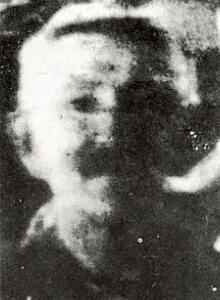
This is the only known photograph of Matt Talbot, which has been enlarged from a group photograph taken in T & C Martin's, where Matt worked, about 1918.
Saturday, December 29, 2007
Resource Center blessing
We thank Rev. Damian O'Reilly, Vice-Postulator of the Cause for the Venerable Matt Talbot in Dublin, Ireland, for his blessing on the Venerable Matt Talbot Resource Center, blogspot, and you, the reader. (JB)
----- Original Message -----
From: Fr. Damian
To: John Blair
Cc: Fr. Damian
Sent: Monday, December 10, 2007 12:16 PM
Subject: Website blessing
John
I pray God's blessing on this wonderful work you have undertaken with this web site. I pray that all who log on to this site may be blessed with the power of God's love and peace in particular all those who are under the burden of alcoholism.
My very best wishes to you for Christmas and the new year.
Damian
Friday, December 28, 2007
Matt Talbot medal
Matt Talbot medals are available through various profit and non-profit outlets. Some sell only the medal for less than one US dollar while others may also include a printed card, prayer, or message, such as the advertised example below, which is posted only for illustrative purposes. Some people purchase a quantity of metals, print their own message, and pass them on to others free-of-charge. (JB)

"This is a Catholic medal depicting Matt Talbot. It is cast in silver tone metal. On the reverse are the words "Pray for Us." There is a jump ring so the medal is ready to put on a chain or on your scapular.
If it hadn’t been for the chains he wore as a symbol of his "slavery" to the Virgin Mary, the Irish ascetic who may attain the honors of the Church, would have remained as anonymous in death as he had been in life. These chains, found embedded in the flesh of his body when he dropped dead on a Dublin street in 1925, attracted the interest of an astonished 20th century world and led to an investigation of his life.
Holiness did not come easily to Matt Talbot. The crisis in his life was universal in aspect – the struggle of the spirit for mastery over the flesh; but for Matt, the cruelty of the struggle was intensified by his addiction to alcohol. A confirmed drinker as a child of 12, he continued to live from one hang-over to the next throughout adolescence and young manhood.
The day that Matt, painfully and pennilessly sober for the first time in 16 years, suddenly faced the reality of his rotted past marked the beginning of his transformation. Matt’s strategy during the years of conflict and throughout his later life was difficult but effective – prayer, daily Mass and Communion, meditation, spiritual reading, charity and penances of extraordinary severity. Thus, the onetime "proper bowsie" of the alehouses and pubs became a faithful servant of God.
Though Matt’s life is an encouraging success story particularly for alcoholics, his meaning in the modern world extends far beyond being the patron of ex-drunkards. There is something in his story of everyone – worker, sinner, Christian, skeptic, apostle – some glimmer of greatness, humility and charity that cannot fail to inspire and amaze. "
|

Thursday, December 27, 2007
Matt Talbot as a saintly example of alcoholism
Although the focus of Ordinary Suffering of Extraordinary Saints (2000), about one hundred six saintly persons who experienced afflictions common to all people, is pastoral in purpose, it is surprising that Matt Talbot is referred to as "blessed" rather than "venerable" by the author, Fr. Vincent O'Malley, C.M. His source (Wallace, 1992) does not use the word "blessed" or "venerable."
Fr. O'Malley is the author of additional books about saints.
The MT content can be read at:
Wednesday, December 26, 2007
Take each day as it comes
18th Jun 1st Reading - Take each day as it comes
2 Corinthians 6:1-10
As we work together with him, we urge you also not to accept the grace of God in vain. For he says,
‘At an acceptable time I have listened to you,
and on a day of salvation I have helped you.’
See, now is the acceptable time; see, now is the day of salvation! We are putting no obstacle in anyone’s way, so that no fault may be found with our ministry, but as servants of God we have commended ourselves in every way: through great endurance, in afflictions, hardships, calamities, beatings, imprisonments, riots, labours, sleepless nights, hunger; 6by purity, knowledge, patience, kindness, holiness of spirit, genuine love, truthful speech, and the power of God; with the weapons of righteousness for the right hand and for the left; in honour and dishonour, in ill repute and good repute. We are treated as impostors, and yet are true; as unknown, and yet are well known; as dying, and see—we are alive; as punished, and yet not killed; as sorrowful, yet always rejoicing; as poor, yet making many rich; as having nothing, and yet possessing everything
The person we remember today is Venerable Matt Talbot (1856-1925) who is also can be considered the patron of men and women struggling with alcoholism. Today is the first time I am actually reading about him from the Veritas Website. Below is an entry that is taken from there and which appeared on the print edition of Day by Day With Followers of Francis and Clare.
Matt can be considered the patron of men and women struggling with alcoholism.
Matt was born in Dublin, where his father worked on the docks and had a difficult time supporting his family. After a few years of schooling, Matt obtained work as a messenger for some liquor merchants; there he began to drink excessively. For 15 years—until he was 30—Matt was an active alcoholic.
One day he decided to take "the pledge" for three months, make a general confession and begin to attend daily Mass. There is evidence that Matt’s first seven years after taking the pledge were especially difficult. Avoiding his former drinking places was hard. He began to pray as intensely as he used to drink. He also tried to pay back people from whom he had borrowed or stolen money while he was drinking.
Most of his life Matt worked as a builder’s laborer. He joined the Secular Franciscan Order and began a life of strict penance; he abstained from meat nine months a year. Matt spent hours every night avidly reading Scripture and the lives of the saints. He prayed the rosary conscientiously. Though his job did not make him rich, Matt contributed generously to the missions.
After 1923 his health failed and Matt was forced to quit work. He died on his way to church on Trinity Sunday. Fifty years later Pope Paul VI gave him the title venerable.
Comment:
In looking at the life of Matt Talbot, we may easily focus on the later years when he had stopped drinking for some time and was leading a penitential life. Only alcoholic men and women who have stopped drinking can fully appreciate how difficult the earliest years of sobriety were for Matt.
He had to take one day at a time. So do the rest of us.
What struck me in today's reading was the spirit of acceptance that came forth in Paul's letter to the Corinthians. He speaks of the torture and suffering he faced in a very matter of fact way, with no desire to seek any sympathy or glory. He just tells it as it is.
In the above comment, "He had to take one day at a time. So do the rest of us", there is also the spirit of acceptence.
I didn’t used to know any alcoholic until abt two years or so ago, when I first chanced upon a blog of an alcoholic, someone living far away from me and someone I dun even know. Yet in her writing and many others that I have started reading through links, I have gotten to peep into their lives, their struggles and their victories. One thing that has always struck me is how honest they can be about their struggles and how sweet it can be to just celebrate the little victories they got in their lives, marking the days as they count to increasing days of sobriety. In the same way as Paul does, they write of their story just as it is (though often they might wonder to themselves if they have been pity-pots, I say no!) It has indeed been my honour and grace to share in their journey.
Today I am reminded to walk the journey, to take each day as they come.. To go with the flow. :)
Right now, as I embark on something new, I am not sure how long I will last in there... Yet I know I need to do this, I need to try. Or else it will bother me for a long time to come, as it has already bothered me for a long time since. So I too am not sure how long I will last or how the journey will go but I will take one day at a time, just as Matt did.
Tuesday, December 25, 2007
Monday, December 24, 2007
Chosen by Matt Talbot: Musings of a Non-Alcoholic
 JennD.
August 16, 2007
"Three things I cannot escape:
the eye of God, the voice of conscience, the stroke of death.
In company, guard your tongue.
In your family, guard your temper.
When alone guard your thoughts."
the eye of God, the voice of conscience, the stroke of death.
In company, guard your tongue.
In your family, guard your temper.
When alone guard your thoughts."
This lovely man...Matthew Talbot.
I was chosen by this Saint to be his special charge for the remainder of the year 2007. I went to the website where one can request a special Patron Saint for a year and this Saint will be sent to one's email address. Then, reading up on the Saint, one can take what one wants from his/her life and apply it where it fits.
Ven. Matthew Talbot, it seems, has chosen me. I have heard of him before, but I never really went into his life in any great detail...'til now. I 'googled' his name and all kinds of interesting sites came up ~ Patron Saints Index, Catholic.com, all the usuals. Then I found some that were not quite so well-known, but just as interesting.
For example, from out of Ireland, his home country, there is a special site dedicated only to him. He is declared by the Church as venerable, but so far has not been beatified, let alone canonized. No miracles yet ~ at least, not as of the last update! :) And, reading up on this holy man, I could not at first figure out what we had in common, or why he would choose me, of all people.
He was Irish; I have a bit o' the Green in me, but my family has much more Scottish and English than Irish, and we were all born here in the States.
I am not an alchoholic ~ I used to drink regularly(weekend parties, that kind of thing) but it was always 'social', never more than that. I don't smoke ~ haven't for 25+ years. He was a problem drinker, and a heavy smoker. I quit drinking when I first became pregnant with our eldest, have not drunk much since...and as far as my smoking days are concerned, I haven't touched a cigarette since April, 1982.
He hated school, always skipped out, barely got a year's worth of education. I have a BS in Fine Arts and Education.
I have never worked in a wine bottling plant. I didn't have to help support my family from my childhood onward; as a matter of fact, I grew up quite comfortably...not wealthy, but my parents were not hurting by any means. While he was born in the slums of downtown Dublin, I came to this life to parents who lived in the suburbs, had a summer cottage on the lake, three squares a day...
So, if I have so little in common with this man, why on earth did he pick me to sponsor? What does he see about my life that so closely parallels his own? So far, this is what I have come up with...
Even tho' I don't really drink anymore, I have other addictions, some of which may even qualify as being sinful, I'm sure. While I won't go into detail here (I will be telling Fr. Ben all about it, you can bet) I will say that perhaps this is what drew Ven. Matt to me. Maybe he sees a bit of himself in my life; his addiction to alchohol and smoke is not the point ~ his addiction, what ever it was, is like mine ~ what ever mine may be. We all have bad habits we need to shake, and I need the help of as many Saints as I can get!
And so, being thoroughly Irish, he might see a chance to make his influence felt, shall we say? The Irish, lovely people that they are, are quite fond of making their presence known, to be sure...so I'd be willing to bet that even tho' he's in Heaven now, he still has that bit o' the Green in him!
In the quote above, he mentions his conscience...which comes to us, by grace of the Holy Spirit, and quite unquestionably as the voice of our Guardian Angel. Since I have a devotion to my own Friend, perhaps Ven. Matt sees this in common, as well...as he could not escape the voice of his own Angel, and he knows that I seek peace and quiet so as to listen more closely to my own (per the Opus Angelorum). Our conscience is with us always; we cannot turn it off, altho' many have tried...
After he had taken an oath of sobriety, he began to attend daily Holy Mass. For the past several weeks, I have been telling my husband Mike that I want to start this practice...if I cannot get there every single day, at least a few extra during the week. For instance, tomorrow (Friday) I am going to the 12:00 noon Holy Mass, not because of having to, but because of wanting to...and I will most likely stay for an hour of Adoration afterwards, if I'm lucky. I believe that Ven. Matt is trying to let me know that this would be a good idea ~ and perhaps with his help, I just may be able to do it.
According to one website, he became a Third Order Franciscan later on in his life...and since he had practiced quiet acts of penance and charity since taking his life-long oath, this was a natural extension for him...living a simple, austere lifestyle, wearing a penitential chain in secret, morning Holy Mass and evening prayers to the Holy Virgin, especially his Rosary. Even with the little education he had had, he was able to spend many hours in spiritual reading, as well...so what he lacked in formal education, he made up for in knowledge of God and the things that really matter.
I have been trying to find more quiet time to spend in prayer myself...all the reading I have been doing about the Angels, in preparation for becoming a member of the OA, my daily prayers connected to the Blue Army (WAF), and whatever else I can find to do...maybe he is one that is leading me to do more of that?
Perhaps all along, all this time, he has been my patron and I never knew 'til now?
I do know this: I plan to make more time to get to know this man, in Heaven as he is, looking down on me today, perhaps doing what he can to learn more about me? Maybe he's thinking, 'If you give me more time, I'm sure you will find what you seek about me...and how I got to be where I am today. I would like to help you get here, too!'
Ah, yes...what a lovely man, this Ven. Matthew Talbot. Even after all his sins of drunkenness, he came home to his God, and there he remains forever. After all my sins...by the grace of God...there will I be forever?
Dearest Ven. Matt Talbot, patron of alchoholics, addicts, those 'staggering to Heaven' ~ please pray for me!
Source:
http://whitewave39.blogspot.com/2007/08/ven-matthew-talbot-1856-1925-feastday.html
We have taken the liberty of changing the title of this reflection for posting purposes.
We have taken the liberty of changing the title of this reflection for posting purposes.
Like this author, one certainly does not have to have a personal connection with alcoholism to have an interest in Matt Talbot.
Sunday, December 23, 2007
Matt Talbot, AA, and the Blessed Sacrament
Matt Talbot
by Leslie K.
Leslie's Univesal/Catholic Thoughts
Public Journal
January 4, 2006
Matt Talbot (1856 - 1925) was born in the poverty of Dublin's inner city. He began drinking at twelve years of age and became a chronic alcoholic. It was the drug culture of the 19th century. Matt was an addict. After sixteen years he decided to 'kick the habit'. A priest helped him, giving him a rehabilitation programme, which providentially incorporated the Twelve Steps of Alcoholics Anonymous. That was fifty years before AA was founded. After a horrendous struggle, he found sobriety through prayer and self-sacrifice. His Higher Power was the Christian God. He remained sober for forty years until his death. His life story has been an inspiration for alcoholics and addicts throughout the world. He is a candidate for canonisation in the Catholic Church.
Today, I thought of Matt and the struggle he had getting and staying sober. During my morning meditation it occured to me that the blessings I have received in my life are too many to count, but the hard times can be easily numbered. Interesting, isn't it?
Last night I sat quietly before the Blessed Sacrament and just understood that the incredible power available to me through the Body, Blood, Soul and Divinity of my Savior, Jesus Christ would have remained behind a locked door if not for AA and my willingness to say, "Yes" to one question - Are you willing to go to any lengths to stay sober?
The ongoing question must become, am I willing today to go to any lengths to stay sober TODAY? It becomes much more than simply following my heart. It means following those few simple steps and embracing the life that the Holy Spirit has revealed to be available to me.
I remember once having a sponsee say to me that she was worried that if she really did the third step, really gave her life over to a Power Greater than herself, that it would mean she would turn into one of those people who walk around talking to themselves.
I look at my lifestyle today and realize I have become one of those people. I take my walks (when it is not storming) and pray the Rosary....to those who do not understand prayer they would think, "Look, a crazy woman muttering to herself". I go to three meetings a week, and try to preceed those meetings with the celebration of the Eucharist - to a person in AA who does not understand they might think, "Uh oh, that's what happens at 13 years sober. You become a religious fanatic".
Yet what has happened to me (and for me) is I have finally begun to move closer to the Power needed to stay sober, the whole purpose of the Big Book, the reason for doing the Steps - Jesus Christ, in the Blessed Sacrament, the Power of the Eucharist. Being able to be there, in HIS PRESENCE and feel the overwhelming comfort of that power is something I never wish to lose.
Today is the Feast Day of St. Elizabeth Ann Seaton, the Mother of the Catholic School System in the United States. The woman who, though born to wealth and comfort, did not find herself until she found the True Presence in the Eucharist.
Mother Seaton, pray with me and for me today, that I may walk like you and become the woman I am supposed to be rather than the woman I think I want to be - in HIS name, amen.
Understanding is the booby-prize of life. One may understand that his
car is out of gas, why it ran out, why more wasn't put in, how far it
would go until it ran out, every aspect, facet and tangent of the entire
running-out-of-gas experiene. But until you put some fuel in, it will
just sit there, with or without understanding. Peter Stavrianoudakis
SOURCE: http://journals.aol.com/lsk49rs/CatholicThoughts/entries/2006/01/04/matt-talbot/492
We have taken the liberty of changing the title of this reflection for posting purposes.
Subscribe to:
Posts (Atom)