The Venerable Matt Talbot Resource Center exists to compile writings about the life, times, conversion, and recovery from alcoholism of Matt Talbot (1856-1925) of Dublin, Ireland. Disclaimer: The placing of information on this site from external linked sources does not necessarily imply agreement with that information. This center is independent of any other center, group, organization, website, or Facebook page. Comments are welcome at: ven.matt.talbot.resource.center@gmail.com
At first glance one might think that this Dublin bridge
solely honors Venerable Matt Talbot. But as this article indicates, it honors
many in addition to Matt.
Stories of remarkable men in
different times, in Dublin and in far flung places, are commemorated in the name
Talbot Memorial Bridge. Matthew Talbot was one of Dublin’s poor. Born in 1856, he
was both a worker and a drunkard by the age of 12 - a fate that was all too
common among his family and fellow inner city Dubliners. That he pawned his
shabby shoes, short changed his long suffering mother, drifted between jobs and
conned friends and acquaintances - all for the sake of yet another drink - is
too unremarkable a story for Matt to have made it into the history books.
Nothing was expected of his life other than he would die as he had lived - drunk
and in abject poverty.
Yet within a year of his death in 1925 he became an
inspiration to millions across the world. For Matt took the pledge - a promise
to abstain from alcohol - in 1884 and turned to God. He overcame tortuous
temptation with prayer, attending Mass each morning at 5am. He died on the
street, the depth of his devotion becoming obvious when the heavy chains and
knotted ropes, embedded into his flesh, were removed by mortuary
workers.
He had lived as an anonymous ascetic but in death became
venerated for his saintly life. Though Matt had kept his feet on terra firma,
for many young lads of the north and south docklands a life at sea beckoned -
from the days of being press ganged to fight in the service of the British, to
joining the merchant navy to sail the seven seas, or working on the ferries
criss-crossing the Irish Sea. Thousands said ‘good-bye’ never to return again,
meeting their fate in some distant land or finding their final resting place
beneath waves which would never wash an Irish shore.
During the Second World War, in particular, Irish seamen
knowingly risked their lives to bring essential supplies home to Ireland, a
neutral country. From a small fleet, 16 ships were lost to unprovoked attacks -
by aircraft, mines and torpedoes - and 136 men died. The Talbot Memorial Bridge
is a monument to these ordinary and, at once, extraordinary Dubliners and
Irishmen.
While their lives only overlapped
by seven months, the temperance movement message of Fr. Mathew, especially in
Ireland and the USA, influenced Matt Talbot and hundreds of thousands to take
the pledge to abstain from
alcohol.
“THEOBALD MATHEW: Temperance ‘Precursor’
to Fr Cullen”
A ‘Who’s Who’ of Ireland’s great benefactors will rarely
nowadays include a biography of Fr Theobald Mathew. His enormous achievements
and legacy will be skipped over, as if to minimise the enduring impact of his
endeavours to help the Irish extricate themselves from the heartbreak and sorrow
of addiction to alcohol.
Today the message of Fr Mathew is sorely needed, as Irish
young people as a group, like their peers in so many other countries, seem deaf
to all the warnings from their elders. They seem to have little idea of how
easily alcohol addiction is acquired. Fr Theobald, now dead for over 150 years,
would have his hands full in the Ireland of today. Were he a time-traveller, all
his charismatic skills would be required to persuade the youth of Ireland that
drinking alcohol is not a harmless activity.
The debate over alcohol addiction is never far from the
Irish conversation. It is omni-present, and ubiquitous. Yet, it was Fr Mathew
who put this issue in the forefront of the national debate, and made it
impossible to ignore. The abuse of alcohol and the casualness of the Irish
people towards it was always on his mind and, aiding the Irish as a nation, in
effect, educating and advising them, became his life’s work.
Few would have predicted that the shy teenager,
self-effacing and uncertain in the family home in County Tipperary would one day
become the most charismatic preacher of his era. Fr Mathew didn’t have a magic
formula, or even a guarantee of success. From pastoral experience, he knew that
our pre-Famine population of eight million was far too inclined to indulge. The
imperialism of Britain was often cited as an excuse. However, even after the
dreadful trauma of the Famine, the love of the Irish for drink did not go away.
If anything, it increased, although our population had been reduced by over
three million. For Fr Mathew, it would be an uphill road.
The self-imposed task he underwent to reform Irish drinking
habits would exhaust him but he kept battling on until his death on 8 December
1856. The boy who would one day become the Venerable Matt
Talbot and one of the glories of the ‘pledge’, a concept promoted
vigorously and successfully by Fr Mathew, was born in the May of that same
year.
Fr Theobald was one of twelve children, nine boys and three
girls. He was born on 10 October, 1790. ‘Toby’ was the nick-name by which his
family knew him, and ‘Darlin’ Master Toby’ by the poor of the locality who
considered him ‘a born saint’. He was educated in Thurles and Kilkenny,
excelling at Greek, Latin and English history. After applying and being accepted
for Maynooth, ‘Toby’s stay there was cut short because the authorities in the
college took umbrage at his organising a social event. Toby went home, dejected
and embarrassed and, for some time, had little to do by way of ecclesiastical
engagements, until it struck him to join the Capuchin Order, where he was
quickly accepted as a novice.
He was one of the generation of young Irish people to make
their way to seminaries and novitiates once again, as the rigors of the Penal
Laws began to ease early in the nineteenth century. In both Kilkenny and Dublin,
Fr Theobald was singled out by the congregation as being a rare and kind
confessor. It would be in Cork, though, that ‘Toby’s’ great life’s work had its
origins: ending the scourge of alcohol abuse. Thus, the yearning congregations
of Cork would readily adopt the ardent young man from Co Tipperary. In addition,
‘Toby’ became renowned for his generosity to the poor. He would never allow a
poor person to go away empty-handed. ‘Give, give’, he used to say, ‘what you
have, you got from God.’
Theobald was elected Provincial of the Capuchin Order in
1822, on the death of the then Provincial, and held that office for almost
thirty years, eventually retiring due only to ill health. Contrary to public
opinion, Fr Mathew did not invent the concept of total abstinence. It began in
America the previous century, and had much success with Protestant communities,
who embraced the whole notion of abstaining from alcohol, in cases where
moderation failed. The Quaker community also recommended abstinence, and it was
one of their own, a Quaker called Martin who set the ball rolling in Cork, very
close to where Fr Mathew lived with his community. At this juncture, Fr Mathew
began to consider the possibility of promoting total abstinence from alcohol
among his beleaguered people. The whole jigsaw of finding and ending the curse
of alcohol addiction came together in his mind, and he suddenly saw a way
forward.
On 10 April 1838, Fr Mathew uttered his famous phrase ‘Here
goes in the name of God’, and launched, in Cork, with Quaker Martin, what became
a great temperance campaign, introducing large numbers of his fellow-Irish to
the notion of total abstinence from alcohol. Large crowds came to hear Fr Mathew
preach. He was invited all over Ireland as well as to Britain and the United
States to spread his message. Hundreds of thousands of people of all religious
persuasions took the pledge on hearing him speak. The statue of him in Dublin’s
O’Connell Street shows him as he was - enthusiastic, exhorting, encouraging
others, as he reached to the skies.
Fr Mathew’s success as a temperance leader is indisputable.
His legacy waned when, after his death, many of those ‘pledge-takers’ reverted
back to alcohol-abuse. Nevertheless, many families and communities reaped a
plethora of rewards for as long as they remained abstainers. Fr James Cullen,
Pioneer founder, was inspired by the work of Fr Mathew and had the ambition to
take up where his great predecessor had left off. In a sense, Fr Mathew was the
forerunner of the Pioneer movement. Perhaps in the Ireland of today, those of us
blessed enough to be Pioneers, can offer up our gift of abstinence for the
people we know or hear of, who can’t abstain at all. Perhaps we, who don’t drink
alcohol, can ‘launch into the deep’ with a prayer that life may be made bearable
for those whose drinking is a source of suffering for both themselves and
others.
Matt Talbot’s purpose in
life until his 28th year of life was basically to work and drink. Then one
Saturday when his mates refused to buy him drinks, he experienced his personal
“bottom,” took the pledge not to drink, and returned fully to the Catholic
Church, remaining sober until his death 41 years later.
"All of us have a purpose in life. God
put us here because of his great plan for us. He has also equipped us with the
right grace, strength, intelligence, etc. for us to fulfill this purpose or
mission he has planned for us. But we have a choice whether to accept this
mission or not.
When we do accept the mission, we can go
through it properly doing the best that we can do for the greater glory of God
or we can do it half-heartedly out of laziness or maybe not do it at all for
fear of the unknown future. Again the choice is ours. The more blessings we
receive, the more we are called to be of service to others and share these
blessings. It is good to remember though that whatever choices we make there are
consequences. This is the task we have at hand… the choice is ours.
As an author, speaker, and founder
of Matt Talbot Kitchen & Outreach in Lincoln, Nebraska, Mary Costello has
introduced people to Venerable Matt Talbot for decades. She will be speaking on
the following topic November 20, 2014 at 7 pm at MTKO.
"Some of you who receive the Catholic paper, The Southern
Nebraska Register might have already read about the miracle performed by
God through the intercession of Matt Talbot. But the wonderful news to those of
us here in Lincoln is that the family involved in the miracle heard about the
man they prayed to because of the Kitchen and Outreach center here in Lincoln,
Nebraska!
Many of us who are concerned with alcoholism and addictions
have been praying, working and hoping for a verifiable, physical miracle to be
performed through the intercession of Matt Talbot for 75 years. But while Matt
continues to help thousands of men and women, wives and husbands, sons and
daughters, moms and dads, grandmas and grandpas return to lives of sobriety and
serenity, these are considered psychological miracles and cannot be considered
by the Congregation of Rites, the folks who decide these things in Rome. They
need physical miracles to move a candidate from the status of “Venerable” where
Matt stands today, to “Blessed” and then, Praise God one day, to the level of
“Saint.”
Yes, there has been a miracle in the suburb of Overland
Park, Kans. A young couple, Shannon and Patrick Watkins, traveled to Lincoln for
the baptism of a relative’s baby and heard about our work and decided to name
their baby Talbot. I’ll explain more about the miracle when I come to see you
all in November.
I know many people, even people associated with MTKO really
don’t know much about the man, Matt Talbot. No, he wasn’t a relative of mine,
nor a friend! Let me tell you a little about this marvelous man and, hopefully,
soon-to-be-saint: he was born into a very poor, alcoholic family in Dublin,
Ireland in 1856. He had very little education and admits himself he was probably
an alcoholic by his early teens. He went to work when he was only 12, which was
the custom and because of another interesting Irish custom (the biggest employer
being one of the world’s largest brewers) the paychecks were not sent home with
the workers but were deposited with the local pub owners. Sounds incredible, but
true. (It was the Catholic Church that finally led efforts to change this
custom, but not until the 1920’s!)
Therefore, every worker had to pass through the neighborhood
watering hole before he arrived home on payday. We can only surmise how many
ever made it home with a few shillings still jangling in his pockets. This was
at a time when Ireland was still recovering from the Great Famine of the late
1840’s and 1850’s; thousands of people were unemployed, starving farmers were
streaming in from the west and soldiers were coming home from the Crimean War.
Dublin was a sea of destitution and poverty.
Matt Talbot and his brothers were some of the unfortunates
who usually happily received their paychecks on Saturday noon and had drained it
by Tuesday night. The rest of the week they drank “on the cuff” or on the
charity of their friends. But one week when Matt was 28, he had been sick all
week. He didn’t draw a paycheck at all. One Saturday noon he stood outside his
favorite pub waiting for one of his pals to invite him in for a nip or two. No
one did. Matt walked a few steps to the bridge overlooking the Royal Canal. He
had never been a particularly spiritual person. His religious education had
taken him only to his First Communion and Confirmation and while he attended
Mass most Sundays he did not receive the Sacraments. There was in Ireland at the
time a practice called “Taking the Pledge” designed by a Catholic priest, Fr.
Mathew, to stem the tide of the horrendous problem of alcoholism in Ireland in
the mid-Nineteenth Century.
We don’t know what God whispered to Matt that afternoon in
1874, but it must have been something wonderful. Matt walked home and said to
this mother, “I’m going to take the Pledge,” and she said, “Don’ take it unless
you’re going to keep it.” He said, “I am going to keep it.”
But the way that he kept it was the great thing, the thing
that turned him into a saint. From home that first day, Matt walked to Conliffe
College, a seminary in Dublin, where he went to Confession and took the Pledge.
The next morning, he went to Mass and Communion for the first time in many
years. During the week, he got up early and went to daily Mass, praying that the
Lord would help him stay sober. After work, instead of going to the bar, he
visited the Lord in the Blessed Sacrament. He asked the priests at the College
to teach him to read (he could barely read and write his name) so he could read
the lives of the saints and he ended up reading and understanding deep
theology.
Matt Talbot especially loved Our Lady under the title of Our
Lady of Wisdom and he slept with a statue of her in his arms. For the next 40+
years, he ate only enough to keep himself alive and gave away most of his
earnings (the Columban Fathers were one of his favorite charities); he lived
simply, sleeping on planks for only a few hours a night and spending many hours
a day in prayer or spiritual reading. He died on his way to his third Mass of
the day on Trinity Sunday, June 7, 1925. After years of study, he was declared
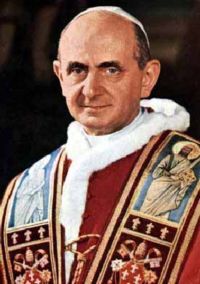
“Venerable” by Pope Paul VI in 1975 indicating that this man had lived a life of
heroic virtue.
Since his death, Matt has performed many, many miracles,
well, of course God performs the miracles but we pray to Matt and he intercedes
at God’s throne for us. But this is the first physical, verifiable miracle that
has been performed through Matt’s intercession. When I come to talk to the
group, I will tell you more about Matt, and more about the miracle. If you would like more information about Matt Talbot, please
contact me at marykcostello@yahoo.com or at 3901 S,
27th St, unit 4, Lincoln Ne. 68502. I have prayer cards and medals
available."
O Jesus, true friend of the humble worker, Thou hast given us
in Thy servant, Matthew, a wonderful example of victory over vice, a model of
penance and of love for Thy Holy Eucharist, grant, we beseech Thee, that we, Thy
servants, may overcome all our wicked passions and sanctify our lives with
penance and love like his.
And if it be in accordance with Thy adorable designs that Thy
pious servant should be glorified by the Church, deign to manifest by Thy
heavenly favours the power he enjoys in Thy sight, who livest and reignest for
ever and ever. Amen.
“For nine Tuesdays in the months
of October and November starting on Tuesday next, 30th September, people will
gather each week at the Shrine of Matt Talbot in St. John & Paul Church,
Shannon, to pray and intercede for people suffering or sharing in the life of
addictions.
Matt Talbot
was born in Dublin in 1856 and died suddenly in 1925, experienced at first hand
the pain and suffering of addiction. Matt worked and prayed and fasted
for the gift of temperance. He had experienced at first hand, in his own body,
the havoc and the ravage wrought by his drinking alcohol to excess. He
had felt the horrors of hangovers and saw its effects on his work and on his
relationship with his friends and with his family. In fact, he saw that he was
slowly but surely destroying himself. Somehow or other, by the grace of a
good and generous God, he got the strength to give it all up and to go
sober. He began to see that our hunger and thirst for food and drink is
something good – given to us by a good and generous God, to encourage us to eat
and drink to keep ourselves alive and strong and well. But he saw also that it
was something to be used in moderation. One of the things we need, at all
times, is a proper approach to the use of food and drink and the sexual power,
given to us by God to bring new life into the world. There is a right
way and a wrong way of using his gifts. There is a temperate way and an
intemperate way. The temperate way is the better way. The intemperate way is
the way that leads to disaster, but people don’t see it like that unfortunately.
The temperate way is possible. Matt Talbot is an outstanding example of
prayer and conversion. The Matt Talbot Novena, now in its 22nd year in Shannon,
is our annual opportunity to support by prayer and reflection all suffering or
sharing in the life of addictions. Matt Talbot has shown that it is
possible to change; the power of prayer should never be
underestimated.”
2014 has been an eventful year for Popes who knew
of Matt Talbot. Earlier this year Pope John Paul II and Pope John XXIII were
both declared saints.
And yesterday, 19 October 2014, Pope Francis beatified Pope Paul VI (1897-1978), the pope who
declared Matt Talbot as “Venerable” on 3rd October 1975, fifty years after
Matt’s death.
In a 1974 address in Rome to Calix Society members
on the occasion of their twenty-fifth anniversary, the now “Blessed Paul
VI” stated: “You have chosen to look upon Matt Talbot as an admirable exemplar
of discipline and supernatural virtue. It is our hope that his success will
encourage countless men and women throughout the world to realize the need for
conversion, the possibility of real rehabilitation, the serenity of Christian
reconciliation, and the peace and joy of helping others to overcome abuses,
disorders and sin.” (http://venerablematttalbotresourcecenter.blogspot.com/2008/03/pope-paul-vi-calix-society-and-matt.html)
Whenever the negative voices in your head threaten
to take over, consider reciting The Knots Prayer:
Dear God,
Please untie the knots in my mind, my heart and my
life.
Remove the have nots, the can nots, and the do
nots that I have in my mind.
Erase the will nots, may nots, and might nots
that may find a home in my heart.
Release me from the could nots, would nots and should
nots that obstruct my life.
And most of all, Dear God, I ask that you remove from
my mind, my heart, and my life all of the “am nots” that I have allowed to
hold me back, especially the thought that I am not good
enough.
Thousands of
moral miracles have been reported by recovering alcoholics through the
intersession of Venerable Matt Talbot. But for beatification, a
Vatican confirmed physical miracle is required, which has not occurred
yet.
But one is
possibly on the horizon...one that does not involve an addiction nor an adult
laborer.
One-year-old Talbot Joseph Watkins wasn’t
supposed to be a healthy little boy. In fact, all medical evidence prior to his
birth pointed to something seriously wrong. But a possible miracle changed the boy’s fate, which may lead to
Matt’s beatification.
This extraordinary story, “The Making of a Miracle,” by
Joe Bollig and published in The Leaven (Catholic Newspaper) on
September 26, 2014, can be read at
An expanded article on page 5 at http://www.theleaven.com/past_issues/_pdf/v36/Leaven%2009-26-14.pdf includes
a brief biography of Matt Talbot, prayer for his canonization, and an interview
with Fr. Brian Lawless, the Vice-Postulator, who visited with the Overland Park,
Kansas family in August 2014.
The Philadelphia Units of The Calix Society announced
that there will be a June 2015 pilgrimage to Ireland lead by
Fr. Brian Lawless. It will include visiting sites important to the the life and
spirituality of Venerable Matt Talbot as well as other spiritual sites (like
Knock) and secular sites.
When we think or hear the word “glutton,” our first
thought might be of a person who simply eats too much too often. But how many
people today think, or in Matt Talbot’s early life thought, active alcoholism
and other addictions as a form of gluttony?
As noted in the following article, Fr.
Longenecker comments on various forms of gluttony and that the original search
for “comfort and sense of well being and happiness” is really found in a
“strong relationship with God and a life of true goodness, truth and
beauty.”
“There is a grotesque scene in the Monty Python film The
Meaning of Lifein which a hugely corpulent
character named Mr Creosote eats a gigantic meal, vomits repeatedly and then,
after eating a tiny after dinner mint, explodes. The comedy is completely
outrageous, but you can’t miss the explicitly revolting depiction of
gluttony.
Being heavy is not always caused by gluttony, nor does one
need to be enormously obese to be guilty of gluttony. St Thomas Aquinas (who was
himself overweight) defined five forms of gluttony: 1. eating food that is too
luxurious, exotic, or costly; 2. eating food that is excessive in quantity; 3.
eating food that is too daintily or elaborately prepared; 4. eating too soon or
at an inappropriate time; 5. eating too eagerly. Gluttony includes any form of
addiction. Drug abuse, caffeine or sugar addictions and alcoholism are forms of
gluttony, but so is any inordinate attachment to food and drink. Similarly
C.S.Lewis (who knew how to down a few pints of beer) points out than being
overly fussy about food and drink can also be a form of gluttony. A person who
insists on their steak being done “just so” then complains and rejects it is
also placing too much selfish attention on food.
We think of gluttony as socially unattractive, but a
sophisticated person dining daintily at a fine restaurant may very well be
guilty of gluttony because they love their food and drink too much. Indeed, a
connoisseur may be a very refined glutton.
Gluttony is a deadly sin not because it is unattractive but
because there is a deeper problem. The glutton uses food for something other
than its proper intention. Food is given for our nourishment, our enjoyment and
for the fellowship of sharing with others. The glutton uses food simply to give
himself pleasure or comfort. Think of a baby with a bottle. Not only does he
gain nourishment, but he enjoys a feeling of comfort and relief from the warm
drink. It’s okay for babies, but we’re supposed to outgrow the need for comfort
food, and we shouldn’t need to rely on inebriation of alcohol or the false high
of drugs to find the peace and happiness we long for.
To put it plainly, the glutton seeks in food, alcohol or
drugs the comfort, and sense of well being and happiness that he should find in
a strong relationship with God and a life of true goodness, truth and beauty.
That is why the lively virtue that counters the deadly vice of gluttony is
temperance.
The seventeenth century poet Thomas Traherne wrote, “Can a
man be just unless he loves all things according to their worth?” Temperance is
that virtue that empowers us to see the good in all things and to love them
without being inordinately attached. Temperance in our consumption of food and
drink also helps us to establish temperance in our relationship to other
material things in life.
A person who is gluttonous is also likely to be greedy. The
person who seeks comfort, peace and happiness in food and drink probably also
clings to material things hoping to find security, peace and happiness. By
exercising the virtue of temperance in the area of food and drink we will also
find victory over our inordinate attachment to our money and
possessions.
Temperance is the virtue that allows us to enjoy food and
drink to the full, but avoids excess realizing that to abuse the gift is to
destroy it. Temperance is therefore gratitude in action. By enjoying God’s gifts
in the right proportion and in the right relationship to all things we are
saying “Thanks” to God and living in the abundant life he promises.”
Note: To read a perspective on
gluttony published during Matt Talbot’s lifetime, see Delany,
J. (1909).Gluttony.
In The Catholic Encyclopedia at
http://www.newadvent.org/cathen/06590a.htm
In the September 2013 issue of Pioneer
Magazine, official publication of the Pioneer Total Abstinence Association
of the Sacred Heart (PTAA), of which Matt Talbot was a member, one article may
be of particular interest at
In the article
titled, “Jim Larkin, Matt Talbot, and the 1913 Dublin
Lockout,” Sean Ua Cearnaigh provides a brief overview of the historical lockout and Matt Talbot’s
role in it. As the author notes, Matt “was not a scab as
some critics who did not know him tried to convey” but one
in solidarity.
This thoughtful reflection was presented at the Venerable
Matt Talbot Hope and Recovery Service held at the Shrine of Venerable Matt
Talbot, Our Lady of Lourdes Church,
Dublin, on 17th September 2014. This spiritual recovery evening was open to all
seeking recovery from addiction.
“We have gathered here this evening
for this service to seek spiritual strength that we need on our lives’ journey
of recovery. We gather in this particular place, in this sacred space to
draw
strength from one who had already done the journey, who had initially been
caught up in the cycle of addiction in which we often find ourselves caught in.
We come to this Church, where the remains of Matt Talbot are kept.
Matt Talbot was born on 2nd 1856 May to
Elizabeth and Charles Talbot on the North Strand, and baptised a few days later.
Having attended school for only one year, Matt got his first job. At this time
he began to drink and later admitted that from his early teens to his late
twenties his only aim in life was heavy drinking.
But at the age of 28, an incident made him
realize the abysmal point that he had reached: Matt was broke and so he lingered
outside a pub with his brothers with the hope that one of the many friends whom
he had helped in their moment of ‘need’ would invite him in. But even his
supposed friends disowned him and passed him by, friends whom he had supported
in their own moment of need.
It was an incident which affected him deeply.
It triggered in him a soul searching process as he stood on a nearby bridge,
gazing at the canal, gazing at the water as it flowed over in the lock. There
and then he took a decision; I will no longer share their company or engage in
their hollow laughter, but I will arise from my misery. Matt stopped drinking
and made an initial three month pledge to God not to drink, which he later took
for life. Despite great temptation in the early stages he never took a drink
again.
What helped him take this step?
I think it was his own Feelings, feelings that had been numbed for many years;
without the influence of drink his feelings came rushing in. They were not
comfortable feelings, but since he could not resort to his old way of avoiding
them since he had no money to buy drink, and none of his friends would oblige
him, he had no alternative but to face his feelings.
Contrary to popular
belief, addiction is not about persistently indulging in a substance or some
soothing behaviour. Rather it is about feelings, or rather disconnecting,
cutting off our feelings. We live in an addictive society that seeks to cut off
any unpleasant feelings. And when we cut off our feelings leaves us vulnerable,
for though we may get some relief from the pain, however we cannot realize the
moment when more harm is being done. We need to learn how to Feel our emotions
rather than fear them, and this is what Matt learnt to do. Running away from
your difficult feelings, means running away from yourself. You cannot form and
maintain a solid relationship with anyone else, until you learn how to have a
healthy one with you, until you accept yourself without self-judgment.
He knew that he could not
achieve this on his own; he needed a higher power in his life, a power that
affirmed him, that accepted him without conditions, inviting him to reach his
full potential. Recovering from addiction we know is no easy process and Matt
himself found it very difficult. But he found the strength he needed in the
sacred spaces that dotted the city landscape, in the many churches where he
encountered the Divine Presence, the loving embrace. There he encountered Jesus
and the deep love that Jesus had for him. You are my beloved; indeed here Matt
felt accepted and loved. Whenever he felt weak and the urge knocking at his
door, this is where he fled , away from the streets, away from the pubs, away
from sight to be close to the Lord and bask in his love. One of his favourite
devotions was the Sacred Heart, which is another way of saying sacred Love. His
remaining forty-one 'dry' years, were lived heroically, attending daily Mass,
praying constantly, helping the poor and living the ascetic life-style of Celtic
spirituality. This life was his prayer to God and his defence against a
reversion to alcoholism.
Matt Talbot has been given to us as a beacon of
hope; he is one of us and so he is able to understand us. That is why within a
short time of his death, Matt's reputation as a saintly man and especially as a
protector of those suffering from all forms of addiction and their families was
being established. He once said: ‘Never be too hard on the man who can’t give up
drink. It’s as hard to give up the drink as it is to raise the dead to life
again. But both are possible and even easy for Our Lord. We have only to depend
on him.’
He was able to make the journey from addiction to wholeness, to
holiness. For this is what holiness is about, living a wholesome life relying
not on ourselves but with the help of a higher power. He has been entrusted to
us so that we can follow in his steps. Matt died in Granby Lane on Trinity
Sunday, 7th June 1925 on his way to Mass in Dominick Street. The chains found on
his body at death were a symbol of his devotion to Mary, to whom he wished to
devote himself as a slave.
This coming year 2015 is the 90th year of his
death and it is good that we mark it in a special way. In keeping his memory we
seek to draw the same strength that he himself received from the ultimate
Good.
Matt Talbot was declared Venerable in 1973 which means the Church
has decided that from a human point of view he has the qualifications of a
Saint.
In looking at the life of Matt Talbot, we may easily focus on the
later years when he had stopped drinking for some time and was leading a
penitential life. Only alcoholic men and women who have stopped drinking can
fully appreciate how difficult the earliest years of sobriety were for Matt. He
had to take one day at a time. So do the rest of us."
Writing on the British Jesuits’ site Thinking
Faith, Hedwig Lewis, SJ, gives more background
on the devotion to Mary the Untier (or Undoer) of Knots, which Pope Francis has
promoted for years. You can also visit a website about the
devotion. The devotion is especially appropriate for “problems and struggles we
face for which we do not see any solution:”
Knots of discord in our family, lack of
understanding between parents and children, disrespect, violence, the knots of
deep hurts between husband and wife, the absence of peace and joy at home. They
are also the knots of anguish and despair of separated couples, the dissolution
of the family, the knots of a drug addict son or daughter, sick or separated
from home or God, knots of alcoholism, the practice of abortion, depression,
unemployment, fear, solitude. . .
- See more at:
http://www.ignatianspirituality.com/16382/mary-unties-knots/#sthas
As
readers of biographical articles and books about Matt Talbot are quite aware, Matt
developed a deep devotion to the Blessed Mother from the time of signing the
pledge to give up alcohol.
One
particular devotion that Pope Francis has promoted for many years is to "Mary the
Untier (or Undoer) of Knots" for a wide range of personal struggles such as
“…knots of discord in our family, lack of understanding between parents and
children, disrespect, violence, the knots of deep hurts between husband and
wife, the absence of peace and joy at home. They are also the knots of anguish
and despair of separated couples, the dissolution of the family, the knots of a
drug addict son or daughter, sick or separated from home or God, knots of
alcoholism, the practice of abortion, depression, unemployment, fear, solitude.
. .”
In this 2006 church bulletin article at
http://www.stjamesthomas.org/bulletins/2006/110506.pdf, Fr. A. Richard Carton discusses why a prayer for
those who struggle with addictions is often heard during the Prayer of the
Faithful at Mass.
PASTOR’S
CORNER:
WE PRAY FOR THOSE WHO STRUGGLE WITH
ADDICTIONS.
This prayer is often heard during the
Prayer of the Faithful at Mass. Some would say that every human being has an
addiction of some form or another. There are others who maintain that we often
exchange one set of addictions for another. Either way, it is when any addiction
becomes overwhelming and controls the life of a human, that a path which could
lead to destruction is set. For years I have been intrigued
with programs which offer support to addicts. In seminary, we studied the Twelve
Step Program of Alcoholics Anonymous chiefly because of its spiritual nature. I
have often stated that the 12 step program is one for all who are serious about
living a full life of faith whether chemical dependency is an addiction in our
lives or not.
Recently, I went to a meeting of
Alcoholics Anonymous. I had never been before. A close friend was celebrating a
milestone in his life. Five years of sobriety. I wanted to be there to support
him and also to understand a little more about the dynamic of what a meeting is
about. Unfortunately, one can have many preconceived ideas of what individuals
at an AA meeting look like and how they act. What I found were men and women who
in their day to day environment would not stand out in
any way that would indicate that they were alcoholics. There was none of the
stuff that might sometimes be seen in movie versions of AA meetings. I was told
before the meeting that a celebration meeting was different than other meetings
in format. As I witnessed it, a celebration meeting affords the person
celebrating an opportunity to ask two friends who are alcoholics to share a
little about the one celebrating, but, more importantly, to share their own
stories of struggle and addiction. As I listened and watched, I noted the men
and women there often shaking their heads in agreement with the experiences of
the speakers. There was a common bond of pain and struggle with those who had
gathered. As I listened, I began to wonder
about the others in the room. What was their story? What had happened to bring
them to an addiction that they would battle for the rest of their lives?What is
it within the human person that causes addiction to become part of our pattern
of behavior? Many questions came to my mind as I
continued to listen and learn.
Growing up in Ireland, I remember in
religion class learning about a man who struggled with alcoholism. Matt Talbot
(1856 - 1925) was born in the poverty of Dublin's inner city. He began drinking
at twelve years of age and became a chronic alcoholic. Matt was an addict. After
sixteen years, he decided to 'kick the habit'. A priest helped him, giving him a
rehabilitation program, which incorporated the Twelve Steps of Alcoholics
Anonymous. That was fifty years before AA
was founded. After a horrendous struggle, he found sobriety through prayer and
self-sacrifice. He remained sober for forty years until his death. His life
story has been an inspiration for alcoholics and addicts throughout the world.
Matt's program of recovery was built around devotion to the Eucharist, love of
Mary, Mother of God, spiritual reading, self-discipline and manual work. But he
never forgot his struggle with his addiction. "Never look down on a man who
cannot give up the drink", he told his sister, "it is easier to get out of
hell!" He is now being considered for Sainthood and has been declared Venerable
by the Church.
I have no doubt that there are more
who participate in that struggle than we will ever know. That is why our prayer
is so important. An alcoholic once told me that when we pray for addicts during
Mass, she knows that she is not alone and can feel the power of our prayer.
Perhaps as we pray, we can ask the intercession of Matt Talbot for all who
suffer with addictions. It is possible that one day he may be declared a Saint
and Patron of those who suffer with addictions. I am most grateful for the
example of my friend in his desire for sobriety. As he told me after the
meeting, it is cooperating with God’s grace that makes the struggles bearable.
For all who suffer from addictions – we pray to the
Lord.
Perhaps this newspaper article will
stimulate other professors and professionals to consider including Matt’s story of addiction and
recovery in relevant courses and activities.
"Priest at Elms College offers Irish-born
Matt Talbot as example for those struggling with addiction"
Matt Talbot was an alcoholic. Someday he might be declared a saint, an interest of one
area priest in terms of helping others fight the disease of
alcoholism. Born in Ireland in 1856, he began drinking before he was a
teenager in Dublin. By 28, he resolved to overcome the addiction, turning to God
and his faith for strength.A devout Catholic, he lived a life of prayer with daily
Mass, Scripture and spiritual reading, penance and hard work.
He died of heart failure on a Dublin street in 1925; penitential
chains were found on his body. After his death, his reputation for holiness spread; he was
revered by many Catholics for his piety, charity and mortification of the flesh.
In 1931, Archbishop Edward J. Byrne of Dublin opened an inquiry into the
claims of the holiness of Matt Talbot. The Vatican began an official inquiry in
1947, and Talbot was noted as"A Servant of God."
In 1975, Pope Paul VI declared him to be "Venerable,"
another step on the way to being officially declared a saint. A physical miracle
attributed to him will be required for him to be declared, "Blessed,” and a
second miracle to be declared a saint.The Rev. Brian Lawless, vice postulator for the cause of canonization of Venerable Matt
Talbot, has made an appeal to Church hierarchy in Ireland to lobby Pope Francis
for his canonization.
According to the Rev. Mark S. Stelzer, chaplain and
associate professor of humanities at Elms
College in Chicopee, one factor that might advance
the cause of Talbot’s canonization is the special affection Pope Francis has
shown for those living with addiction. “On his first trip as pope to Latin
America, Francis made an unexpected stop at St. John of God Hospital in Brazil,
which specializes in the treatment of addiction,” Stelzer said. Some Catholics involved in ministry to achieve or maintain
sobriety have a special devotion to Matt Talbot.
Stelzer first learned of Talbot in conjunction with work he
does regularly throughout the country on behalf of Guest House, a treatment
center for Catholic clergy and religious recovering from addictions. That work
includes retreats and seminars for those in treatment as well as ongoing
educational programs for Church leadership and parish communities.
The priest hopes to offer persons
struggling with addiction and those who love them the example of Talbot who
himself knew the struggle of addiction and the joy of recovery. The message is one of hope, survival, forgiveness, beginning with
ourselves.
Three years ago, Stelzer began offering parish missions
during Lent based on Talbot’s story of addiction and recovery. He has offered
such retreats in the Roman Cathoic Diocese of Springfield, and Archdiocese of
Hartford.
Robin Roncari of Windsor Locks, Conn., invited Stelzer to
lead a parish Lenten mission in March at St. Mary Church there. “His topic was,
appropriately enough for Lent, on forgiveness,” she said. “What better material
to use than addiction: forgiving ourselves and others. Matt Talbot was the
springboard for the four-night mission.”
Talbot’s story encompasses most people's struggles, be it
addiction to alcohol, drugs, food, whatever humans find difficult to overcome.
“When you read a story like Matt Talbot's…you realize today's struggles are no
different than those in the past,” Roncari said. “The message is one of hope,
survival, forgiveness, beginning with ourselves. Matt Talbot was pulled up by
strangers, people around him. He had to feel worthy enough in himself to accept
the hands that led him to sobriety and a renewed life.”
Following parish missions or other presentations Stelzer
offers on addiction and recovery, he regularly receives calls and e-mails from
those in attendance seeking help for themselves or for a loved one. “After
reminding the person contacting me of the importance of seeking professional
help for underlying medical or psychiatric issues, my advice remains the same:
Seek support in a Twelve Step program,” he said. “For most people, it is in such
programs that the foundation of recovery is established. If the person
contacting me seems receptive, I do encourage them to turn to Matt Talbot in
their prayer.”
It has been estimated that one out of every four families is
living with addiction. “Our congregations are comprised of countless people who
themselves are struggling with addiction. Our congregations are also comprised
of countless people trying to help a loved one find the way to recovery,” the
priest said, noting that insofar as it resonates with the Christian story of
light that emerges from darkness, the story of Matt Talbot speaks powerfully to
both groups of people.
Persons active in their addiction or new to sobriety require
time, patience and understanding to recover from the adverse physical and
emotional effects of drinking or drugging. “Although never totally absent,
appreciation of the spiritual dimension of recovery and support that people such
as Matt Talbot might offer comes later,” Stelzer said.
His experience shows that
family members and loved ones who first hear of Talbot are the ones who
initially find the greatest strength and comfort in his example; it is not
uncommon for family members and close friends of the addicted to be the ones who
pray regularly to Talbot for intercession on behalf of a family member or
friend.
“Long before the founding of Alcoholics
Anonymous by Bill Wilson and Dr. Bob Smith in 1935,
Matt Talbot realized the many ways in which addiction had robbed him of primary
relationships in his life, including a relationship with God and other people,”
he said. “Matt Talbot also realized that with prayer and meditation, life-long
abstinence from alcohol and a restoration of those primary relationships was
possible.”
Although Alcoholics Anonymous wisely makes a distinction
between spirituality and religion, Matt Talbot demonstrated ways in which a
spirituality based on a restoration of relationships could be conjoined with
particular religious devotion, Stelzer said. For Talbot, that devotion consisted
of hours spent in prayer before the Eucharist and daily attendance at Mass.“For this reason, devotion to Matt Talbot is particularly
attractive to Catholics whose life is sustained by the Eucharist celebrated
daily in our churches,” Stelzer said. For the past 12 years, he has offered a course each semester
at Elms College, entitled “Addiction and Recovery: A Spiritual Journey.” The
elective course regularly attracts between 50 and 60 students each semester. “The popularity of the course is indicative of the
pervasiveness of addiction in our society and the constant effort of Elms
College to prepare nurses, social workers, teachers and law enforcement
professionals capable of responding with compassion and necessary skills to
serve the addicted and those who love them,” he said. “When or if Matt Talbot is canonized is secondary to the
inspiration he offers those living with addiction and their loved ones today,”
Stelzer said.
Sir
Joseph Glynn published the first biography of Matt Talbot in 1926 a year after
Matt’s death. The demand was so great that an expanded edition of Life of
Matt Talbot was published in 1928 with additional
editions published in subsequent decades.