Thursday, October 23, 2014

Inspiration and Hope with Venerable Matt Talbot

Fr. Tom Ryan, PP, who is responsible for the hugely successful Matt Talbot Novenas and author of Comfort my people: prayers and reflections inspired by the Venerable Matt Talbot (http://www.catholicireland.net/comfort-my-people-prayers-and-reflection-inspired-by-the-venerable-matt-talbot) prepared the following remarks for the 2014 novena, which is currently in process. (More information is available at the link below.)
 
Inspiration and hope with Matt Talbot
Fr Tom Ryan
23 September 2014

“For nine Tuesdays in the months of October and November starting on Tuesday next, 30th September, people will gather each week at the Shrine of Matt Talbot in St. John & Paul Church, Shannon, to pray and intercede for people suffering or sharing in the life of addictions.

Matt Talbot was born in Dublin in 1856 and died suddenly in 1925, experienced at first hand the pain and suffering of addiction.
    Matt worked and prayed and fasted for the gift of temperance. He had experienced at first hand, in his own body, the havoc and the ravage wrought by his drinking alcohol to excess.
    He had felt the horrors of hangovers and saw its effects on his work and on his relationship with his friends and with his family. In fact, he saw that he was slowly but surely destroying himself.
    Somehow or other, by the grace of a good and generous God, he got the strength to give it all up and to go sober.
    He began to see that our hunger and thirst for food and drink is something good – given to us by a good and generous God, to encourage us to eat and drink to keep ourselves alive and strong and well. But he saw also that it was something to be used in moderation.
    One of the things we need, at all times, is a proper approach to the use of food and drink and the sexual power, given to us by God to bring new life into the world.
    There is a right way and a wrong way of using his gifts. There is a temperate way and an intemperate way. The temperate way is the better way.  The intemperate way is the way that leads to disaster, but people don’t see it like that unfortunately. The temperate way is possible.
    Matt Talbot is an outstanding example of prayer and conversion.  The Matt Talbot Novena, now in its 22nd year in Shannon, is our annual opportunity to support by prayer and reflection all suffering or sharing in the life of addictions.
    Matt Talbot has shown that it is possible to change; the power of prayer should never be underestimated.”
Monday, October 20, 2014

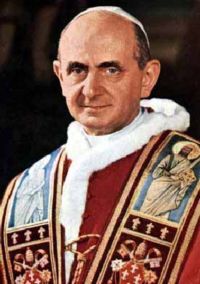
Blessed Paul VI and Venerable Matt Talbot


2014 has been an eventful year for Popes who knew of Matt Talbot.  Earlier this year Pope John Paul II and Pope John XXIII were both declared saints.
And yesterday, 19 October 2014, Pope Francis beatified Pope Paul VI (1897-1978), the pope who declared Matt Talbot as “Venerable” on 3rd October 1975, fifty years after Matt’s death.

In a 1974 address in Rome to Calix Society members on the occasion of their twenty-fifth anniversary, the now “Blessed Paul VI” stated: “You have chosen to look upon Matt Talbot as an admirable exemplar of discipline and supernatural virtue. It is our hope that his success will encourage countless men and women throughout the world to realize the need for conversion, the possibility of real rehabilitation, the serenity of Christian reconciliation, and the peace and joy of helping others to overcome abuses, disorders and sin.” (http://venerablematttalbotresourcecenter.blogspot.com/2008/03/pope-paul-vi-calix-society-and-matt.html)

Monday, October 13, 2014

The Knots Prayer

Whenever the negative voices in your head threaten to take over, consider reciting The Knots Prayer:


Dear God,

Please untie the knots in my mind,
my heart and my life.


Remove the have nots,
the can nots, and the do nots
that I have in my mind.


Erase the will nots,
may nots, and might nots that
may find a home in my heart.


Release me from the could nots,
would nots and should nots
that obstruct my life.


And most of all, Dear God,
I ask that you remove from my mind,
my heart, and my life all of the “am nots”
that I have allowed to hold me back,
especially the thought that
I am not good enough.


Amen


Source: Author known to God

Also note:  http://venerablematttalbotresourcecenter.blogspot.com/2014/09/mary-unties-knots-of-alcoholism.html

Friday, October 10, 2014

A physical miracle involving Venerable Matt Talbot?

Thousands of moral miracles have been reported by recovering alcoholics through the intersession of Venerable Matt Talbot. But for beatification, a Vatican confirmed physical miracle is required, which has not occurred yet.

But one is possibly on the horizon...one that does not involve an addiction nor an adult laborer.

One-year-old Talbot Joseph Watkins wasn’t supposed to be a healthy little boy. In fact, all medical evidence prior to his birth pointed to something seriously wrong. But a possible miracle changed the boy’s fate, which may lead to Matt’s beatification.

This extraordinary story, “The Making of a Miracle,” by Joe Bollig and published in The Leaven (Catholic Newspaper) on September 26, 2014, can be read at

An expanded article on page 5 at  http://www.theleaven.com/past_issues/_pdf/v36/Leaven%2009-26-14.pdf includes a brief biography of Matt Talbot, prayer for his canonization, and an interview with Fr. Brian Lawless, the Vice-Postulator, who visited with the Overland Park, Kansas family in August 2014.

Wednesday, October 8, 2014

2015 Pilgrimage to Matt Talbot's Ireland

 
The Philadelphia Units of The Calix Society announced that  there will be a June 2015 pilgrimage to Ireland lead by Fr. Brian Lawless.  It will include visiting sites important to the the life and spirituality of Venerable Matt Talbot as well as other spiritual sites (like Knock) and secular sites.  
Check http://www.philly-calix.com/upcoming-events/ periodically for additional details as they become available.

Sunday, September 28, 2014

Active Addiction - a Form of Gluttony

When we think or hear the word “glutton,” our first thought might be of a person who simply eats too much too often. But how many people today think, or in Matt Talbot’s early life thought, active alcoholism and other  addictions as a form of gluttony? 

As noted in the following article, Fr. Longenecker  comments on various forms of gluttony and that the original search for “comfort and sense of well being and happiness” is really found in a “strong relationship with God and a life of true goodness, truth and beauty.”


“There is a grotesque scene in the Monty Python film The Meaning of Life in which a hugely corpulent character named Mr Creosote eats a gigantic meal, vomits repeatedly and then, after eating a tiny after dinner mint, explodes. The comedy is completely outrageous, but you can’t miss the explicitly revolting depiction of gluttony.

Being heavy is not always caused by gluttony, nor does one need to be enormously obese to be guilty of gluttony. St Thomas Aquinas (who was himself overweight) defined five forms of gluttony: 1. eating food that is too luxurious, exotic, or costly;  2. eating food that is excessive in quantity; 3. eating food that is too daintily or elaborately prepared; 4. eating too soon or at an inappropriate time;  5. eating too eagerly. Gluttony includes any form of addiction. Drug abuse, caffeine or sugar addictions and alcoholism are forms of gluttony, but so is any inordinate attachment to food and drink. Similarly C.S.Lewis (who knew how to down a few pints of beer) points out than being overly fussy about food and drink can also be a form of gluttony. A person who insists on their steak being done “just so” then complains and rejects it is also placing too much selfish attention on food.

We think of gluttony as socially unattractive, but a sophisticated person dining daintily at a fine restaurant may very well be guilty of gluttony because they love their food and drink too much. Indeed, a connoisseur may be a very refined glutton.

Gluttony is a deadly sin not because it is unattractive but because there is a deeper problem. The glutton uses food for something other than its proper intention. Food is given for our nourishment, our enjoyment and for the fellowship of sharing with others. The glutton uses food simply to give himself pleasure or comfort. Think of a baby with a bottle. Not only does he gain nourishment, but he enjoys a feeling of comfort and relief from the warm drink. It’s okay for babies, but we’re supposed to outgrow the need for comfort food, and we shouldn’t need to rely on inebriation of alcohol or the false high of drugs to find the peace and happiness we long for.

To put it plainly, the glutton seeks in food, alcohol or drugs the comfort, and sense of well being and happiness that he should find in a strong relationship with God and a life of true goodness, truth and beauty. That is why the lively virtue that counters the deadly vice of gluttony is temperance.

The seventeenth century poet Thomas Traherne wrote, “Can a man be just unless he loves all things according to their worth?” Temperance is that virtue that empowers us to see the good in all things and to love them without being inordinately attached. Temperance in our consumption of food and drink also helps us to establish temperance in our relationship to other material things in life.

A person who is gluttonous is also likely to be greedy. The person who seeks comfort, peace and happiness in food and drink probably also clings to material things hoping to find security, peace and happiness. By exercising the virtue of temperance in the area of food and drink we will also find victory over our inordinate attachment to our money and possessions.

Temperance is the virtue that allows us to enjoy food and drink to the full, but avoids excess realizing that to abuse the gift is to destroy it. Temperance is therefore gratitude in action. By enjoying God’s gifts in the right proportion and in the right relationship to all things we are saying “Thanks” to God and living in the abundant life he promises.”


Note: To read a perspective on gluttony published during Matt Talbot’s lifetime, see Delany, J. (1909). Gluttony. In The Catholic Encyclopedia at http://www.newadvent.org/cathen/06590a.htm

Thursday, September 25, 2014

Jim Larkin, Matt Talbot and the 1913 Dublin Lockout

In the September 2013 issue of Pioneer Magazine, official publication of the Pioneer Total Abstinence Association of the Sacred Heart (PTAA), of which Matt Talbot was a member, one article may be of particular interest at 
 
In the article titled, “Jim Larkin, Matt Talbot, and the 1913 Dublin Lockout,” Sean Ua Cearnaigh provides a brief overview of the historical lockout and Matt Talbot’s role in it. As the author notes, Matt “was not a scab as some critics who did not know him tried to convey” but one in solidarity. 
 

Monday, September 22, 2014

Venerable Matt Talbot as a Beacon of Hope for Those Addicted

-­‐
This thoughtful reflection was presented at the Venerable Matt Talbot Hope and Recovery Service held at the Shrine of Venerable Matt Talbot, Our Lady of Lourdes Church, Dublin, on 17th September 2014. This spiritual recovery evening was open to all seeking recovery from addiction.


The Venerable Matt Talbot - Reflection
1856-1925

Posted September 19, 2014 
Source: https://www.facebook.com/pages/Matt-Talbot-Shrine/263868810479483?ref=stream


“We have gathered here this evening for this service to seek spiritual strength that we need on our lives’ journey of recovery. We gather in this particular place, in this sacred space to draw strength from one who had already done the journey, who had initially been caught up in the cycle of addiction in which we often find ourselves caught in. We come to this Church, where the remains of Matt Talbot are kept.

Matt Talbot was born on 2nd 1856 May to Elizabeth and Charles Talbot on the North Strand, and baptised a few days later. Having attended school for only one year, Matt got his first job. At this time he began to drink and later admitted that from his early teens to his late twenties his only aim in life was heavy drinking.

But at the age of 28, an incident made him realize the abysmal point that he had reached: Matt was broke and so he lingered outside a pub with his brothers with the hope that one of the many friends whom he had helped in their moment of ‘need’ would invite him in. But even his supposed friends disowned him and passed him by, friends whom he had supported in their own moment of need. 

It was an incident which affected him deeply. It triggered in him a soul searching process as he stood on a nearby bridge, gazing at the canal, gazing at the water as it flowed over in the lock. There and then he took a decision; I will no longer share their company or engage in their hollow laughter, but I will arise from my misery. Matt stopped drinking and made an initial three month pledge to God not to drink, which he later took for life. Despite great temptation in the early stages he never took a drink again.

What helped him take this step? I think it was his own Feelings, feelings that had been numbed for many years; without the influence of drink his feelings came rushing in. They were not comfortable feelings, but since he could not resort to his old way of avoiding them since he had no money to buy drink, and none of his friends would oblige him, he had no alternative but to face his feelings.

Contrary to popular belief, addiction is not about persistently indulging in a substance or some soothing behaviour. Rather it is about feelings, or rather disconnecting, cutting off our feelings. We live in an addictive society that seeks to cut off any unpleasant feelings. And when we cut off our feelings leaves us vulnerable, for though we may get some relief from the pain, however we cannot realize the moment when more harm is being done. We need to learn how to Feel our emotions rather than fear them, and this is what Matt learnt to do. Running away from your difficult feelings, means running away from yourself. You cannot form and maintain a solid relationship with anyone else, until you learn how to have a healthy one with you, until you accept yourself without self-judgment.

He knew that he could not achieve this on his own; he needed a higher power in his life, a power that affirmed him, that accepted him without conditions, inviting him to reach his full potential. Recovering from addiction we know is no easy process and Matt himself found it very difficult. But he found the strength he needed in the sacred spaces that dotted the city landscape, in the many churches where he encountered the Divine Presence, the loving embrace. There he encountered Jesus and the deep love that Jesus had for him. You are my beloved; indeed here Matt felt accepted and loved. Whenever he felt weak and the urge knocking at his door, this is where he fled , away from the streets, away from the pubs, away from sight to be close to the Lord and bask in his love. One of his favourite devotions was the Sacred Heart, which is another way of saying sacred Love. His remaining forty-one 'dry' years, were lived heroically, attending daily Mass, praying constantly, helping the poor and living the ascetic life-style of Celtic spirituality. This life was his prayer to God and his defence against a reversion to alcoholism.

Matt Talbot has been given to us as a beacon of hope; he is one of us and so he is able to understand us. That is why within a short time of his death, Matt's reputation as a saintly man and especially as a protector of those suffering from all forms of addiction and their families was being established. He once said: ‘Never be too hard on the man who can’t give up drink. It’s as hard to give up the drink as it is to raise the dead to life again. But both are possible and even easy for Our Lord. We have only to depend on him.’

He was able to make the journey from addiction to wholeness, to holiness. For this is what holiness is about, living a wholesome life relying not on ourselves but with the help of a higher power. He has been entrusted to us so that we can follow in his steps. Matt died in Granby Lane on Trinity Sunday, 7th June 1925 on his way to Mass in Dominick Street. The chains found on his body at death were a symbol of his devotion to Mary, to whom he wished to devote himself as a slave.

This coming year 2015 is the 90th year of his death and it is good that we mark it in a special way. In keeping his memory we seek to draw the same strength that he himself received from the ultimate Good.

Matt Talbot was declared Venerable in 1973 which means the Church has decided that from a human point of view he has the qualifications of a Saint.

In looking at the life of Matt Talbot, we may easily focus on the later years when he had stopped drinking for some time and was leading a penitential life. Only alcoholic men and women who have stopped drinking can fully appreciate how difficult the earliest years of sobriety were for Matt. He had to take one day at a time. So do the rest of us."

Wednesday, September 17, 2014

Mary Unties Knots of Alcoholism


Mary Unties Knots


Writing on the British Jesuits’ site Thinking Faith, Hedwig Lewis, SJ, gives more background on the devotion to Mary the Untier (or Undoer) of Knots, which Pope Francis has promoted for years.  You can also visit a website about the devotion.  The devotion is especially appropriate for “problems and struggles we face for which we do not see any solution:”
Knots of discord in our family, lack of understanding between parents and children, disrespect, violence, the knots of deep hurts between husband and wife, the absence of peace and joy at home. They are also the knots of anguish and despair of separated couples, the dissolution of the family, the knots of a drug addict son or daughter, sick or separated from home or God, knots of alcoholism, the practice of abortion, depression, unemployment, fear, solitude. . .
- See more at: http://www.ignatianspirituality.com/16382/mary-unties-knots/#sthas
As readers of biographical articles and books about Matt Talbot are quite aware, Matt developed a deep devotion to the Blessed Mother from the time of signing the pledge to give up alcohol.

One particular devotion that Pope Francis has promoted for many years is to "Mary the Untier (or Undoer) of Knots" for a wide range of personal struggles such as “…knots of discord in our family, lack of understanding between parents and children, disrespect, violence, the knots of deep hurts between husband and wife, the absence of peace and joy at home. They are also the knots of anguish and despair of separated couples, the dissolution of the family, the knots of a drug addict son or daughter, sick or separated from home or God, knots of alcoholism, the practice of abortion, depression, unemployment, fear, solitude. . .”

For information about this particular devotion to Mary, it would be worthwhile to read the article at http://www.thinkingfaith.org/articles/20130521_1.htm and visit the website at http://www.maryundoerofknots.com/history.htm

Monday, September 15, 2014

Praying for those addicted during Mass

In this 2006 church bulletin article at http://www.stjamesthomas.org/bulletins/2006/110506.pdf,  Fr. A. Richard Carton discusses why a prayer for those who struggle with addictions is often heard during the Prayer of the Faithful at Mass.

PASTOR’S CORNER:
WE PRAY FOR THOSE WHO STRUGGLE WITH ADDICTIONS.

This prayer is often heard during the Prayer of the Faithful at Mass. Some would say that every human being has an addiction of some form or another. There are others who maintain that we often exchange one set of addictions for another. Either way, it is when any addiction becomes overwhelming and controls the life of a human, that a path which could lead to destruction is set. For years I have been intrigued with programs which offer support to addicts. In seminary, we studied the Twelve Step Program of Alcoholics Anonymous chiefly because of its spiritual nature. I have often stated that the 12 step program is one for all who are serious about living a full life of faith whether chemical dependency is an addiction in our lives or not.

Recently, I went to a meeting of Alcoholics Anonymous. I had never been before. A close friend was celebrating a milestone in his life. Five years of sobriety. I wanted to be there to support him and also to understand a little more about the dynamic of what a meeting is about. Unfortunately, one can have many preconceived ideas of what individuals at an AA meeting look like and how they act. What I found were men and women who in their day to day environment would not stand out in any way that would indicate that they were alcoholics. There was none of the stuff that might sometimes be seen in movie versions of AA meetings. I was told before the meeting that a celebration meeting was different than other meetings in format. As I witnessed it, a celebration meeting affords the person celebrating an opportunity to ask two friends who are alcoholics to share a little about the one celebrating, but, more importantly, to share their own stories of struggle and addiction. As I listened and watched, I noted the men and women there often shaking their heads in agreement with the experiences of the speakers. There was a common bond of pain and struggle with those who had gathered. As I listened, I began to wonder about the others in the room. What was their story? What had happened to bring them to an addiction that they would battle for the rest of their lives?What is it within the human person that causes addiction to become part of our pattern of behavior? Many questions came to my mind as I continued to listen and learn.

Growing up in Ireland, I remember in religion class learning about a man who struggled with alcoholism. Matt Talbot (1856 - 1925) was born in the poverty of Dublin's inner city. He began drinking at twelve years of age and became a chronic alcoholic. Matt was an addict. After sixteen years, he decided to 'kick the habit'. A priest helped him, giving him a rehabilitation program, which incorporated the Twelve Steps of Alcoholics Anonymous. That was fifty years before AA was founded. After a horrendous struggle, he found sobriety through prayer and self-sacrifice. He remained sober for forty years until his death. His life story has been an inspiration for alcoholics and addicts throughout the world. Matt's program of recovery was built around devotion to the Eucharist, love of Mary, Mother of God, spiritual reading, self-discipline and manual work. But he never forgot his struggle with his addiction. "Never look down on a man who cannot give up the drink", he told his sister, "it is easier to get out of hell!" He is now being considered for Sainthood and has been declared Venerable by the Church.

I have no doubt that there are more who participate in that struggle than we will ever know. That is why our prayer is so important. An alcoholic once told me that when we pray for addicts during Mass, she knows that she is not alone and can feel the power of our prayer. Perhaps as we pray, we can ask the intercession of Matt Talbot for all who suffer with addictions. It is possible that one day he may be declared a Saint and Patron of those who suffer with addictions. I am most grateful for the example of my friend in his desire for sobriety. As he told me after the meeting, it is cooperating with God’s grace that makes the struggles bearable. For all who suffer from addictions – we pray to the Lord.

Wednesday, September 10, 2014

Venerable Matt Talbot's Life Included in College Course

 
Perhaps this newspaper article will stimulate other professors and professionals to consider including Matt’s story of addiction and recovery in relevant courses and activities.


"Priest at Elms College offers Irish-born Matt Talbot as example for those struggling with addiction"
By Cori Urban | Special to The Republican
September 09, 2014
Source: http://www.masslive.com/living/index.ssf/2014/09/priest_at_elms_college_offers_irish-born_matt_talbot_as_example_for_those_struggling_with_addiction.html

Matt Talbot was an alcoholic. Someday he might be declared a saint, an interest of one area priest in terms of helping others fight the disease of alcoholism.
 
Born in Ireland in 1856, he began drinking before he was a teenager in Dublin. By 28, he resolved to overcome the addiction, turning to God and his faith for strength. A devout Catholic, he lived a life of prayer with daily Mass, Scripture and spiritual reading, penance and hard work.
 
He died of heart failure on a Dublin street in 1925; penitential chains were found on his body. After his death, his reputation for holiness spread; he was revered by many Catholics for his piety, charity and mortification of the flesh.

In 1931, Archbishop Edward J. Byrne of Dublin opened an inquiry  into the claims of the holiness of Matt Talbot.
The Vatican began an official inquiry in 1947, and Talbot was noted as"A Servant of God." 

In 1975, Pope Paul VI declared him to be "Venerable," another step on the way to being officially declared a saint. A physical miracle attributed to him will be required for him to be declared, "Blessed,” and a second miracle to be declared a saint.The Rev. Brian Lawless, vice postulator for the cause of canonization of Venerable Matt Talbot, has made an appeal to Church hierarchy in Ireland to lobby Pope Francis for his canonization.

According to the Rev. Mark S. Stelzer, chaplain and associate professor of humanities at Elms College in Chicopee, one factor that might advance the cause of Talbot’s canonization is the special affection Pope Francis has shown for those living with addiction. “On his first trip as pope to Latin America, Francis made an unexpected stop at St. John of God Hospital in Brazil, which specializes in the treatment of addiction,” Stelzer said. Some Catholics involved in ministry to achieve or maintain sobriety have a special devotion to Matt Talbot.

Stelzer first learned of Talbot in conjunction with work he does regularly throughout the country on behalf of Guest House, a treatment center for Catholic clergy and religious recovering from addictions. That work includes retreats and seminars for those in treatment as well as ongoing educational programs for Church leadership and parish communities.

The priest hopes to offer persons struggling with addiction and those who love them the example of Talbot who himself knew the struggle of addiction and the joy of recovery. The message is one of hope, survival, forgiveness, beginning with ourselves.

Three years ago, Stelzer began offering parish missions during Lent based on Talbot’s story of addiction and recovery. He has offered such retreats in the Roman Cathoic Diocese of Springfield, and Archdiocese of Hartford.

Robin Roncari of Windsor Locks, Conn., invited Stelzer to lead a parish Lenten mission in March at St. Mary Church there. “His topic was, appropriately enough for Lent, on forgiveness,” she said. “What better material to use than addiction: forgiving ourselves and others. Matt Talbot was the springboard for the four-night mission.”

Talbot’s story encompasses most people's struggles, be it addiction to alcohol, drugs, food, whatever humans find difficult to overcome. “When you read a story like Matt Talbot's…you realize today's struggles are no different than those in the past,” Roncari said. “The message is one of hope, survival, forgiveness, beginning with ourselves. Matt Talbot was pulled up by strangers, people around him. He had to feel worthy enough in himself to accept the hands that led him to sobriety and a renewed life.”

Following parish missions or other presentations Stelzer offers on addiction and recovery, he regularly receives calls and e-mails from those in attendance seeking help for themselves or for a loved one. “After reminding the person contacting me of the importance of seeking professional help for underlying medical or psychiatric issues, my advice remains the same: Seek support in a Twelve Step program,” he said. “For most people, it is in such programs that the foundation of recovery is established. If the person contacting me seems receptive, I do encourage them to turn to Matt Talbot in their prayer.”

It has been estimated that one out of every four families is living with addiction. “Our congregations are comprised of countless people who themselves are struggling with addiction. Our congregations are also comprised of countless people trying to help a loved one find the way to recovery,” the priest said, noting that insofar as it resonates with the Christian story of light that emerges from darkness, the story of Matt Talbot speaks powerfully to both groups of people.

Persons active in their addiction or new to sobriety require time, patience and understanding to recover from the adverse physical and emotional effects of drinking or drugging. “Although never totally absent, appreciation of the spiritual dimension of recovery and support that people such as Matt Talbot might offer comes later,” Stelzer said.

His experience shows that family members and loved ones who first hear of Talbot are the ones who initially find the greatest strength and comfort in his example; it is not uncommon for family members and close friends of the addicted to be the ones who pray regularly to Talbot for intercession on behalf of a family member or friend. 

“Long before the founding of Alcoholics Anonymous by Bill Wilson and Dr. Bob Smith in 1935, Matt Talbot realized the many ways in which addiction had robbed him of primary relationships in his life, including a relationship with God and other people,” he said. “Matt Talbot also realized that with prayer and meditation, life-long abstinence from alcohol and a restoration of those primary relationships was possible.”

Although Alcoholics Anonymous wisely makes a distinction between spirituality and religion, Matt Talbot demonstrated ways in which a spirituality based on a restoration of relationships could be conjoined with particular religious devotion, Stelzer said. For Talbot, that devotion consisted of hours spent in prayer before the Eucharist and daily attendance at Mass.“For this reason, devotion to Matt Talbot is particularly attractive to Catholics whose life is sustained by the Eucharist celebrated daily in our churches,” Stelzer said.
 
For the past 12 years, he has offered a course each semester at Elms College, entitled “Addiction and Recovery: A Spiritual Journey.” The elective course regularly attracts between 50 and 60 students each semester. “The popularity of the course is indicative of the pervasiveness of addiction in our society and the constant effort of Elms College to prepare nurses, social workers, teachers and law enforcement professionals capable of responding with compassion and necessary skills to serve the addicted and those who love them,” he said.
 
“When or if Matt Talbot is canonized is secondary to the inspiration he offers those living with addiction and their loved ones today,” Stelzer said.

Saturday, September 6, 2014

Interview with Fr. Brian Lawless regarding Venerable Matt Talbot


As previously noted Fr. Brian Lawless, Vice-Postulator for the Cause for the Canonisation of Matt Talbot, was the featured speaker at the 2014 National Calix Society Convention in Philadelphia
(http://venerablematttalbotresourcecenter.blogspot.com/search/label/Fr.%20Brian%20Lawless).

During this visit Fr. Brian was interviewed by radio host, Ken Johnson, on August 6. This one hour program, available at
provides up-to-date information regarding Matt Talbot.

Friday, September 5, 2014

A new printing of the "Life of Matt Talbot" by Sir Joseph Glynn

Sir Joseph Glynn published the first biography of Matt Talbot in 1926 a year after Matt’s death. The demand was so great that an expanded edition of Life of Matt Talbot was published in 1928 with additional editions published in subsequent decades.

While original editions of this book are periodically available for purchase online, we have previously noted that a free copy of the full text (microform) is available at http://www.archive.org/stream/MN5135ucmf_8/MN5135ucmf_8_djvu.txt as well as a slightly less complete but perhaps more readable free copy at http://www.solicitor.net/_fileupload/Matt%20Talbot%20book.pdf


For those who may prefer a paperback copy, CreateSpace Independent Publishing Platform, an Amazon Company, has now made available a reprint of Glynn’s book at a modest cost at http://www.amazon.com/Life-Matt-Talbot-Joseph-Glynn/dp/1484809173.

Sunday, August 31, 2014

A Daily Resource about Venerable Matt Talbot

Daily posts about Matt Talbot began 13th July 2014 by Colin in the United Kingdom which are currently available at http://www.christianforums.com/t7832307/.

Saturday, August 30, 2014

Quotes About Eucharist Adoration

Matt Talbot’s voice is one of many on the importance of Eucharist Adoration. Have you added yours?

Venerable Matt Talbot (1856 to 1925)
Third Order Franciscan known for doing great penances
 
"How can anyone be lonely, with Our Lord in the Blessed Sacrament?"


Tuesday, August 26, 2014

Recovery and Venerable Matt Talbot

Fr. Louis Scurti, a New Jersey priest and certified marriage & family therapist, discusses the life of Venerable Matt Talbot and recovering from addictions today in this June 19, 2014 seven minute video at

Saturday, August 16, 2014

Wooden sculpture of Venerable Matt Talbot


Grzegorz Jakielski, at https://www.facebook.com/pages/Matt-Talbot/304690079653019, has posted this photograph of a 2 ft. wooden sculpture of Matt Talbot. It was carved by the grandmother of a recovering alcoholic as a parish gift for a priest in Poland who is very interested in Matt Talbot.
 
Grzegorz has also posted 12 photographs taken at the tomb of Matt Talbot, Our Lady of Lourdes Church, Seán McDermott Street, Dublin, at https://www.facebook.com/media/set/?set=a.559750170813674.1073741826.304690079653019&type=1


Thursday, August 14, 2014

Venerable Matt Talbot - A Prodigal Son


The following two posts are found at
https://www.facebook.com/Stagathasparish, where Fr. Brian Lawless, Vice-Postulator of the Cause for Canonisation of Venerable Matt Talbot, leads the Parish Team.

July 20, 2014 post

At the age of 28 Matt Talbot had his conversion experience which changed not only his life but the lives of so many others. Matt’s conversion was also his home-coming.


A conversion experience is always a home-coming:
- turning away from an
addiction,
- being reconciled with our family,
- forgiving an old hurt,
- going to confession after a long absence.


Once we are there we look back and wonder at our resistance.
Here was something that we needed in order to live, and yet we did not recognise it;
the truth of ourselves demanded it, and yet we did not accept to do it.

Now, Lord, by your grace, we know that your Word has been made flesh
and found a home in us.

Lord, be with all those who are homeless and alone tonight.
Amen


July 12, 2014 post


Today, we pray with one voice, asking that each of those suffering from the spiritual death of addiction will be liberated from the bonds of compulsion and craving; that the hold of these harmful behaviors will be released forever.

We call to you, Lord Jesus, that like the Prodigal Son, that our brothers and sisters, held in the grip of death by addiction, will be able to return to a life free from harmful dependence.

Matt Talbot was led out of the despair of dependence, by living and working in prayerful devotion. He was dedicated to helping others. Through abstinence, prayer, the Sacraments, and reading of the Word, he was saved. Today, we ask that each of the addicted be led out of the shadows and into the light of hope.

With the example of this humble servant, and all the Saints who have struggled and prevailed, we ask that our plea for sobriety be heard, and that the energy needed for recovery will be available to all who seek Your help.

Show us the way out of addiction. Lead us to a new life of Faith.Teach us, through the example of Matt Talbot, the discipline of living addiction free lives.

Send each of those who suffer from addictive behavior the strength and courage needed to overcome dependence. Inspire us to seek abstinence and sobriety in our day to day lives, to live as Matt Talbot lived, by the light of Your Holy Spirit, and the guidance of Your redeeming grace, as we seek recovery. This we ask through Jesus Christ our Lord.
Amen

Friday, August 1, 2014

A New Birth

The message In this recent homily by Fr. Phil Bloom, pastor at St. Mary of the Valley Catholic Church, Monroe, Washington, is that "God allows the flesh to have power so that we will realize our weakness and come to him. The suffering involved in humility is labor pain" and uses the life of Venerable Matt Talbot as an
illustration.

Life in the Spirit Week 2
(July 13, 2014) 


We are now in the second week of our series on "Life in the Spirit."* Spirit is the aspect of our being that enables us to have a relationship with God and with each other. The Spirit (with a capital "s") refers to the Holy Spirit. As we shall see, even though you and I have a capacity for God (capax Dei), we can realize that potential only in the Holy Spirit.

We saw last week that St. Paul makes a distinction between spirit and flesh. "You are not in the flesh," he says, "you are in the spirit." The flesh refers not just to sensual pleasure, but the whole downward pull of our human nature. For example, one of the ugliest sins of the flesh is envy. Envy doesn't seek sensual pleasure. Envy wants to cut other people down. I will address envy later in this series. For now, please fix in your mind that the flesh is not about partying, but about pulling down other people and one's own self.

Paul makes clear that God did not create us with this downward pull. It resulted from our own free choices. God allows the power of the flesh to continue because he respects our freedom, but also so we can learn humility. Humility is the great virtue. An arrogant man stands apart from God - and from others. A humble person acknowledges his need for God and others. To teach humility God allows us to fall. St. Therese of Lisieux said: "We would like never to fall. What an illusion! What does it matter, my Jesus, if I fall at every moment? I come to recognize by it how weak I am and that is gain for me."

We fall, yes, but God does not want us to stay in the mud. He desires to lift us up. As St. Paul writes today, God wants us to have "the glorious freedom of the children of God." That glorious freedom begins with humility and depends on constant humility - acknowledging my need for God and my need for you.

Humility has a price: suffering. I wish we could buy humility at Home Depot or get it by just thinking about it, but it doesn't work that way. Humility costs pain. St. Paul compares it to a woman in labor. A man once told me about the birth of his first child. He and his wife had taken all the childbirth classes and they felt ready. His wife is a brave woman who seldom complains. But he said that he had no idea women suffer so much. But then what joy when they held their newborn child!

So it is with us. We daily experience the labor pain of a new creation - a new birth.

Jesus describes that new birth with the example of a seed. If a seed could speak, it might say, "Please, leave me alone. I am happy in my little shell." A seed can live in its shell indefinitely. Archaeologists discovered a date palm seed when they excavated Herod's Palace in Judea. The seed goes back to Jesus' time and it theoretically could last until doomsday. A human can likewise stay wrapped up in himself for his entire life - and into eternity. That's the "hell" Jesus warns us against.

But you know what happened to that two-thousand-year-old date palm seed? Scientists planted and watered it - and it germinated. God wants to do something similar for you and me. He wants to rescue us from the isolation and sterility of hell. When the seed is immersed in soil and water, it breaks open, receives nourishment and as Jesus say, "produces fruit a hundred, sixty and thirty fold."

The life of Venerable Matt Talbot shows how humility leads to productivity. I spoke about Matt Talbot on Corpus Christi Sunday. When was twelve he got a job helping a wine merchant. He started "sampling the wares" and within a year became addicted. He lost that job, but got another one at a whiskey store. He spent most or all of his wages in pubs. Running up debts, he pawned his possessions including shirts and boots. One evening in 1884 (when he in his early thirties) he was penniless and out of credit. He waited outside a pub hoping his "friends" would invite him to a drink. None did. Matt went home in disgust and announced to his mother that he was "taking the pledge." He went to a priest to make a three month pledge, then six months, which finally extended to forty years. The first days and weeks were the most difficult. He found strength in Mass (daily if possible), prayer and a program of aiding others. He got a job as a hod carrier and worked so diligently that the foreman put him first in line to set the pace for others. With his earnings, he repaid his debt and made restitution for things he had stolen, then quietly began quietly helping the needy. The greatest help was to show them how to recover from addiction - for example to alcohol or gambling. He helped hundreds to find sobriety and a deep relationship with Jesus.

Venerable Matt Talbot shows what God wants of us - to break out of our isolation, our self-enclosure. That requires humility. It means recognizing our need for Him and for each other - the Church, the Body of Christ. If I knew some easy path, I would tell you - and I would take it myself. But humility involves pain. God allows the flesh to have power so that we will realize our weakness and come to him. The suffering involved in humility is labor pain. As St. Paul says, God wants us to "be set free from slavery to corruption and share in the glorious freedom of the children of God." Amen.

Satisfying our hunger and thirst


The message of this homily by Fr. Phil Bloom, pastor at St. Mary of the Valley Catholic Church, Monroe, Washington, is: “Like Matt Talbot all of us experience a thirst, a hunger nothing in this world can satisfy.”


Like Someone Dying of Hunger
Homily for Corpus Christi, Year A
June 22, 2014
Today we celebrate Corpus Christi - the Body and Blood of Jesus. In the first reading Moses says that the Lord allowed us "to be afflicted with hunger" so that we could appreciate the manna - the one bread that would satisfy. The famous theologian, Hans Urs von Balthasar (1905 –1988) says it this way: 

"When receiving the Eucharist each person must remember that he is falling into the arms of God like someone dying of hunger in the wilderness of this life." 

Let's be honest. It's sometimes difficult recognize that we are dying of hunger. We have been blessed with more abundance, more opportunities and more gadgets than any generation in human history. At the same time we experience a very real hunger: a sadness that people want to cover over. But, you know, maybe a person should feel sad if he trying to live by bread alone, not by every word that comes the mouth of God. 

We need something more than this world's bread. Jesus says, "unless you eat the flesh of the Son of Man and drink his blood, you do not have life within you." Jesus' words should startle us as they did his original hearers. "I am the living bread come down from heaven," he says, "whoever eats this bread will live forever and the bread that I will give is my flesh for the life of the world." 

That's what I want to offer you - Jesus the bread of life, the only one who will satisfy your hunger. Here at St. Mary of the Valley we are trying to become a more welcoming parish, to meet the needs of young families, to strengthen our music and to have homilies with a helpful message. All of these things are vital, but we have to keep in mind the teaching of Vatican II: that the Eucharist is the source and summit, the fount and goal of the Christian life. The Eucharist is an end in itself. I am the living bread come down heaven, Jesus says. 

In his book, "Journey to the Heart of Jesus," Archbishop Sartain writes about the importance of consistency in attending Mass. He uses the example Matt Talbot who by age 13 became addicted to alcohol. He sunk deeper and deeper until he hit bottom fifteen years later. Desperate, he made a pledge of sobriety on his knees. With the help of a priest, he established a disciplined program of recovery and he remained sober for forty years. His program foreshadowed Alcoholics Anonymous and he helped hundreds discover that they thirsted not for alcohol but for something else - or to put it more accurately for someone else. 

Matt Talbot's recovery involved quietly participating in Mass. Mass, private prayer and tending to the needs of others were the pillars of his program. "It is consistency God wants," he is often quoted as saying. Matt Talbot died on June 7, 1925 on his way to Mass. Fifty years later Pope Paul VI declared him Venerable and I believe someday we will say: St. Matt Talbot, pray for us. 

Like Matt Talbot all of us experience a thirst, a hunger nothing in this world can satisfy. As we celebrate Corpus Christi, I would like to conclude by again quoting Hans Urs Von Balthasar:
"When receiving the Eucharist each person must remember that he is falling into the arms of God like someone dying of hunger in the wilderness of this life." Amen.