

Venerable Matt Talbot Resource Center
The Venerable Matt Talbot Resource Center exists to compile writings about the life, times, conversion, and recovery from alcoholism of Matt Talbot (1856-1925) of Dublin, Ireland. Disclaimer: The placing of information on this site from external linked sources does not necessarily imply agreement with that information. This center is independent of any other center, group, organization, website, or Facebook page. Comments are welcome at: ven.matt.talbot.resource.center@gmail.com
Saturday, March 26, 2016
Thursday, March 17, 2016
The Dublin Mystic: Matt Talbot
by K. V.
Turley*
On 8 June 1925, the following news item appeared in the Irish Independent:
What was not reported was the unusual discovery when he was
taken to hospital. He was wearing heavy chains: some wrapped around his legs,
others on his body. Mortuary staff puzzled over not just who he was but, also,
the meaning of the chains.
The newspaper report had appeared on a Monday morning. Later that night, police ushered a woman into the mortuary. She identified the body as that of her brother: Matt Talbot. A nursing nun present asked about the chains. The dead man’s sister replied simply that it was something he wore, and with that, they were placed in the coffin and the lid closed.
That was not the whole story though; the chains were part of the mystery of the man who had died. They were as symbolic as they were real. The man’s life having been a ‘crossing over’ from the servitude of vice to the freedom of those in chains for Christ.
Talbot was born in 1856 into a large Catholic family living in semi-poverty in Dublin. His schooling was slight. He was barely literate when he went to work full-time aged just 11 years old. For the rest of his life his occupation was as an unskilled labourer. He was exposed to harsh working conditions, at times harsh bosses and to a social environment that necessitated some form of release from this – this was found by many in the city’s public houses. Matt was no different, so much so that by his teenage years he was hopelessly addicted to alcohol.
Matt had the reputation of being a hard worker. Increasingly, however, that work ethic was simply the means to finance his ‘hard drinking’. As it grips, vice of whatever sort is hard to counter, especially when the will to oppose it diminishes, so it was with Matt Talbot – what had began as an escape soon became a prison of moral and spiritual degradation. And, the more time he spent there the more Matt needed alcohol to shield him from that reality. Those around watched and, shaking their heads, concluded that Talbot was a lost cause. But they were to be proved wrong and in a most unexpected way.
Fittingly, the second phase of Matt’s life began outside a pub. That day he had no money, and, therefore, hoped that some of his drinking fraternity would stand him a drink. As each acquaintance filed past, none offered to buy him anything. On that summer’s day in 1884, something occurred that was to change Matt Talbot forever. Humiliated by the indifference of his erstwhile friends, he turned and walked straight home. His mother was surprised to see him – at that early hour, and sober. He proceeded to clean himself up before announcing he was going to a nearby seminary to ‘take the pledge’ – a promise to abstain from all alcohol. His mother was mystified by this and fearful. She knew that pledges made to God were not something to be taken lightly. She counselled him against doing any such thing unless he was intent on persevering. He listened, and then left.
Matt did take the pledge that day. He also went to Confession. It was as dramatic as it was decisive. It had all the hallmarks of a genuine conversion, one as sincere as it was needed. Nevertheless, a conversion takes but a moment, the work of sanctity a lifetime: after years of drunkenness, still arraigned against Matt was a weakness of character and a world that revolved around alcohol. It looked as if the odds were stacked against him, but this was not solely a human undertaking. Into this ‘land of captivity’, from ‘across the Jordan’, there came invisible armies to fight alongside this now embattled soul, one embarked upon a war of liberation. This was not a new spiritual combat, but rather one that had commenced many years previously when this poor man’s parents brought a child to a parish church and asked for baptism in the name of the Father, and the Son and the Holy Spirit.
After his conversion, not much changed, outwardly at least: Matt continued with his employment in the docks. He continued to work hard, now respected more than ever by his fellow workers and employers who noticed that he had started to give his wages to his mother rather than straight to a publican. Nevertheless, work alone cannot satisfy the human heart. Previously, when not working his life had been many hours spent in public houses, but, now, he had turned his back on that. He had been ‘born anew’, but like a newborn was vulnerable to the world he inhabited. With no material substance to cling to he turned inward, to the Spirit that dwells within each baptised soul. And, as he did so, he commenced upon an adventure that few could have imagined possible.
From then on, along the Dublin streets, there moved a mystic soul. Each morning at 5AM, dressed in workman’s clothes a man knelt outside a city church waiting for the doors to open and the first Mass to begin. After the Holy Sacrifice, he would pray for a time before going to one of the timber yards near the docks. There, he laboured all day; but there were periods in the day when lulls and breaks would occur. Whilst his fellow workers gossiped or smoked, Matt chose to be alone, knelt in prayer in a hidden part of a workshop until the call came to return to his labours.
***
Each evening, when work was finished, Matt walked home with his fellow workers. They knew their companion’s free time was spent praying in some city church before the Blessed Sacrament. Often he asked them to join him in making a visit to Our Blessed Lord. Some did. After a short while, however, they would leave with Matt still knelt in the gathering twilight. Eventually, when at night he did return home it was to yet more prayer – and mortification. His bed was a plank of wood, a piece of that same material his pillow. Although respected by those he lived amongst and worked alongside, and not unfriendly, he had few visitors. Those who did encounter him felt he was not quite of this world; they were right; he was travelling ever inwards on a mystical journey to a freedom he could never have dreamt of when trapped in an alcoholic stupor.
When his belongings were found after his death, one of the surprises was the number of books he owned. Inquires soon revealed that he had slowly, but determinedly, taught himself to read and, as he did so, effectively began a course of study that included the spiritual classics, the lives of Saints, doctrinal books, and works of mystical and ascetical theology. When asked how he, a poor workman, could read the works of St. Augustine, Newman et al, his reply was as straightforward as it was telling. He said he asked the Holy Spirit to enlighten him. And so, he grew in an intellectual understanding of his faith, which in turn deepened the prayer and penance he undertook. Here was a 20th Century heir to the spiritual traditions of the ancient Irish monks, albeit one now living not on an island monastery but in the slums of Dublin, but, like those earlier contemplatives his life was work, study and prayer with eyes turned ever inward to the Holy Trinity.
Matt never married; held no position of note, was unknown outside his own small circle of family and friends – only one blurred photograph has survived him- and, yet, this was a rare man: one who had taken the Gospel at its word and lived it.
His lifetime ran alongside the then momentous events in Irish history. A time of cultural renaissance and nationalist fervour, of a Great Strike in 1913 and open revolution in 1916, of the Great War and a War for Independence, throughout it all his life remained largely unchanged. Matt knew all too well that kingdoms rise and kingdoms fall, but that he had set his face to serve a different Kingdom, one shown him in 1884 when he confessed all and cast himself into the hands of the Living God.
By 1925, Matt was 69. He had been in poor health for some time. Out of necessity he tried to continue working as there was only limited relief for the poor or elderly, but his strength was failing. Nevertheless, he persisted in his prayer and penance. On 7 June 1925, whilst struggling down a Dublin alleyway on his way to Mass, he fell. A small crowd gathered around him. A Dominican priest was called from the nearby church, the one where Matt had been hurrying. The priest came and knelt over the fallen man. Realising what had happened, he lifted his hand in a blessing for the final journey. Little did he realise the dead stranger lying in front of him had already been on that ‘journey’ for over 40 years.
Having lived in the intimacy of the Triune God, it was apt Matt died on Trinity Sunday. Having lived off the Eucharist daily for more than 40 years, it was equally fitting he was buried on the feast of Corpus Christi.
Decades later, a visiting Italian priest went privately to pray at the grave of the Dublin worker he had heard so much about. In 1975, and after the due process had been completed, that same cleric, now Pope Paul VI, bestowed a new title upon that Irish workman: Venerable Matt Talbot.
There is a large trunk in the safe keeping of the Archdiocese of Dublin. It contains the books owned by Venerable Matt Talbot. A veritable treasury of spiritual theology, one of the books contained therein is True Devotion to Mary by St. Louis de Montfort. In its pages it reflects on being a slave to this world or to the Blessed Virgin. For those that choose the latter path it recommends, after due recourse to a spiritual director and the suitable enrolment, that a chain be worn to symbolise that that soul no longer belongs to the powers of darkness but is now a child of the light. On that June day in 1925, when Matt Talbot fell upon a Dublin street, it was dressed as a slave to Mary and as an ambassador of Christ.
*K. V. Turley is a London based freelance writer and filmmaker with a degree in theology.
March 17,
2016
On 8 June 1925, the following news item appeared in the Irish Independent:
Unknown Man’s Death
An elderly man collapsed in
Granby Lane [Dublin] yesterday, and being taken to Jervis Street Hospital he was
found to be dead. He was wearing a tweed suit, but there was nothing to indicate
who he was.
The newspaper report had appeared on a Monday morning. Later that night, police ushered a woman into the mortuary. She identified the body as that of her brother: Matt Talbot. A nursing nun present asked about the chains. The dead man’s sister replied simply that it was something he wore, and with that, they were placed in the coffin and the lid closed.
That was not the whole story though; the chains were part of the mystery of the man who had died. They were as symbolic as they were real. The man’s life having been a ‘crossing over’ from the servitude of vice to the freedom of those in chains for Christ.
Talbot was born in 1856 into a large Catholic family living in semi-poverty in Dublin. His schooling was slight. He was barely literate when he went to work full-time aged just 11 years old. For the rest of his life his occupation was as an unskilled labourer. He was exposed to harsh working conditions, at times harsh bosses and to a social environment that necessitated some form of release from this – this was found by many in the city’s public houses. Matt was no different, so much so that by his teenage years he was hopelessly addicted to alcohol.
Matt had the reputation of being a hard worker. Increasingly, however, that work ethic was simply the means to finance his ‘hard drinking’. As it grips, vice of whatever sort is hard to counter, especially when the will to oppose it diminishes, so it was with Matt Talbot – what had began as an escape soon became a prison of moral and spiritual degradation. And, the more time he spent there the more Matt needed alcohol to shield him from that reality. Those around watched and, shaking their heads, concluded that Talbot was a lost cause. But they were to be proved wrong and in a most unexpected way.
Fittingly, the second phase of Matt’s life began outside a pub. That day he had no money, and, therefore, hoped that some of his drinking fraternity would stand him a drink. As each acquaintance filed past, none offered to buy him anything. On that summer’s day in 1884, something occurred that was to change Matt Talbot forever. Humiliated by the indifference of his erstwhile friends, he turned and walked straight home. His mother was surprised to see him – at that early hour, and sober. He proceeded to clean himself up before announcing he was going to a nearby seminary to ‘take the pledge’ – a promise to abstain from all alcohol. His mother was mystified by this and fearful. She knew that pledges made to God were not something to be taken lightly. She counselled him against doing any such thing unless he was intent on persevering. He listened, and then left.
Matt did take the pledge that day. He also went to Confession. It was as dramatic as it was decisive. It had all the hallmarks of a genuine conversion, one as sincere as it was needed. Nevertheless, a conversion takes but a moment, the work of sanctity a lifetime: after years of drunkenness, still arraigned against Matt was a weakness of character and a world that revolved around alcohol. It looked as if the odds were stacked against him, but this was not solely a human undertaking. Into this ‘land of captivity’, from ‘across the Jordan’, there came invisible armies to fight alongside this now embattled soul, one embarked upon a war of liberation. This was not a new spiritual combat, but rather one that had commenced many years previously when this poor man’s parents brought a child to a parish church and asked for baptism in the name of the Father, and the Son and the Holy Spirit.
After his conversion, not much changed, outwardly at least: Matt continued with his employment in the docks. He continued to work hard, now respected more than ever by his fellow workers and employers who noticed that he had started to give his wages to his mother rather than straight to a publican. Nevertheless, work alone cannot satisfy the human heart. Previously, when not working his life had been many hours spent in public houses, but, now, he had turned his back on that. He had been ‘born anew’, but like a newborn was vulnerable to the world he inhabited. With no material substance to cling to he turned inward, to the Spirit that dwells within each baptised soul. And, as he did so, he commenced upon an adventure that few could have imagined possible.
From then on, along the Dublin streets, there moved a mystic soul. Each morning at 5AM, dressed in workman’s clothes a man knelt outside a city church waiting for the doors to open and the first Mass to begin. After the Holy Sacrifice, he would pray for a time before going to one of the timber yards near the docks. There, he laboured all day; but there were periods in the day when lulls and breaks would occur. Whilst his fellow workers gossiped or smoked, Matt chose to be alone, knelt in prayer in a hidden part of a workshop until the call came to return to his labours.
***
Each evening, when work was finished, Matt walked home with his fellow workers. They knew their companion’s free time was spent praying in some city church before the Blessed Sacrament. Often he asked them to join him in making a visit to Our Blessed Lord. Some did. After a short while, however, they would leave with Matt still knelt in the gathering twilight. Eventually, when at night he did return home it was to yet more prayer – and mortification. His bed was a plank of wood, a piece of that same material his pillow. Although respected by those he lived amongst and worked alongside, and not unfriendly, he had few visitors. Those who did encounter him felt he was not quite of this world; they were right; he was travelling ever inwards on a mystical journey to a freedom he could never have dreamt of when trapped in an alcoholic stupor.
When his belongings were found after his death, one of the surprises was the number of books he owned. Inquires soon revealed that he had slowly, but determinedly, taught himself to read and, as he did so, effectively began a course of study that included the spiritual classics, the lives of Saints, doctrinal books, and works of mystical and ascetical theology. When asked how he, a poor workman, could read the works of St. Augustine, Newman et al, his reply was as straightforward as it was telling. He said he asked the Holy Spirit to enlighten him. And so, he grew in an intellectual understanding of his faith, which in turn deepened the prayer and penance he undertook. Here was a 20th Century heir to the spiritual traditions of the ancient Irish monks, albeit one now living not on an island monastery but in the slums of Dublin, but, like those earlier contemplatives his life was work, study and prayer with eyes turned ever inward to the Holy Trinity.
Matt never married; held no position of note, was unknown outside his own small circle of family and friends – only one blurred photograph has survived him- and, yet, this was a rare man: one who had taken the Gospel at its word and lived it.
His lifetime ran alongside the then momentous events in Irish history. A time of cultural renaissance and nationalist fervour, of a Great Strike in 1913 and open revolution in 1916, of the Great War and a War for Independence, throughout it all his life remained largely unchanged. Matt knew all too well that kingdoms rise and kingdoms fall, but that he had set his face to serve a different Kingdom, one shown him in 1884 when he confessed all and cast himself into the hands of the Living God.
By 1925, Matt was 69. He had been in poor health for some time. Out of necessity he tried to continue working as there was only limited relief for the poor or elderly, but his strength was failing. Nevertheless, he persisted in his prayer and penance. On 7 June 1925, whilst struggling down a Dublin alleyway on his way to Mass, he fell. A small crowd gathered around him. A Dominican priest was called from the nearby church, the one where Matt had been hurrying. The priest came and knelt over the fallen man. Realising what had happened, he lifted his hand in a blessing for the final journey. Little did he realise the dead stranger lying in front of him had already been on that ‘journey’ for over 40 years.
Having lived in the intimacy of the Triune God, it was apt Matt died on Trinity Sunday. Having lived off the Eucharist daily for more than 40 years, it was equally fitting he was buried on the feast of Corpus Christi.
Decades later, a visiting Italian priest went privately to pray at the grave of the Dublin worker he had heard so much about. In 1975, and after the due process had been completed, that same cleric, now Pope Paul VI, bestowed a new title upon that Irish workman: Venerable Matt Talbot.
There is a large trunk in the safe keeping of the Archdiocese of Dublin. It contains the books owned by Venerable Matt Talbot. A veritable treasury of spiritual theology, one of the books contained therein is True Devotion to Mary by St. Louis de Montfort. In its pages it reflects on being a slave to this world or to the Blessed Virgin. For those that choose the latter path it recommends, after due recourse to a spiritual director and the suitable enrolment, that a chain be worn to symbolise that that soul no longer belongs to the powers of darkness but is now a child of the light. On that June day in 1925, when Matt Talbot fell upon a Dublin street, it was dressed as a slave to Mary and as an ambassador of Christ.
*K. V. Turley is a London based freelance writer and filmmaker with a degree in theology.
Sunday, March 13, 2016
A Note on Moral Miracles
John Thavis, one of the world’s leading Vaticanologists, has
recently published a most perceptive and highly readable book, The Vatican
Prophecies: Investigating
Supernatural Signs, Apparitions, and Miracles in the Modern Age (2015).
In Chapter 7, '’The Miracle Trail,’'
Travis discusses the Vatican’s current view on moral miracles as being too
ambiguous and ephemeral as illustrated in the cause of Matt Talbot, which can be
read a https://books.google.com/books/about/The_Vatican_Prophecies.html?id=QsdJBgAAQBAJ&printsec=frontcover&source=kp_read_button&hl=en#v=onepage&q=matt%20talbot&f=false.
The paragraph concludes: “Moreover, most recovering
alcoholics or addicts have been through some form of treatment. Discerning
precisely what prompted an alcoholic to abandon the bottle was simply beyond the
competence of the Vatican’s experts.”
A physical miracle involving Matt Talbot, however, would keep
his cause perhaps more active and likely, e.g., http://venerablematttalbotresourcecenter.blogspot.com/search?q=physical+miracle
Thursday, March 10, 2016
Mary Purcell's Writings on Matt Talbot
Mary Purcell (1906-1991),
renown biographer of Matt Talbot and other holy individuals and saints,
published two booklets and two books about Matt. A nine page booklet titled The
Making of Matt Talbot (1972) can be read at https://issuu.com/messengerpublications/docs/the_making_of_matt_talbot. An expanded 32 page edition with the same title can be read at
https://lxoa.files.wordpress.com/2010/09/mattalbot.pdf.
Extensive biographies of
Matt Talbot by Ms. Purcell are Matt Talbot and His Times
(1977) and Remembering Matt Talbot (1990). While these two books are still available for purchase
online, there is now an online copy of Matt Talbot and His
Times at https://issuu.com/aidtothechurchinneed/docs/matt_talbot_times
Monday, February 22, 2016
An Informative Booklet About Venerable Matt Talbot
Nearly two years ago, we posted information about a
“Profile in Heroic Virtue” article featuring Venerable Matt Talbot by the Dead
Theologians Society at http://venerablematttalbotresource center.blogspot.com/search?q=Dead+Theologians+Society.
This society has also published a series of Booklets on the Saints, including a very worthwhile twelve page introduction, including photographs, about the life and inspiration of Matt Talbot. Also included is a catechetical reflection regarding addiction based on Genesis 3. The download pdf is available at http://www.acnire land.org/dts/dts_matt.pdf.
Thursday, February 18, 2016
Interior View of Our Lady of Lourdes Church, Dublin
For those who have not yet visited the
Shrine of Venerable Matt Talbot within Our Lady of Lourdes Church, Sean McDermott Street, Dublin 1, Ireland,
click this Google Map link for viewing:
Note: We thank Grzegorz Jakielski for posting this link on
February 11, 2016 https://www.facebook.com/pages/Matt-Talbot/304690079653019.
Thursday, February 11, 2016
Reminder: 2016 Pilgrimage in Ireland with Venerable Matt Talbot’s Vice Postulator
If you are interested and have not signed up, the above link
has pilgrimage details.
Friday, February 5, 2016
Day of Prayer for Temperance
The complete News Feed is available at
Sunday 7 February 2016 is a Day of Prayer for Temperance, a day
which offers us an opportunity to reflect on our relationship with alcohol and a
day on which we can take time to pray for those who suffer from
addiction.
Writing about temperance in the current issue of
Intercom magazine Bishop Éamonn Walsh, Vice-chair of the Irish Bishops’
Drugs Initiative said:
Parish Resource for Temperance Sunday
Compassionate Lord and Saviour,
you inspired the Capuchin Friar Theobold Mathew
to show your compassionate face to those addicted
and burdened by the abuse of alcohol or addicted behavior,
and to promote temperance.
May we today, continue to serve our brothers and sisters with love and joy,
And to foster balance, and moderation in our life styles with the help of God.
So, we pray, “here goes in the name of God.”
Amen
We live in a world where many people wish to march to the beat of their own drum. Where freedom and tolerance means, ‘let me do what I want and you can do what you want, as long as it does not interfere with my freedom’. When a society takes down the protective banks so that everyone can be totally free, we could easily become a lazy lake with people floating around doing their own thing but really going nowhere. Once there is a focus in life, floating aimlessly disappears. A purpose develops with its own safeguards, priorities and balance. It is this balance that we associate with temperance. It may demand sacrifices to attain a goal for self or others. Once the habit of temperance is formed in one area of life, it can be drawn on whenever required.
Temperance has an unpopular image, it is perceived as a restrictive, a sort of kill-joy and spoil sport. Nothing could be further from the reality. Temperance brings balance and prevents excess getting a grip. Bad tempered behaviour or intemperate language is neither accepted in sport nor in social behaviour. Society is all too aware of how drugs, including alcohol, have done such damage to sport, recreation, working and family life. It has become so difficult for people to resist the culture of artificial and chemical enhancement for all kinds of performances and entertainment.See Intercom February 2106 article on Temperance by Bishop Eamonn Walsh at http://www.catholicbishops.ie/wp-content/uploads/2016/02/Intercom-February-2016-article-on-Temperance-by-Bishop-%C3%89amonn-Walsh..pdf
Parish Resource for Temperance Sunday
- Father Mathew’s Prayer
Compassionate Lord and Saviour,
you inspired the Capuchin Friar Theobold Mathew
to show your compassionate face to those addicted
and burdened by the abuse of alcohol or addicted behavior,
and to promote temperance.
May we today, continue to serve our brothers and sisters with love and joy,
And to foster balance, and moderation in our life styles with the help of God.
So, we pray, “here goes in the name of God.”
Amen
Thursday, February 4, 2016
First Friday Venerable Matt Talbot Novena Masses
| ||||||

Monday, January 18, 2016
Dublin Street Art Image of Matt Talbot
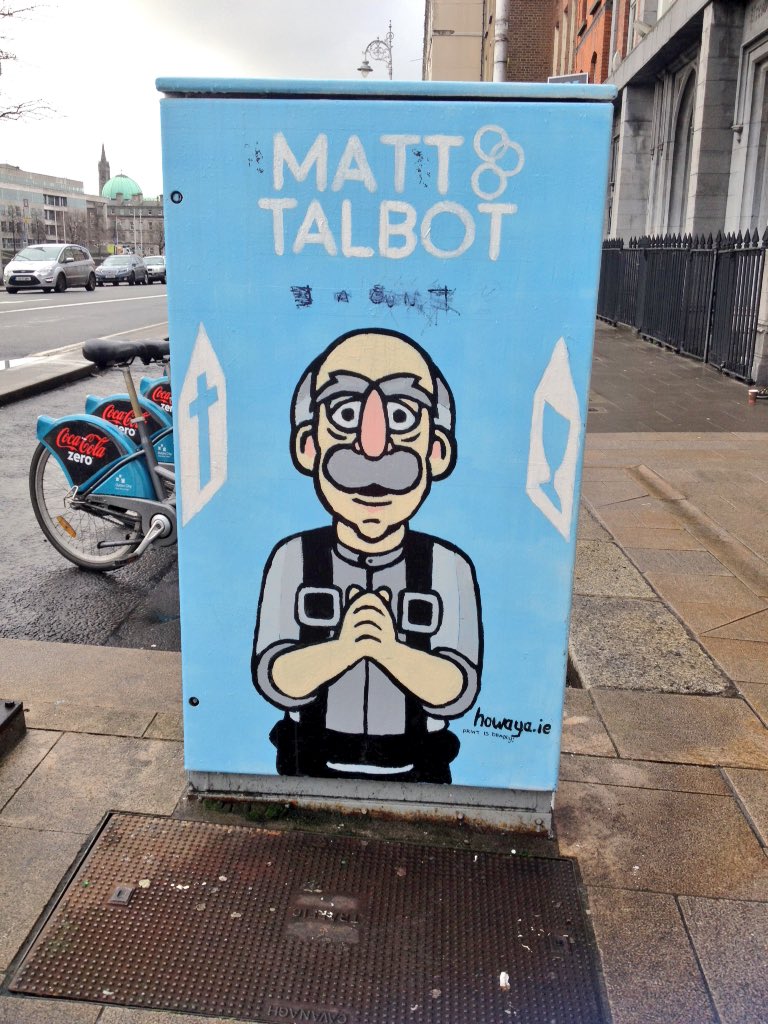
Mags Gargan, Features Editor with The Irish Catholic, tweeted (2 Jan 2016), “Lovely to see Matt Talbot commemorated in Dublin street art.”
https://twitter.com/MagsGarganIC/status/683281189843660801
Thursday, January 14, 2016
Lives Transformed
Bob Hunt, a pediatric Registered Nurse, Catholic
faith instructor, and author, has written a series of articles on “Evidence for the Existence of God from
Experience” for Catholic365.com. The quotation and
link below are from Part 5.
Lives Transformed
“The greatest
testimony to the presence and power of God and His Holy Spirit is the
transformation of lives from wantonness and misdirection to virtue and meaning.
The encounter with God that many have experienced may prove nothing more than an
interesting passing moment unless it impacts one’s life. While this may not
always be a dramatic turn, there are those examples of men and women whose lives
have been genuinely transformed, even to the point of being unrecognizable from
what it was before.”
To illustrate
his point Bob presents five biographical sketches of such transformation,
including that of Matt Talbot, which begins, “It would have been almost a miracle had
Matt Talbot avoided becoming an alcoholic.” See
http://www.catholic365.com/article/3090/evidence-for-the-existence-of-god-from-experience-part-5-lives-transformed.html
http://www.catholic365.com/article/3090/evidence-for-the-existence-of-god-from-experience-part-5-lives-transformed.html
Monday, January 11, 2016
Matt Talbot: Also the Workers’ Saint
Whereas Venerable Matt Talbot (1856-1925) may be known most
frequently as the patron saint of alcoholics, he is also considered as the
Workers’ Saint.
A search of our site and elsewhere online notes “worker” or
“labourer” in the title of articles and books about Matt. For example, the title of an article at http://www.catholicireland.net/saintoftheday/matt-talbot-the-workers-saint/ is "Venerable Matt Talbot - The Workers' Saint" and the first sentence states: “Matt Talbot was a Dubliner who struggled with a drink problem,
then led a severe ascetical life, and became known after his death as the
Workers' Saint.”
In an article about St. Joseph the Worker at
http://www.motherofallpeoples.com/2010/04/st-joseph-the-worker/, that included such headings as
The Gospel of Work and
Your Workplace is Holy
Ground, Matt and others are
mentioned as examples:
“...One thinks here of Ven. Matt Talbot, the
Dublin workman who spent a lifetime as a laborer on building-sites; he would
offer his daily work, in union with St. Joseph, to the Divine Workman, of whom
he once remarked in his laconic way, “Christ the Carpenter must have a close
interest in those who work.”
One also thinks here of Bl. Charles
de Foucauld; wishing to share St. Joseph’s lowly status as a manual worker, he
prevailed upon the Poor Clares, during his sojourn in Nazareth, to allot him the
task of sweeping their convent floors.
Examples abound of Christian zeal
in offering to God work of every kind in the spirit of penance and prayer. St.
Benedict was imbued with this principle, as is seen in his famous motto: “To
work is to pray.” Similarly St. Bernadette; on becoming an invalid she famously
declared that this was the newfound employment she could and would offer to
God.
Gerard Manley Hopkins had a sharp
insight into how the humblest tasks, howsoever low-grade they may be socially
and economically, can glorify God and sanctify the
worker.”
Saturday, January 9, 2016
Two Titles and Sources of Same Article
The purpose of this post is to clarify an informative article
with two different titles and sources by the same author.
In 2007 we posted (with permission) the Abbey of Saint-Joseph de Clairval Spiritual
Newsletter, August 15, 2004, about Venerable Matt Talbot by Dom Antoine
Marie, OSB. at http://venerablematttalbotresourcecenter.blogspot.com/2007/11/matt-talbot-model-for-all-men-and-women.html. Since it was titleless, we gave it the title, “Matt Talbot - A Model
for all Men and Women,” for posting purposes.
Six years later, this article was reposted at https://prayers4reparation.wordpress.com/2013/10/08/a-former-alcoholic-on-the-road-to-sainthood-we-all-have-one-or-the-other-cross-to-carry-never-despair-of-gods-mercy/ with the title, “A FORMER ALCOHOLIC ON THE ROAD TO SAINTHOOD – WE ALL HAVE ONE OR THE OTHER CROSS TO CARRY; NEVER DESPAIR OF GOD’S MERCY!” Besides additional headings for the text, which may increase readability, this article also has a different source, namely, published in “The Little Way Association” (Helping the Missions side by side with St Therese), issue number 88, Sacred Heart House, London.
Tuesday, January 5, 2016

Monday, January 4, 2016
A New Year with Venerable Matt Talbot
Although the 90th
Anniversary Year of Venerable Matt Talbot’s death has concluded, let us continue
to pray for his canonization and to share his life and influence with others, one day at a time,
during

Tuesday, December 29, 2015

Wednesday, December 23, 2015
For addicts, alcoholics and those who love and care for them
The following article was published in recognition of National Recovery Month, a yearly program sponsored by the U.S. Substance Abuse and Mental Health Services Administration.
Under the guidance of the Bishop and as an aspect of our call to be missionaries of the love of Jesus we have the opportunity and obligation to develop an intentional approach to ministry to persons and families affected by alcoholism and addiction. We have to believe that we can more fully give of ourselves to those trapped by the bondage of addiction in Southeast Alaska by introducing here Catholic movements such as the Calix Society, the Pioneer Total Abstinence Association for the Sacred Heart of Jesus and Catholic resources such as the writings of Fr. Ralph Pfau, the Guest House, the National Catholic Council on Addictions. Also, we must become aware of, and better understand, how to introduce people to the places of recovery that are already established in our communities, such as 12-step meetings, inpatient and outpatient programs, and Native resources.
By Barry Schoedel
September 13,
2013
Southeast Alaska Catholic Newspaper Online
Many people may not realize this, but the Church, primarily through the
commitment of individual Catholics, has been involved in reaching out to those
enslaved to substances or behaviors since the Incarnation of Christ in the womb
of the Virgin Mary. Indeed the Word became Flesh to reconcile an estranged
humanity to the Father, and this reconciliation leaves no stone unturned. It
embraces all that is good and true in medicine while completing it with the love
of God. It is intrinsic to the vocation of the Church that she effects and
guides the liberation of peoples from their various forms of bondage. This
includes those who are harmfully enslaved to substances and behaviors. As
Catholics we are grateful for the medical disciplines that support recovery and
at the same time have a responsibility to proclaim the love of God in Jesus
Christ to all peoples, especially the mentally ill and those suffering from
substance abuse disorders.
Even before the founding of Alcoholics Anonymous, through
such organizations as the Pioneer Total Abstinence Association of the Sacred
Heart of Jesus – founded by Fr. James Cullen S.J. in Ireland in 1898 – there
have been Catholics specifically committed to serving the good of those who are
dependent on alcohol. Venerable Matt Talbot was freed from the compulsion to
drink when he recognized that he was enslaved to it and only a new life in God
could free him. After reaching out for help from others, he gave his life to God
through devotion to Jesus, daily Mass, meditation and prayer, receiving
spiritual direction, and mortification. Matt is an inspiration to many people in
recovery because he was a simple man, a humble Irish laborer, whom God used as
an instrument of grace to communicate that his grace could relieve people of the
compulsion to drink. Matt’s life was a continual seeking of the reconciliation
offered in Christ, allowing himself to be led by the Holy Spirit to a restored
relationship with God the Father.
Bill W., one of the founders of Alcoholics Anonymous,
considered Fr. Ed Dowling, S.J., an important spiritual director. Bill W.
grappled much with the Catholic faith and made a sincere effort to try to
understand the faith, though he struggled with accepting the authority of the
Church. An often unmentioned and behind the scenes founder of Alcoholics
Anonymous was Sister Ignatia Gavin. In 1935 she admitted a patient that Dr. Bob
(another founder of A.A.) brought to her hospital for the treatment of
alcoholism. The hospital didn’t want to admit alcoholics. The disease aspect of
chemical dependency was not well understood at this time and it was seen as
strictly a moral problem and a problem of the will. Sr. Ignatia was able to
admit this patient under a diagnosis of acute gastritis, thus revolutionizing
the approach to the treatment of alcoholism. Sr. Ignatia worked to get
alcoholism accepted as a medical condition serious enough to have its own
criteria for admission so that alcoholics didn’t have to be admitted through the
“back door.” Her efforts resulted in an entire ward of the hospital being
devoted to the care of recovering alcoholics. This was a huge advance in the
treatment of alcoholism and has influenced how we approach all chemical
dependency issues.
Fr. John Doe (Fr. Ralph Pfau), a priest who was trained
at St. Meinrad Seminary in Indiana and served in Indianapolis, is believed to be
the first Roman Catholic priest who sought the help of Alcoholics Anonymous to
be free from the compulsion to drink. Fr. Ralph Pfau was a prolific author of
materials to support both Catholics and non-Catholics in recovery from
Alcoholism. Books such as Sobriety Without End, Sobriety and Beyond, and his
Golden Book series were well used resources by both Catholics and non-Catholics
in the early history of AA. They remain some of the best recovery resources
available. Fr. Ralph also was instrumental in the founding of what is now the
National Catholic Council on Addictions. Fr. Ralph especially worked during his
life to reach out to priests and religious who were alcoholic, which led to the
founding of what is now called Guest House, a substance abuse ministry to clergy
and religious who are alcoholic and/or addicted. Their mission statement is, “to
provide information, education, treatment and care needed to assure that clergy,
men and women religious, and seminarians suffering from alcoholism and other
related conditions have the best opportunity for quality recovery.” The success
of Guest House led to the foundation of a similar program in India called
Friendship House as well as the establishment of the National Catholic Council
on Addictions.
The late Jesuit and moral theologian Fr. John C. Ford was
also an early A.A. member and friend of Bill W. Fr. John Ford became an
important resource for the Church’s developing understanding of the
psychological and moral aspects of alcoholism. The late Fr. John C. Ford is to
this day considered an eminent moral theologian, who helped the Church
articulate such Catholic teachings as the moral evil of contraception. More
recently, Cardinal Justin Rigali (the then) Archbishop of Philadelphia, held a
one day conference on addictions, delivering a keynote address titled, “Let the
Oppressed Go Free: Breaking the Bonds of Addiction,” which is now available in
book format. Just this summer, Archbishop Tobin of the Archdiocese of
Indianapolis, delivered the keynote address at the annual meeting of the Guest
House ministry, sharing honestly about his own confrontation with chemical
dependency and his journey in recovery. Many other clergy and religious are also
involved head on in addressing the problems of addiction and substance abuse,
both in the Church and society at large.
Alaskans are no strangers to alcoholism and chemical
dependency problems. Alaska is continually recorded as having among the highest
“amount of alcohol consumption per person ratio” among all 50 states. Although
certainly not limited to Native peoples, among Natives this rate is inordinately
high. An article in the Juneau Empire last year mentioned that in 2010 alcohol
and drug abuse cost Alaska’s economy 1.2 billion dollars. This is a staggering
figure, yet it doesn’t completely communicate the spiritual and moral
diminishment that alcoholism and chemical dependency causes in hearts and souls,
and in homes, families, and communities.
Whether we are recovering addicts or alcoholics, those in
need of recovery, or those who love them, we are called as Catholics to be
evangelized by the love and goodness of Christ, to make disciples, and to
proclaim the Kingdom of God. In Southeast Alaska we have a special obligation
and opportunity it seems, to carry on this tradition of participating as a
Church and as individual Catholics in the liberation of our neighbor, through
the corporal and spiritual works of mercy. As we approach the Synod and examine
our commitment to the Mission of the Church we have to ask ourselves what we can
do to better reach out as the Body of Christ, with love and truth, to those
suffering from painful and debilitating addictions.
Thankfully, it is not a matter of reinventing the wheel,
but instead receiving more fully in what has come before us in terms of the
Catholic tradition of helping alcoholics and addicts. We must trust that the
Christian faith is important to complete moral and spiritual recovery and that
we have something immeasurably good to share with those suffering from
addictions. We must be willing to meet people in the midst of their bondage and
to accompany them with Christ to freedom.
Under the guidance of the Bishop and as an aspect of our call to be missionaries of the love of Jesus we have the opportunity and obligation to develop an intentional approach to ministry to persons and families affected by alcoholism and addiction. We have to believe that we can more fully give of ourselves to those trapped by the bondage of addiction in Southeast Alaska by introducing here Catholic movements such as the Calix Society, the Pioneer Total Abstinence Association for the Sacred Heart of Jesus and Catholic resources such as the writings of Fr. Ralph Pfau, the Guest House, the National Catholic Council on Addictions. Also, we must become aware of, and better understand, how to introduce people to the places of recovery that are already established in our communities, such as 12-step meetings, inpatient and outpatient programs, and Native resources.
Wednesday, December 16, 2015
“Year of Mercy” at Our Lady of Lourdes Church in Dublin

In announcing the Holy Year, the Pope has asked for a Door of Mercy to be opened in every Cathedral of the world and in Holy Shrines frequented by large groups of pilgrims.
The Shrine of Venerable Matt Talbot attracts quite a number of pilgrims from Ireland and overseas, and it will also have a Holy Door of Mercy during this Jubilee Year for the greater benefit of pilgrims.
The Holy Door will be blessed, and then opened on Christmas Eve.
Matt Talbot has a message for young people; he was only twenty-eight years of age when he made his basic life choice and changed his ways. His return to the sacraments gave him a deep experience of God’s infinite Mercy, which transformed and sustained him.
Thursday, December 10, 2015
A New Image of Venerable Matt Talbot
This image of Matt Talbot was created
by Tracy L. Christianson, based on using the only
known photograph of Matt as a reference, reading about him, and prayer.
More information is
available at http://www.portraitsofsaints.com/collections/all/all-images-matt-talbot
Tracy has given us permission to post her
depiction.

Tuesday, December 8, 2015
The Jubilee Year of Mercy
Two basic sources
of
information about this Jubilee Year (8 December 2015 –
29 November 2016) may be found at
As we have previously reported at http://venerablematttalbotresourcecenter.blogspot.com/2015/07/venerable-matt-talbot-missionary-of.html, Archbishop Eamon Martin stated the following in a homily earlier
this year:
”I think of the Venerable Matt Talbot who recognised his weakness and
then quietly undertook daily sacrifice and penance while reaching out humbly in
love and charity to others. In preparation for the Jubilee Year of Mercy Pope
Francis has been speaking about the need for “missionaries of mercy” in the
world. Last Advent he said “there is a need for people who are witnesses of the
mercy and tenderness of the Lord, which shakes up those who are resigned,
revives the discouraged, (and) ignites the fire of hope.” Matt Talbot was such a
“missionary of mercy.”
The archbishop also stated, “I would like to thank God today for the many missionaries of mercy around this country who unselfishly reach out to help those who are addicted by offering prayer, providing counselling and therapy, recovery programmes and pathways of mentoring and support for addicts and their families.”
The archbishop also stated, “I would like to thank God today for the many missionaries of mercy around this country who unselfishly reach out to help those who are addicted by offering prayer, providing counselling and therapy, recovery programmes and pathways of mentoring and support for addicts and their families.”
Are you a missionary of mercy?
Subscribe to:
Posts (Atom)